
Climate risk is no longer a niche concern for businesses and has become central to understanding a business’s financial risk. Put simply, as the Earth’s climate changes, how a business reacts and prepares for the future is becoming more important to investors.
Climate risk is increasingly treated as a financial risk, and climate disclosure, the reporting of an entity’s climate-related risks, opportunities, and environmental impacts, such as carbon dioxide emissions, is becoming a standard practice across the world. This, alongside the emergence of green bonds, sustainability-linked bonds, carbon credits, and carbon taxes, illustrates a real shift in policy and attitude towards sustainability. For South Africa, the Johannesburg Stock Exchange (JSE) continues to play an important role in shaping how sustainability is priced in South Africa. Acting as a marketplace that connects capital with opportunity, the JSE lends trust and transparency to investors and the market, who are increasingly looking at climate as a deciding factor to invest. Loshni Naidoo, Chief Sustainability Officer at the JSE, says, “The JSE has understood for a while that climate risk is financial risk, and that any possible future requires sustainability to be upfront, rather than an afterthought.” Putting it bluntly, she adds, “the market is asking, ‘does your company have a future without sustainability?’ and the JSE is shaping how sustainability is measured, reported, and understood in South Africa, and that allows capital to be allocated accurately preparing the economy for long-term resilience.”Key concepts
When looking at the ecosystem of sustainability in South African markets, there are several terms used that may seem simple on the surface, but form part of a larger regulatory strategy that aims to move businesses away from high emissions towards a more sustainable operational model, as well as to get businesses to understand climate-related risk and integrate that into their risk assessment. Naidoo notes, “Like finance, sustainability has its own jargon. It can seem confusing at first, but once learned, it becomes a practical tool for better decision- making” Carbon tax: The carbon tax places a price on greenhouse gas emissions worked out in a carbon dioxide equivalent (CO2e). A business must understand its carbon emissions and is then taxed on them. Naidoo explains that taxes are not just a way of generating income for the government but are designed to influence behaviour. They encourage businesses to understand their emissions profile and make more sustainable operational choices. South Africa introduced the carbon tax in 2019 under a “polluter pays” model, and Naidoo explains, “The purpose of this tax is not to punish high emitters, but rather to get them to pay fairly for their emissions while incentivising them to become more sustainable.” Each year, the amount increases as South Africa approaches its broader sustainability goals, trying to persuade the private sector to align with them. In 2026, the tax is R308 per tonne of CO2e and is expected to rise to R462 per tonne in 2030. “Companies must report their emissions to the Department of Forestry, Fisheries and Environment (DFFE), and while the goal is to get businesses to drive emission reductions and decarbonisation, the financial implications for high emitters will become increasingly material,” says Naidoo.
Carbon credit: A carbon credit attaches a financial value to one tonne of reduced CO2e. This may be used to help organisations meet their compliance obligations or net zero commitments. Companies that invest in or are a part of low-carbon projects can get these projects verified and may use those credits to offset a portion of their carbon tax liability. “The amount you can offset is capped. This ensures that businesses prioritise reducing their own emissions rather than relying solely on offsets.” Currently, offset use is generally limited to 5-10% of your total carbon tax, depending on sector and activity, with reforms under Phase 2 of the carbon tax providing additional detail. She adds, “offsetting is attractive to businesses, but international best practice and science-based targets are clear, the starting point must always be to measure your own emissions and reduce them first before looking to offset.” Importantly, for a project to be deemed “low-carbon” it must be a verified project, and these could include taking renewable energy, energy efficiency, and community-driven programmes into account.
Carbon market: The JSE has created a structured and credible marketplace to support local and continental carbon markets under the JSE Ventures platform. The JSE Ventures platform is geared to support Carbon Tax eligible carbon credits, Corsia credits trading and other voluntary market carbon credits issued by global standards. The marketplace enables companies to negotiate carbon credit prices transparently and trade. Naidoo elaborates, “The role of the JSE here is to create trust and transparency. Only by establishing a market that investors and companies can rely on, can we expect carbon markets to grow globally and inSouth Africa.” Future carbon market growth may also be in response to policy changes and regulatory compliance, to meet Paris agreement goals and corporate net zero commitments. Climate disclosure: South Africa has a voluntary disclosure ecosystem, while other countries have been quick to introduce mandatory reporting. Naidoo says, “South Africa is evaluating a shift from voluntary disclosure to mandatory climate disclosure. However, right now we have voluntary reporting, which is still useful as this practice does provide investors with information to evaluate climate risk. There is increasing demand for consistent, decision-useful climate information to assess risk and opportunity which only highlights the growing importance of sustainability being seen as financial risk.” The JSE has played a significant role in supporting voluntary disclosure, by promoting alignment with international standards. While voluntary, the continual improvement of reporting makes them understandable for investors as they cover necessary information to support decision making. “It is not only about risk, but the reports show opportunities for growth as well as performance against targets. This allows a business to go above carbon footprints and, in many cases, show how sustainability and climate resilience actively help a company to “future-proof.”The changing landscape
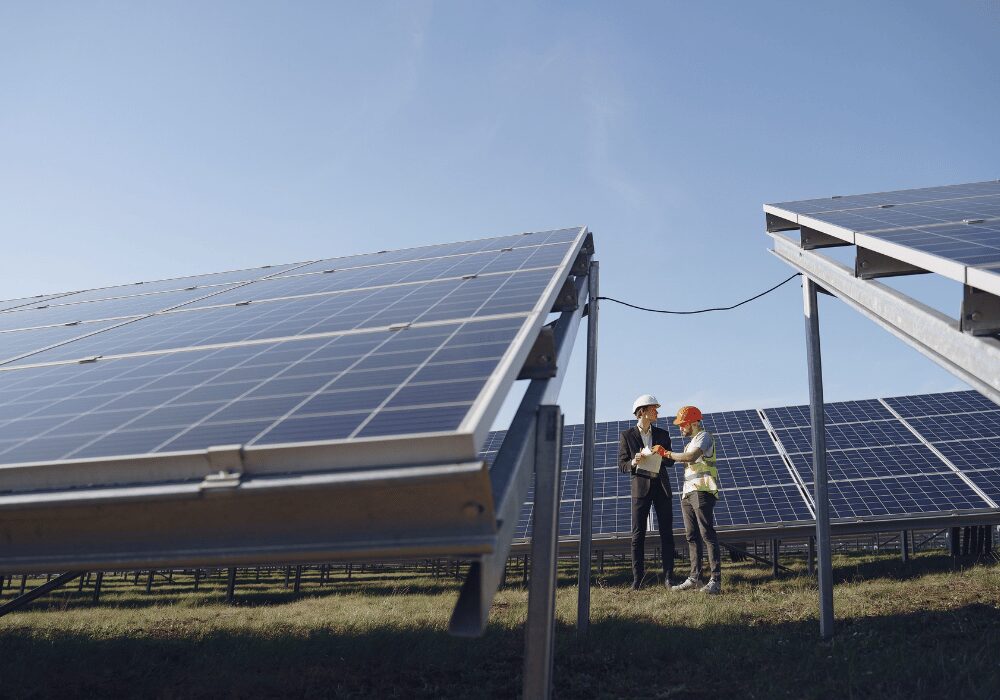 The JSE’s unique position means that while it does not monitor companies outside of listing requirements, it can see how companies are changing within the space. Naidoo says, “We are seeing action. We are seeing a shift from generic boilerplate disclosures that include measurable targets set against strategic goals. This is also driving demand for better quality data. As climate risk becomes more central to a company’s future, reliable data enables investors to compare companies more effectively and invest with greater confidence.”
Naidoo does foresee mandatory reporting based on the current Department of Trade Industry and competition (DTIC)/ Companies and Intellectual Property Commission (CIPC) process, but explains, “South Africa is complex with interlinked social and environmental challenges. Therefore, any move to impose sustainability reporting requirements must be a whole economy approach so that we work towards achieving South Africa’s sustainability goals as a cohesive collective. Hence, we continue to collaborate with regulators and the government to ensure reporting produces benefits. While this is in the future, the JSE continues growing the market, gaining trust within that market while raising awareness that this is for the best interests of the economy, companies, and the environment.”
The JSE’s unique position means that while it does not monitor companies outside of listing requirements, it can see how companies are changing within the space. Naidoo says, “We are seeing action. We are seeing a shift from generic boilerplate disclosures that include measurable targets set against strategic goals. This is also driving demand for better quality data. As climate risk becomes more central to a company’s future, reliable data enables investors to compare companies more effectively and invest with greater confidence.”
Naidoo does foresee mandatory reporting based on the current Department of Trade Industry and competition (DTIC)/ Companies and Intellectual Property Commission (CIPC) process, but explains, “South Africa is complex with interlinked social and environmental challenges. Therefore, any move to impose sustainability reporting requirements must be a whole economy approach so that we work towards achieving South Africa’s sustainability goals as a cohesive collective. Hence, we continue to collaborate with regulators and the government to ensure reporting produces benefits. While this is in the future, the JSE continues growing the market, gaining trust within that market while raising awareness that this is for the best interests of the economy, companies, and the environment.”