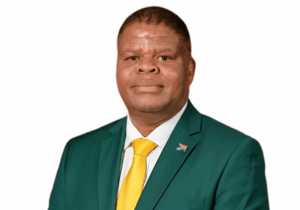

The Deputy Minister of Water and Sanitation, David Mahlobo, has called for a collective approach involving government, communities, businesses, civil society and other stakeholders to address the growing municipal debt owed to water boards and the broader challenges affecting the sustainability of the water sector.
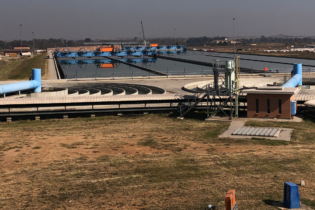
Deputy Minister Mahlobo was speaking during a webinar convened by the South African Human Rights Commission (SAHRC) on Wednesday, 09 September 2026, under the topic: “Municipal debt to water boards: Exploring a human rights centric approach.” The webinar brought together key stakeholders to discuss the growing municipal debt burden, its impact on the sustainability of water boards and the implications for the constitutional right of access to water. Water boards play a critical role in the water value chain by supplying bulk potable water to water services authorities. However, a range of challenges, including poor revenue collection, weak credit control, governance challenges and financial management weaknesses, have resulted in some municipalities struggling to meet their payment obligations to water boards. Municipal debt owed to water boards continues to escalate and amounted to R23.77 billion, excluding current accounts, as of 31 July 2026. The continued accumulation of this debt is placing significant pressure on the liquidity position of water boards, with some entities experiencing severe cash-flow constraints and an increased risk of financial distress. The inability of municipalities to settle their bulk water accounts timeously has consequences that extend beyond the balance sheets of individual institutions. It affects the financial capacity of water boards to maintain, refurbish and expand critical water infrastructure, while also placing pressure on their ability to ensure the continued delivery of sustainable and reliable bulk water services to municipalities.
The webinar sought to examine the causes of the growing municipal debt to water boards, assess its human rights implications and identify corrective measures to address the debt burden.
In his address, Deputy Minister Mahlobo highlighted the need for greater investment in water and sanitation infrastructure, improved water-use efficiency to address water losses, pollution and non-revenue water, stronger financial discipline and reinvestment in critical infrastructure, as well as more effective billing, credit control and enforcement to improve revenue collection across the water value chain.
“Our view is that this matter of water, for the first time, there is a leadership led by the President, where there is clarity. But as government alone, we are not going to resolve the problem. We need a society approach, working with communities who are partners around water use and sanitation. But also working with businesses, and civil society experts, including indigenous communities and traditional leaders,” Deputy Minister Mahlobo said.In closing, Deputy Minister Mahlobo reiterated that addressing municipal debt and the broader challenges facing the water sector requires collective leadership, shared responsibility and decisive action. Through stronger partnerships, responsible water use, sound financial management and decisive action across the water value chain, South Africa can build a more sustainable and resilient water sector that safeguards access to water for present and future generations.