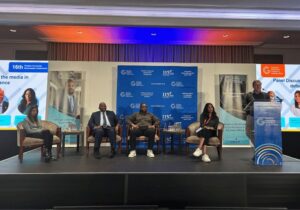
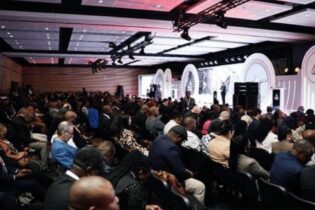
The 16th Premier Corporate Governance Conference examined South Africa’s governance challenges, from municipal failures and water security to accountability.
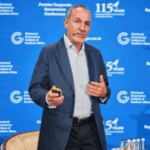
Stephen Sadie, CEO of CGISA
Governance in South Africa’s crisis economy – to use the media newsrooms’ terminology for our current state of affairs – is hiccupping along.
There is an ongoing tug of war between the good governance and the opposing poor governance forces which illustrated how SA’s governance is at a crossroads during the
16th Premier Corporate Governance Conference held in Johannesburg last week (16-17 September).
“Intentional efforts to undermine governance keep South Africa running as a crisis economy. Governance is facing pressure from different ends of the continuum. The ‘good governance’ forces like the judiciary, the media and governance professionals are standing up to the systemic ‘poor governance’ forces that prefer for things to stay put. We represent the efforts for greater accountability, transparency and responsibility across public and private sectors,” said Stephen Sadie, CEO of
CGISA (Chartered Governance Institute of Southern Africa), which hosts the annual conference.
Good governance forces such as investigative journalism, electricity availability, private investment-driven logistical improvements, judiciary’s resilience, whistleblowers’ courage, financial accountability and the ‘Madlanga effect’ are fighting against the stubborn poor governance forces that have plagued SA for over 10 years.
What’s pulling SA into the red are the water poly-crisis, municipal (dis)services, colluding political, police and crime cartels, major pollutants like Sasol, boardroom-based dysfunction including the PIC and Spar, and the (mis)administration of national sports bodies.
More than 200 governance professionals, business leaders, academics, journalists and other stakeholders gathered under the theme “Fault lines and futures: Corporate governance at the crossroads” to examine some of the most pressing corporate governance challenges facing South Africa.
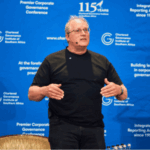
Prof Alex van den Heever from the Wits School of Governance
“We have to get to the underlying causes,” said Prof Alex van den Heever from the
Wits School of Governance. “Meaningful reform of the legislative and procurement frameworks will reshape how government operates and redress the conflicts of interest, strengthen procurement systems and insulate them from political capture. Tackling the root causes of systemic public failure must replace knee-jerk responses to symptoms. This requires societal awareness, accountability and a collective push for stronger governance structures.”
Essential services like water must be protected from exploitation as a cash cow by the tanker mafia and the colluding municipal workers and maintenance teams, said Dr Ferrial Adam from
WaterCAN.
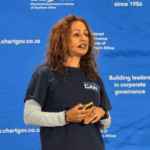
Dr Ferrial Adam from WaterCAN
“The water poly-crisis is a systemic failure of governance, accountability and leadership because we have many components that are part of a solution including plans, technical expertise and science. The economic, environmental and public health poly-crisis is the cost of weak governance.
“What must happen is to close the governance gaps across the system by having accountable government, responsible business and engaged civil society,” said Dr Adam.
The conference heard from a panel of senior journalists about the extraordinary efforts the media makes to expose the daily governance failures happening across the country.
While being bullied and threatened when they speak openly about corruption and other forms of institutionalised crime across government and the private sector, journalists are also aware that the current under-resourcing of editorial media suits the anti-governance brigade. It means less eyeballs following and challenging the issues.
“Just as much as the many delegates who are company secretaries and governance professionals, us in the media are part of the governance ecosystem. We are not the governors but it’s critical that the fourth estate, the media, are able do their job,” said Rob Rose, Editor-in-Chief at Financial Mail.
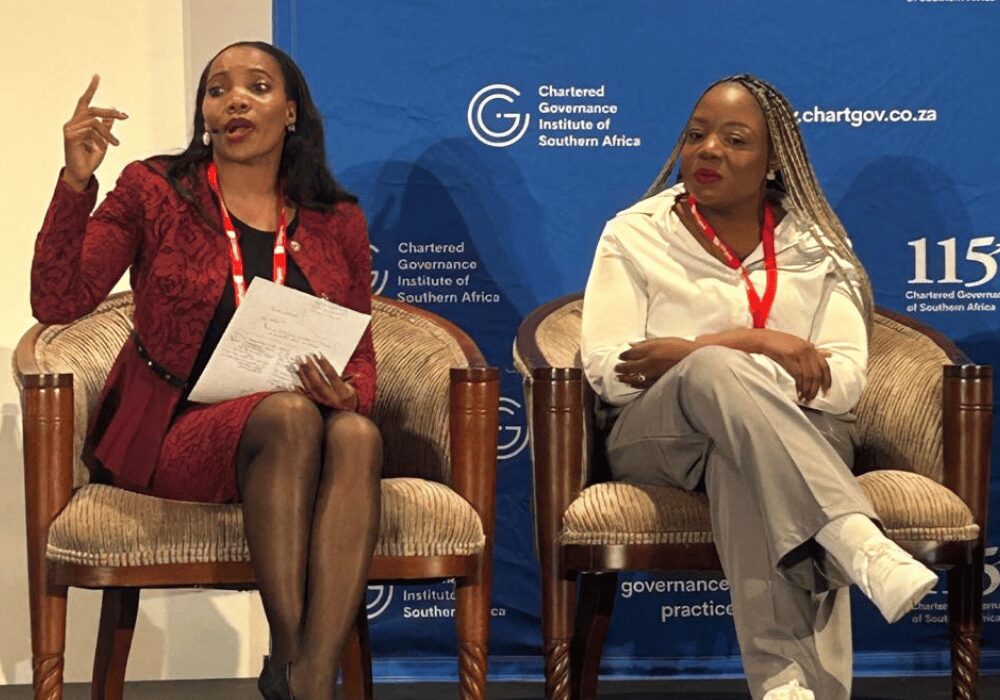
Cosec panel
From navigating obligations to managing the realities of the boardroom, this conversation put the spotlight on the people helping governance move from policy to practice. What happens when the in- and out-of-the boardroom pressure rises? A panel of company secretaries offered words of wisdom to practising governance professionals: to be purpose-driven, apply foresight and have the courage to question and act as soon as governance faulters.
Their role is particularly important because governance failures do not always begin with dramatic acts of wrongdoing. They can take root when processes are repeatedly bypassed, oversight is weakened, warning signs are ignored, or those responsible for challenging decisions remain silent.
Dr Adam said: “One of the biggest myths is that so-called ordinary citizens cannot influence change.” She said the imminent municipal elections on 4 November provide an opportunity for all South Africans to contribute to positive change.
The conference ended with a collective call to action – to ensure that company secretaries and governance professionals make a greater difference to their organisations in building a society based on good governance.