eWASA CEO Keith Anderson sat down with ReSource editor Duncan Nortier and spoke frankly about EPR over the last five years in anticipation of the next phase of EPR in South Africa.

Keith Anderson, CEO of eWASA
Launched in 2021, South Africa’s Extended Producer Responsibility system took a then-voluntary approach and turned it mandatory. These regulations have been a key driver of sector growth, building waste management infrastructure, enabling recycling, and creating meaningful employment.
This is not to say South Africa is cruising smoothly, or that it can rest on the first iteration of the regulatory framework. For
eWASA CEO Keith Anderson, “this is only the beginning, and while EPR has been great, we need to grow the regulations to make it even more effective.”
Looking back at the first five years of EPR implementation, what do you believe are the biggest weaknesses in the current regulatory framework that need to be addressed? Conversely, what was its biggest strength?
The first five years should be viewed as a necessary foundation-building phase. We now have enough experience to see where the weaknesses and gaps are and, importantly, to build from that experience.
The biggest weakness is the uneven implementation of the system. In particular, enforcement against non-compliant producers, or what we often refer to as free riders, needs to be stronger.
There is a fundamental fairness issue here. Compliant producers are carrying costs that their non-compliant competitors avoid. You have companies doing everything correctly, investing the money, paying their fees and fulfilling their obligations, while a non-compliant competitor can place products on the market without carrying the same responsibilities. That effectively penalises companies doing the right thing.
Another major weakness is inconsistent data quality. We are seeing fragmented data, inconsistent reporting between sectors and a lack of standardisation. The fee structure also needs greater transparency. Producers need to understand what they are paying for and how the fee has been calculated.
The biggest strength, however, is that South Africa now has mandatory EPR. It is formal, it is here and it is being built upon. Having a mandatory legal framework creates the foundation for producer accountability, PRO participation, registration, reporting and investment in end-of-life management. The foundation is laid; now we need to build on it.
How should the regulations be improved to ensure that all obligated producers, not just those already engaging with PROs, are contributing to EPR?
The regulations should be strengthened around practical enforceability, with clearer and easier compliance checks.
Registration should be treated as the entry point rather than the end of the process. There needs to be a clearer system for checking who is actually obligated and whether those companies are meeting their responsibilities.
That requires evidence-based data. Government should be able to use registration information and other available information to identify obligated producers and determine whether they are complying.
Voluntary compliance alone does not create a fair system. The objective should not be to punish legitimate businesses. It should be to create a level playing field in which every producer placing an obligated product on the South African market declares accurately, joins or establishes an appropriate compliance scheme, contributes appropriately and reports its performance.
If those things can be measured and meaningful action can be taken against companies that do not comply, the system becomes much stronger.
There is also an important development around public disclosure of non-compliant companies. Government has indicated that, while it is waiting for the necessary authority to issue certain penalties or funds, it is looking at publishing the names of companies that are non-compliant.
That creates reputational risk. Responsible companies are concerned about being associated with non-compliance, and public disclosure can therefore become an important enforcement mechanism.
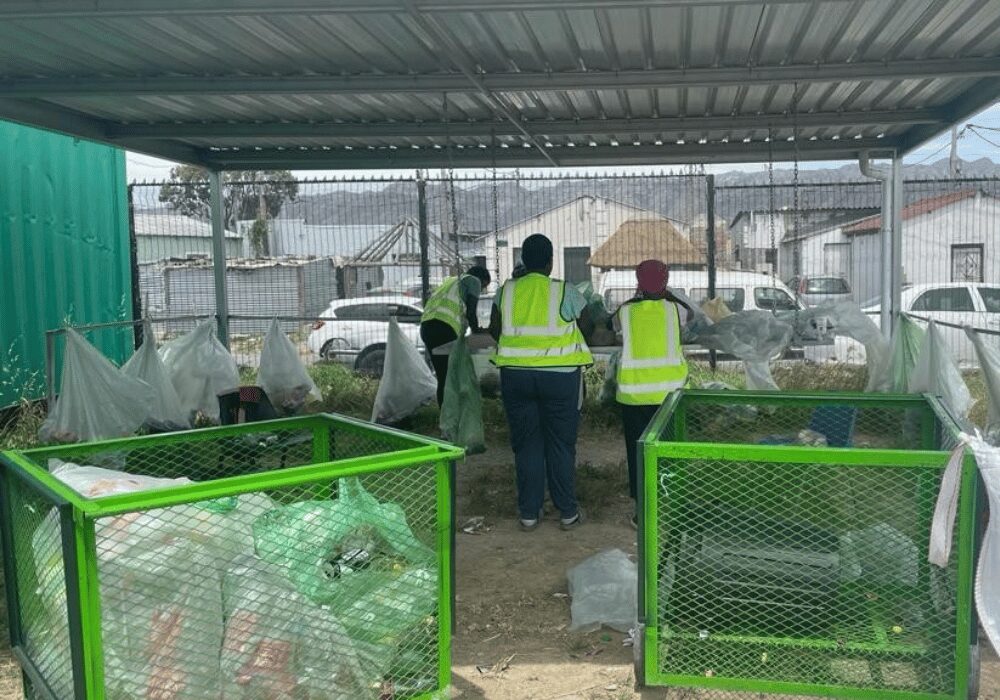
By supporting key areas of the waste value chain EPR enables stable income
South Africa needs to move away from a basic compliance-fee mindset towards a more transparent, change-centred fee structure.
EPR fees need to be sufficient to support the activities that the system is supposed to deliver. That includes collection, transport, sorting, treatment, recycling, refurbishment, recovery, administration, awareness, reporting and the infrastructure required to develop the sector.
At eWASA, we have tried to make this transparent from the beginning. From year one, we have explained how every rand received is spent. The allocation is broken down so that producers can see where the money goes, and that information is published and provided to producers.
The problem is that when PROs compete primarily on price, it can create a race to the bottom. If one organisation charges a significantly lower fee, producers may choose it because of the price rather than its infrastructure, network, services or outcomes.
That is dangerous because EPR must not become a box-ticking exercise. The fees have to support the purpose of EPR.
Interestingly, different PASA, PRO Alliance of South Africa (not the paper and packaging PRO Alliance of South Africa) members have independently developed fee structures through their own research and mechanisms, and those fee structures are broadly similar. That suggests there is a common underlying cost structure within the industry.
One possible way of changing the competitive dynamic would be to remove price as the primary differentiator. If every PRO charged a hypothetical flat rate, producers would have to choose between PROs based on their ability to deliver value, infrastructure, networks and outcomes rather than simply choosing the cheapest option. That would be a game changer.
What changes are needed to improve the quality and consistency of data on products placed on the market, collection rates and recycling outcomes?
Data quality needs to become one of the core reform areas for the next five years.
One of the key problems is that different participants have developed their own approaches to categorising and reporting information. We need standardised product categories, weight classifications, material definitions and declaration templates across the sector.
Consistent compliance requires consistent reporting. There also needs to be a clearer relationship between what is placed on the market and what subsequently happens to those products. We need to reconcile products placed on the market with products collected, sorted, recycled, recovered, exported or sent to landfill.
If the integrity of that evidence can be established, decisions can be based on actuals rather than estimates.
PROs and producer-run schemes should be required to retain auditable evidence and submit information through a more consistent digital reporting system. Independent audits, site verification, common reporting definitions and regular quality checks would help ensure that targets and policy decisions are based on credible information.
Better data also supports better fee structures and enforcement. If we know what is being placed on the market, what is being collected and what is ultimately being recovered, we can make decisions based on evidence rather than fragmented information. This is one of the key areas PASA will be raising with government.
How can government, PROs and industry better address the informal sector and ensure that waste pickers, collectors, refurbishers and smaller recyclers are properly integrated into the EPR system?
The informal sector should be treated as part of the collection infrastructure, rather than as a side issue. That is one of the major lessons of the first five years.
The next phase should focus on turning that principle into a practical operating model. That means registration pathways, fair collection fees, EPR training, access to collection points, safe sorting areas, links to PRO-funded projects and fair contracting arrangements with collectors, refurbishers and smaller recyclers.
Should South Africa move towards stronger eco-modulation of EPR fees, where producers pay more for products that are difficult to repair or recycle and less for products designed for circularity?
Yes, but it should be phased in carefully and supported by reliable data. Eco-modulation can become an important design signal. Products that are easier to collect, separate, repair, reuse, refurbish or recycle should not necessarily carry the same fee exposure as products that create higher downstream costs and environmental risks.
In principle, it is a logical development of EPR. It would move EPR beyond simply paying for waste management and make it a mechanism that influences product design. That is an important shift because EPR should ultimately move up the value chain.
However, this can only work if the data is reliable enough to support the differentiation. The system needs clear criteria. These could include recyclability, hazardous components, repairability, recycled content, material complexity and the existence of end markets.
Producers would also need sufficient guidance and transition time.
The current system places significant administrative and reporting requirements on producers and PROs. What could be simplified or standardised without weakening accountability?
The system is heavily paper-driven, but simplification should come through standardisation rather than reduced accountability.
Producers and PROs would benefit from common definitions, common sector templates, common declaration formats, common reporting calendars, standardised product classification rules and consistent audit evidence requirements.
At the moment, different organisations can approach similar audits in very different ways. One organisation may conduct a highly complex audit while another may assess substantially less information.
There needs to be a common standard. A single digital reporting pathway, or better integration between the relevant government and PRO reporting systems, could reduce duplicate administration and misinterpretation while improving the quality and integrity of the information being submitted.
What should not be weakened is the requirement to declare accurately, fund appropriately, keep records, report performance and provide auditable evidence.
The objective is to simplify compliance, not simplify avoidance. Standardisation should make it easier for companies to comply correctly while maintaining the evidence and accountability that make the system meaningful.
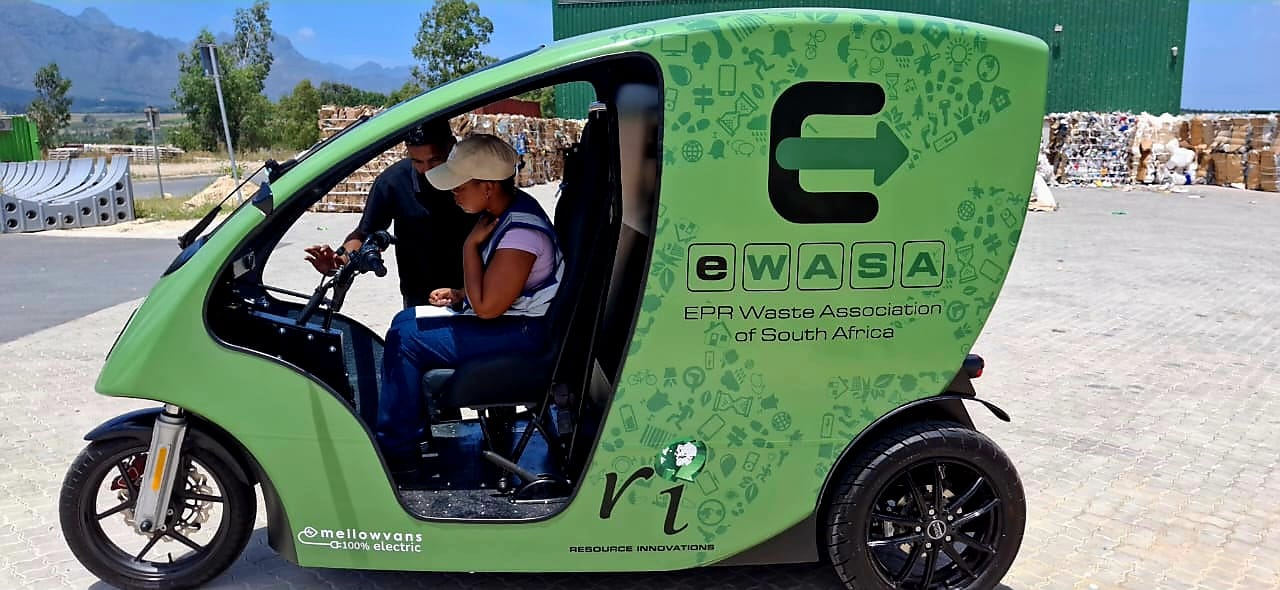
PROs help build the infrastructure around the circular economy, priortising innovation in spaces that are neglected such as collection
Municipalities should become formal implementation partners in EPR, particularly where EPR-funded activities overlap with municipal waste services. This requires closer cooperation between municipalities, PROs and industry, with practical local agreements clearly defining responsibilities, streamlined processes, coordinated infrastructure, data sharing and community education.
Municipalities could also make greater use of vacant or underutilised buildings and land as buy-back centres or other recycling facilities, helping to formalise the informal sector while creating jobs and improving collection efficiency. PROs should not be expected to carry municipal obligations, nor should they unnecessarily duplicate functions already performed by municipalities. Instead, the focus should be on creating a coordinated local operating model that makes the system more effective and cost-efficient.
There are already examples of what can happen when municipalities, PROs and industry work together. Through collaborative initiatives, collection volumes can move from kilograms to tonnes because participants are working together rather than operating in isolation. This cooperation can also support the integration of waste pickers, collectors and smaller recyclers into a more formal system, while allowing municipalities to benefit from improved collection and potentially lower waste-management costs.
Over the next five years, the relationship between PROs, municipalities and metros therefore needs to become much closer, with existing infrastructure and resources used more effectively to build a stronger EPR system.
Beyond increasing collection and recycling rates, what regulatory changes are needed to make EPR drive product redesign, repair, refurbishment, reuse and the development of domestic secondary-material markets?
The regulation needs to place stronger emphasis on circular design rather than focusing primarily on end-of-life recovery.
Existing EPR requirements already point in this direction through requirements around life-cycle assessment, material minimisation, design for reuse and recovery, recycling and reducing environmental toxicity. The next phase should strengthen those requirements. That could include stronger repairability and refurbishment pathways, reuse and refill targets where appropriate, incentives for recycled content, support for domestic beneficiation and stronger demand for secondary raw materials.
EPR should help build markets for recovered resources so that materials can be processed and used productively within the local economy.
South Africa already has facilities capable of processing certain materials. There is therefore an opportunity to use policy and EPR to support the development and utilisation of that domestic capacity rather than simply assuming that recovered materials must be exported.
The argument that South Africa does not have the facilities to process materials should not automatically become a reason to continue exporting them. Where capacity exists, the next question should be how policy can support markets that allow that capacity to operate effectively.
There is also a broader economic consideration. Exporting materials can make commercial sense for individual businesses because international markets can offer dollar- or euro-based pricing. But there can be a longer-term cost to the local economy when valuable resources consistently leave the country rather than being processed domestically.
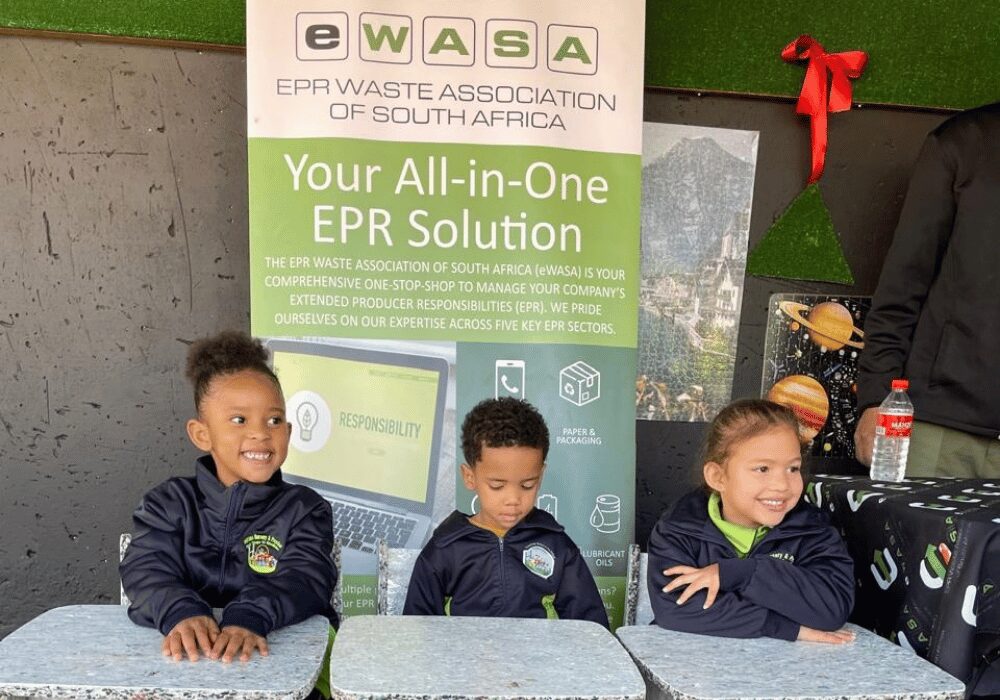
EPR drives up recycled material’s visibility, and can be used for social good
The first priority would be universal participation and enforcement so that free riders cannot undermine compliant producers.
The scale of free riding appears to be considerably greater than initially anticipated. An independent study commissioned by eWASA has provided a clearer picture of the issue, including information gathered across different government departments.
The second priority would be improving data integrity and fee transparency. Fees need to reflect real end-of-life costs, and performance needs to be auditable. Without credible data, it becomes much harder to establish appropriate fees, measure outcomes or make sound policy decisions.
The third priority would be to use EPR properly as a circular economy instrument. That means strengthening eco-modulation, product design, municipal cooperation, informal-sector integration and the participation of obligated producers.
If those elements are working together by 2030, success would mean an EPR system visibly delivering measurable outcomes.
Waste pickers and SMEs would be properly integrated. Municipalities and PROs would have clear local operating models. EPR fees would fund measurable recovery, refurbishment, reuse and recycling. Producers would be participating fairly, and the data would be credible enough to guide future targets and investment.
The next phase of EPR must be fair, enforceable and evidence-based. South Africa has the regulatory foundation. The opportunity now is to turn compliance into a mature circular economy system that rewards responsible design, funds real recovery and includes the people and enterprises already doing the work on the ground.