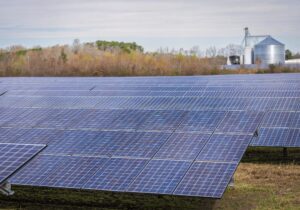

As South Africa’s technological and renewable energy transitions accelerate, electronic equipment and solar photovoltaic (PV) systems have shifted from niche installations to core infrastructure across commercial, industrial, and residential sectors. With vast volumes of electronics active nationwide, the e-waste management conversation must mature alongside the rapid pace of adoption.
The fundamental challenge facing the sector is no longer simply recognising the need to divert items from landfills; it is establishing scientifically validated, scalable frameworks for full lifecycle stewardship across all electronic equipment streams. Extended Producer Responsibility (EPR) regulations have introduced a vital catalyst into this landscape, encouraging producers, importers, and recyclers to evaluate the complete operational lifespan of their products. Central to this regulatory philosophy is the need to conduct thorough Life Cycle Analyses (LCAs) right from the front end. A comprehensive LCA requires analysing the exact chemical and structural composition of equipment prior to deployment. By characterising trace elements, material breakdown, and exposure profiles over the entire life cycle of any electronic asset, including consumer hardware, industrial electronics, and solar infrastructure, the sector can design targeted operational interventions that mitigate ecological and health risks long before equipment reaches end-of-life. Translating these insights into practical industry standards requires moving away from fragmented waste conversations. Instead, the sector must adopt an integrated industrial ecology framework, one that connects professional decommissioning protocols and global testing standardisation with advanced materials engineering.Upstream decommissioning logistics and the global application of testing standards
A critical yet frequently overlooked phase in the equipment lifecycle occurs during physical decommissioning, removal, and initial sorting. Substandard handling techniques during uninstallation often result in severe mechanical damage, micro-cracking, or structural glass compromise, which complicates downstream processing and transforms salvageable assets into hazardous scrap. Establishing professional decommissioning standards is essential to preserve structural integrity and protect handling personnel from electrical and physical hazards. Once equipment is safely removed and transported to processing facilities, a major structural vulnerability in the global circular economy emerges: the under-utilisation of existing international testing benchmarks. International testing standards already exist to govern electrical safety, insulation resistance, wet leakage currents, thermal integrity, and mechanical stability. However, these standards are currently not widely applied or enforced on a global scale. Without the widespread adoption and enforcement of these established testing protocols, there is a pervasive risk that substandard, degraded, or electrically unsafe hardware will re-enter supply chains, creating severe fire, safety, and operational hazards for end-users. Advocating for the broader global application and enforcement of these existing standards is essential across all electronic streams. Enforcing established benchmarks ensures that equipment considered for secondary deployment meets non-negotiable safety criteria, effectively preventing substandard devices from compromising market trust or public safety.Precision materials engineering: Chemical matrix integrity and amorphous safety

Understanding the safety and stability
of solar sand requires examining
the precise atomic structure of the
original glass

In solar PV modules, the glass fraction accounts for more than 80 percent of total mass. To transform this recovered glass into a usable secondary raw material, the extracted panels undergo specialised mechanical crushing, milling, or granulation processes. This mechanical processing reduce the solid glass sheets into a fine, granular material commonly referred to as solar sand.
Understanding the safety and stability of solar sand requires examining the precise atomic structure of the original glass. Solar panel glass is a bulk oxide matrix containing an inorganic, vitrified amorphous network composed primarily of silicon dioxide, calcium oxide, magnesium oxide sodium oxide, and aluminium oxide. The trace elements integrated into this network are either functional dopants, added specifically during manufacturing to engineer the optical clarity and electrical performance required for maximum efficiency or contaminants introduced during the manufacturing process. From an occupational health perspective, solar sand offers a profound safety advantage over natural crystalline quartz sand, such as river sand. Because the silicon dioxide within solar glass exists strictly as an inorganic vitrified amorphous network rather than crystalline silica, processing and handling solar sand eliminates the silicosis risk inherent to respirable quartz dust, without introducing any additional hazardous properties. Evaluating the material’s health hazards according to the Globally Harmonised System of Classification and Labelling of Chemicals (GHS) confirms that this amorphous structure fundamentally alters its hazard classification, establishing solar sand as a significantly safer alternative to natural crystalline sand for workers and handling technicians. When solar sand is incorporated into secondary value-added products, such as concrete products, chemical stability profiling demonstrates robust material encapsulation. When these final composite products are subjected to rigorous leaching tests under harsh acidic environments, trace elements and heavy metals, including antimony, lead, and barium, are locked into the binder matrix of the concrete product. Because these elements are firmly stabilised within the product matrix, they do not leach into surrounding environments. The physical particle geometry and grain size distribution achieved during milling dictate the specific engineering parameters for where the material can be effectively utilised and where it cannot. By understanding these geometric and physical constraints, processed solar sand can be safely directed into appropriate industrial applications, civil aggregates, and construction materials, providing a scientifically sound, long-term material sink for end-of-life glass.An integrated vision for valorisation of waste

By 2030, South Africa will generate
an estimated 750,000 tonnes of
electronic waste