Discover how Protea Chemicals is strengthening Africa’s water security through locally manufactured treatment chemicals, innovative coagulant formulations and technical expertise.

Joyce Jabane Bauwens, general manager of Water Care at Protea Chemicals
As Africa grapples with deteriorating raw water quality, increasing water scarcity and growing pressure on treatment infrastructure, effective coagulation and flocculation are more important than ever. Protea Chemicals’ Water Care business is combining local manufacturing, innovative chemical formulations and technical expertise to strengthen water security across the continent.
As part of the Omnia Group, Protea Chemicals is responding to these challenges through its Water Care business, which supplies a comprehensive range of specialised chemicals for drinking water and wastewater treatment. Central to this offering is its locally manufactured Zetafloc range of coagulants, designed to meet increasingly complex water treatment requirements.
“Produced at our Mobeni facility in Durban, the Zetafloc range has built a strong reputation for quality, reliability and treatment performance. It’s a renowned brand,” says Joyce Jabane Bauwens, general manager of Water Care at Protea Chemicals.
Zetafloc includes highly effective polymeric coagulants,and inorganic coagulants, producing speciality blends with bespoke chemistries for specific water treatment requirements. Aluminium chlorohydrate acts as an effective binding component when combined with other coagulant chemistries, allowing Protea Chemicals to develop speciality blends tailored to specific water treatment requirements.
“The organic coagulants are more complex to manufacture because they require specialised polymer chemistry, precise control of chemical reactions and sophisticated manufacturing processes. Protea Chemicals Water Care is the only manufacturer of Dadmac Monomer in Africa, producing PolyDADMAC, a critical polymer for water treatment,” explains Jabane Bauwens.
Zetafloc products are certified under NSF/ANSI/CAN 60 for use in drinking water treatment, providing independent assurance that they meet the applicable requirements for drinking water treatment chemicals.
Quality control begins with the raw materials themselves. “Protea Chemicals sources raw materials from both South African and global suppliers. All raw materials must meet strict specifications, adhering to drinking water standards. Suppliers cannot simply be onboarded without undergoing a verification process, ensuring that the materials used meet the Omnia and industry quality and certification requirements,” adds Jabane Bauwens.
Strength in local supply

Water treatment chemicals should increasingly be recognised as a strategic component of water security rather than simply a consumable purchased on price
This stringent approach to quality control is reinforced by the company’s local manufacturing capabilities. “A key differentiator for Protea Chemicals Water Care is that we do not import our treatment chemicals. By manufacturing our own products, we have complete oversight of their chemical composition, quality and performance. We understand how they behave and react during treatment, allowing us to confidently stand behind their effectiveness,” states Jabane Bauwens.
She adds that local manufacturing of water treatment chemicals is about more than supporting South African industry. “It is a matter of water security. Municipalities, water boards, mines and industrial operations depend on a continuous supply of chemicals to treat water, and any interruption can have serious consequences. As a local manufacturer, we have control over product quality, formulation and availability.”
As global supply chains face geopolitical uncertainty, shipping disruptions and fluctuating raw material prices and availability, South Africa’s ability to manufacture critical water treatment chemicals locally provides an important safeguard to Africa’s water security.
Protea Chemical’s manufacturing capability is supported by Omnia’s procurement expertise, global supplier relationships and financial resources, strengthening its ability to maintain continuity of supply. Its reach extends beyond South Africa, supplying water treatment chemicals to customers across the African continent. The company exports to neighbouring countries, including Namibia, Botswana, eSwatini, Malawi and Zambia, and has an established presence West Africa.
Trends in flocculent and coagulant use
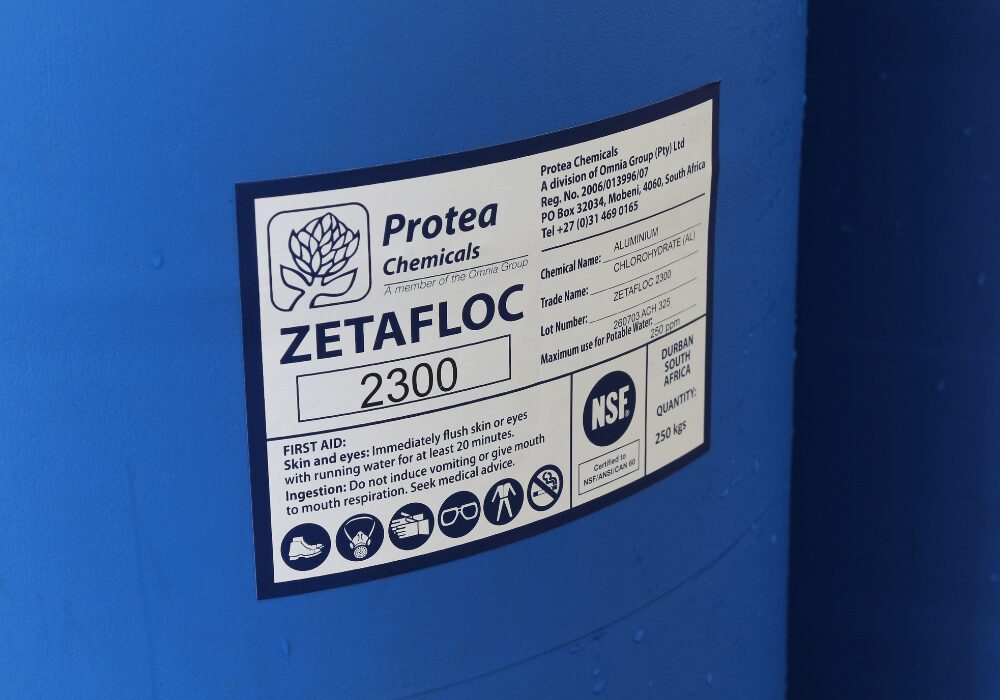
The Zetafloc range has built a strong reputation for quality, reliability and treatment performance
Protea Chemicals Water Care is seeing growing demand for application-specific coagulant formulations as customers move away from a one-size-fits-all approach. As the public and private sectors increasingly diversify their water sources through groundwater abstraction, desalination and water reuse, conventional off-the-shelf treatment chemicals may no longer be suitable in all instances. Different water sources present unique treatment challenges, creating a growing need for tailored chemical formulations that address specific water quality characteristics. Speciality and blended Zetafloc products provide a platform for developing solutions around these changing customer requirements.
Wastewater from different industrial processes can have vastly different chemical characteristics. Consequently, a coagulant that performs well in one application may be unsuitable for another.
One of the biggest changes facing water treatment plants is the increasing variability and complexity of raw water. Many plants were originally designed to treat water with relatively predictable characteristics. Today, operators must contend with seasonal changes, increased nutrient loading, algal growth, higher concentrations of organic matter and pollution from various sources.
Heavy rainfall can introduce significant quantities of suspended solids and organic material into rivers and dams, while drought conditions can concentrate contaminants and change water chemistry.
Jabane Bauwens says these changes are fundamentally influencing the development of coagulants. “The traditional approach of relying on a standard chemical throughout the year is therefore becoming less suitable for some treatment applications. Climate change, changing raw water characteristics, advances in raw material chemistry and increasingly stringent water quality requirements are all influencing this development.”
Changing drinking water standards are also influencing the development of coagulant formulations. Polyamines, for example, are subject to strict controls relating to chemical impurities and permitted dosing levels because of the potential presence of residual substances such as epichlorohydrin.
For Protea Chemicals, this has created an ongoing need to develop and refine its formulations.
Jabane Bauwens says the Mobeni manufacturing operation has been established for more than two decades, during which time the Zetafloc portfolio has evolved considerably. Some formulations have been discontinued as market requirements changed, while new products have been developed to address emerging water quality challenges.
“The biggest part of our innovation is formulation, based on the quality of water, source of water you are treating, required treatment outcome and also reducing the cost of treatment. When we develop formulations, we don’t cut corners – Zetafloc is a very strong brand,” she says.
Looking beyond the price per kilogram
With chemical expenditure representing a significant operating cost for many treatment plants, procurement decisions frequently focus on the price per kilogram.
However, Jabane Bauwens argues that this approach can overlook the true cost of producing treated water. “Coagulation has an impact on the entire treatment process. The choice of coagulant can influence downstream treatment efficiency. A product with a higher purchase price may require a substantially lower dosage, making it more economical than a cheaper alternative.”
Different coagulant chemistries can also influence sludge characteristics, ultimately affecting its handling and disposal requirements.
“Rather than focusing on price per kilogram of a product, consider the overall treatment cost that includes chemical consumption, operational performance, downstream treatment requirements and sludge management,” says Jabane Bauwens.
She adds that simply increasing the dosage of an existing product is not always the best solution when water quality changes. “In some circumstances, switching to a different chemistry or introducing a speciality blend can deliver better performance at a lower overall cost. This is particularly relevant for municipalities and water boards seeking to optimise existing infrastructure and improve treatment efficiency without major capital expenditure.”
The importance of getting the dosage right
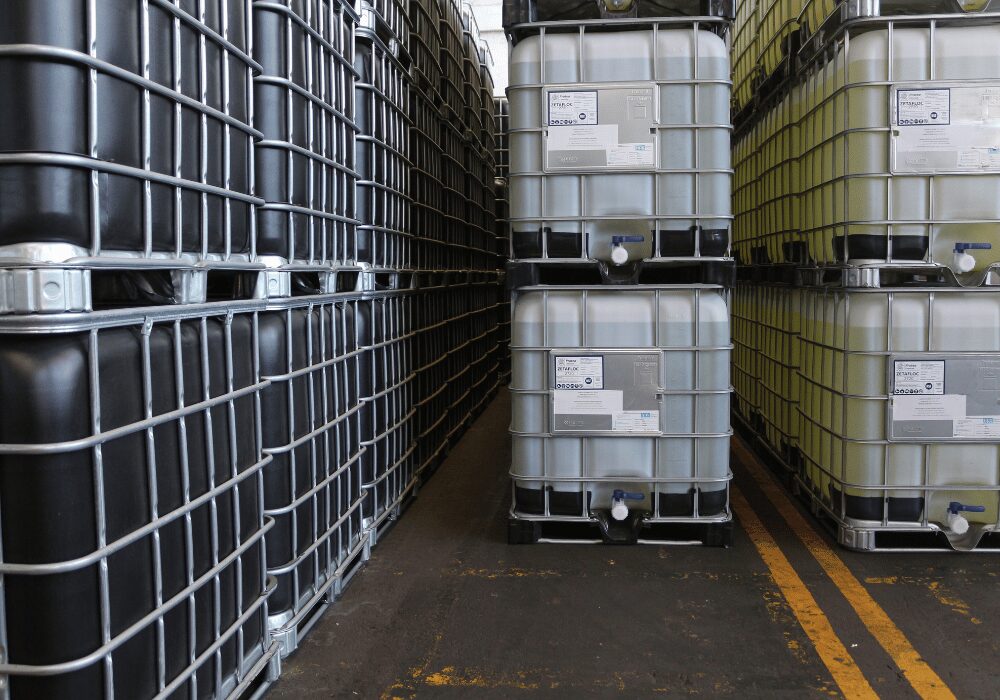
Zetafloc products are certified under NSF/ANSI/CAN 60 for use in drinking water treatment, providing independent assurance that they meet the applicable requirements for drinking water treatment chemicals
Selecting the correct coagulant is only part of achieving effective treatment. Dosage optimisation is equally important.
Jabane Bauwens warns that both overdosing and underdosing can have significant operational and financial consequences. “Underdosing prevents sufficient particle destabilisation and floc formation, leaving more suspended material in the water. This places additional pressure on downstream filtration systems, which must remove particles that should have been captured earlier in the treatment process. Your filters have to do what should have been done at the coagulation stage.”
Overdosing presents a different set of challenges. Apart from unnecessary chemical expenditure, excessive dosing can increase sludge production and, depending on the chemistry, contribute to elevated residual chemical concentrations in treated water.
For drinking water applications, maximum permitted chemical dosages are particularly important. NSF certification specifies maximum use levels for certified products, helping control potential chemical contaminants introduced during treatment.
Jabane Bauwens emphasises that regular optimisation is essential because raw water quality is not static.
Technical support beyond chemical supply
Protea Chemicals Water Care’s approach to coagulation and flocculation extends beyond manufacturing and delivering products.
The company works closely with plant operators to assess raw water characteristics, select appropriate formulations and optimise chemical dosing.
Before recommending a coagulant, its technical teams typically evaluate parameters such as turbidity, pH, alkalinity, suspended solids, organic matter and colour .
Potential products and dosages are then assessed through jar testing where different chemistries and dosages to be compared according to floc formation, settling behaviour and resulting water quality.
Where a new product demonstrates improved performance, further plant trials can be undertaken before full implementation.
Much of Protea Chemicals’ sales and technical team comprises engineers and professionals with practical water treatment experience, including individuals who have operated treatment plants.
Jabane Bauwens, herself a chemical engineer , believes this experience is essential when recommending changes to established treatment programmes.
“Credibility is everything. The bulk of our sales team comes from this industry. Some of them operated the plants, so we have that credibility that gives a customer comfort.”
Regular technical engagement allows dosing programmes to be adjusted as raw water conditions change, helping plants maintain treatment performance while controlling chemical consumption.
As Africa faces mounting water security challenges, Protea Chemicals is drawing on its local manufacturing capabilities, formulation expertise and technical support to help treatment plants produce more water, more efficiently, from increasingly challenging sources.
Jabane Bauwens believes that water treatment chemicals should increasingly be recognised as a strategic component of water security rather than simply a consumable purchased on price.
“Ultimately, effective coagulation and flocculation is not simply about removing particles from water. It is about protecting downstream infrastructure, reducing operating costs, improving treatment reliability and ensuring that more water can be treated safely from increasingly challenging sources.”
And for Jabane Bauwens, maintaining South Africa’s ability to manufacture the chemicals that make this possible is fundamental to Africa’s long-term water security.