
Water restrictions will reduce domestic, industrial and irrigation allocations in the Western Cape as below-average rainfall and El Niño forecasts raise water security concerns.
Key figures
- 72.5% – Combined dam storage on 2 November 2026
- 84.4% – Storage during the same period in 2025
- 7% – Domestic and industrial allocation reduction
- 15% – Irrigation allocation reduction
- 56.8 million m³ – Total annual water allocation reduction.
Water Security Remains A National Priority
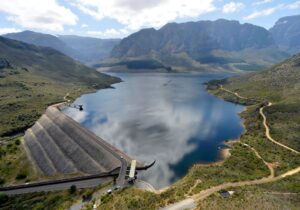
Our Water security at National level is in the Balance, there is no crisis on Bulk Water Resource in the Country whilst there are Local deficit like droughts and high non-Revenue Water in some areas. The Western Cape Water Supply System is the lifeblood of economic and social development in the Province. It supplies water to the City of Cape Town, the West Coast region, the towns of Stellenbosch, Paarl, Franschhoek and Wellington, as well as numerous agricultural users who contribute significantly to food production and economic growth in the region and nationally. Protecting this system is therefore not only a water management responsibility but also a socio-economic imperative. The System consists of six interconnected dams, including Upper and Lower Steenbras, Theewaterskloof, Berg River, Wemmershoek and Voëlvlei dams. Its total storage capacity is approximately 898.2 million cubic metres, with the accessible storage considered in the operational analysis amounting to approximately 826 million cubic metres. As at 2 November 2026, combined storage in the Western Cape Water Supply System stood at 72.5% (646.5 million cubic metres) compared to 84.4% (694 million cubic metres) during the same period in 2025. This decline reflects a significant reduction in available water in some places. The Province is in a less favourable position than in recent years. While the major dams remain at acceptable levels overall, some key components of the system have recorded significant declines compared to the previous year. Storage levels remain significantly above those experienced during the severe drought period of 2016-2017; yet, the current water storage is below the preferred operational threshold of 80% and approximately 11.9 % points below the ten-year average of 84.49%. This reduction in storage levels is primarily attributed to below-normal rainfall experienced during 2026 winter rainfall season. The indicative rainfall trends for the Western Cape Water Supply System indicate that the rainfall received during the 2024/25 and 2025/26 rainfall periods were 722.7 mm and 752.8 mm, respectively which is below the long-term average of 964 mm. The risk analysis for the systems in the summer rainfall areas were conducted in May 2026 which is the end of their rainy season and the decision date for these systems. The results of the analysis did not indicate water supply violations from the water resource perspective thus did not require any restrictions to be imposed on these systems, except for localized infrastructural constraints from the water supply side.Scientific Analysis Points To Increased Risks
The annual analysis indicates that the system remains operationally stable and capable of supplying current water requirements. However, it also highlights emerging risks that require careful management and require us to act now to protect this precious resource. The Department’s Annual Operating Analysis considered current water use, future demands, dam storage levels, rainfall trends, infrastructure constraints and long-term system reliability. The assessment found that:- Below-normal rainfall was experienced during the latter part of the 2026 winter rainfall season.
- Several dams within the system continue to show declining storage trends.
- Climate forecasts indicate a strong to extreme El Niño event, which may result in higher temperatures, increased evaporation and reduced runoff into dams.
- Future water security could be compromised if current demand reduction measures are not strengthened.
Precautionary Measures To Protect Water Security
The Department of Water and Sanitation expresses sincere gratitude to the water users within the Western Cape Water Supply System for optimal use of the water resource and for not using their full allocation, thereby requests the water users to stay within their current water usage. Based on the scientific analysis and recommendations, the Department will implement precautionary measures aimed at protecting the long-term sustainability of the Western Cape Water Supply System.
The restrictions include:
- A 7% reduction in domestic and industrial water allocations, equivalent to 27.2 million cubic metres per annum.
- A 15% reduction in irrigation water allocations, equivalent to 29.6 million cubic metres per annum.
Government Continues To Invest In Water Security
Our government remains committed to expanding water supply infrastructure and strengthening the resilience of the province’s water resources. Several major infrastructure projects are progressing and will contribute significantly to long-term water availability, including amongst others: The Raising of Clanwilliam Dam wall Project, which remains one of the largest water resource infrastructure projects currently under construction in South Africa. Once completed, the Clanwilliam Dam Project will enhance water availability for communities, agriculture, and economic development in the Cederberg Local Municipality, West Coast District Municipality, and Matzikama Local Municipality. I recently visited the Clanwilliam Dam construction site on the 07 November 2026 and was encouraged by 40% progress achieved. These projects represent a significant investment in the future of our people and our economy. They are essential to ensuring that future generations have a reliable and sustainable water supply.In addition, the Department and its partners continue to implement water conservation programmes, repair aging infrastructure, reduce water losses, and develop additional water sources where required.
Saving water, a collective responsibility
Water conservation is no longer a temporary response to drought. It must become a permanent feature of how we manage this precious resource. Therefore, the Department calls for intensified Water Conservation and Water Demand Management (WCWDM) measures across all sectors. We urge municipalities, businesses, industries, agricultural users and households to continue using water efficiently and responsibly. A collective effort is required to reduce the average daily demand for water. Citizens are urged to observe municipal water-use restrictions, and municipalities must implement restrictions and enforce by-laws. Residents are encouraged to report water wastage and violations of municipal water-use by-laws to their respective municipalities for investigation and appropriate action. The Department of Water and Sanitation will continue to closely monitor storage levels, climatic conditions and water demand trends throughout the year. Should conditions deteriorate, the Department will not hesitate to implement the necessary measures to protect essential water supplies and safeguard the interests of all users, particularly vulnerable communities whose basic water needs must always remain our primary concern. The status of the water supply systems at a national level is summarised in the table below: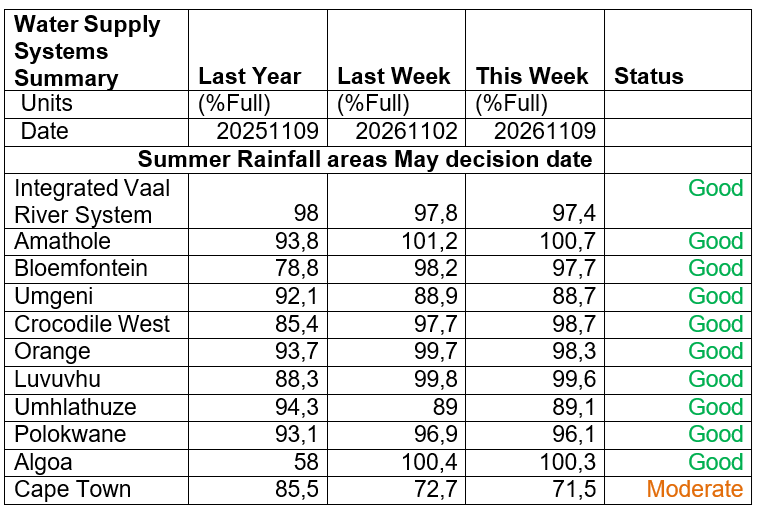
Table 1: State of Storage for Water Supply Systems in the country
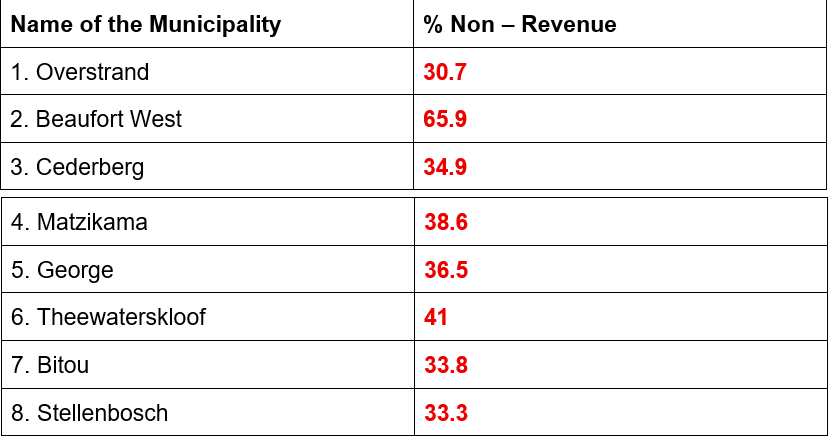 Together, through prudent management, cooperation and responsible water use, we can strengthen the resilience of the Western Cape Water Supply System and protect this critical resource for years to come.
“Let us act now, not when our dams are empty. By working together, we can secure water for our communities, our economy and future generations.”I thank you.