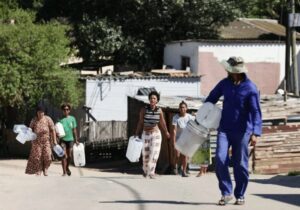

The Western Cape’s low dam levels and the forecast dry, hot summer have prompted water restrictions, as confirmed by the Minister of Water and Sanitation, Pemmy Majodina, who said they will be implemented as soon as they are gazetted.
According to News24, the province will face restrictions that reduce its water allocation by 7%, while farmers’ allocation will be cut by 1 5%.
“These measures are intended to protect strategic water reserves, strengthen resilience against future droughts, and ensure that sufficient water remains available for households, economic activities, and essential environmental requirements,” said Majodina while briefing the media on the status of water security in the Western Cape.According to the Department of Water and Sanitation’s (DWS) assessment, the province’s dam levels were at 72.5% at the start of November – compared to 84.4% at the same time last year. Business Day reports that the department explained that low dam levels resulted from below-average winter rainfall. Dam levels fell after two below-average rainfall seasons: 722.7 mm (28.5 inches) in 2024/25 and 752.8 mm (29.6 inches) in 2025/26, against a long-term average of 964 mm (38 inches), per Reuters.

Government modelling showed the risk of water shortages and mandatory restrictions would rise substantially from 2027 onwards if users kept drawing their full allocations.
In light of this, the City of Cape Town has urged residents, businesses and visitors to use water sparingly. The South African Weather Service (SAWS) warned that South Africa is likely to experience below-normal rainfall and above-normal temperatures as a strong El Niño event develops in the Pacific Ocean.“It should be noted that the expected very strong 2026/27 El Niño event, combined with global warming, will likely result in 2027 being the warmest year ever recorded. The 201 5/1 6 very strong El Niño event brought unprecedented heatwaves to the southern African region,” the weather service said.This article was originally posted on bizcommunity.com and is republished here under a Creative Commons license. Read the original article here.