
Integrated planning, infrastructure maintenance, and innovation are essential to creating safer, more reliable and resilient transport networks that support South Africa’s economic future.
South Africa’s transport networks are fundamental to the country’s economic competitiveness, employment creation, spatial transformation and regional trade. They connect people to jobs, education, healthcare, and essential services, while enabling businesses to access suppliers, labour, and markets.
Yet the sector continues to face significant pressures. Rising costs, supply chain disruptions, changing trade routes and fuel-price volatility affect households, public transport operators and the freight and logistics industry alike. These challenges are compounded by deteriorating infrastructure, congestion, safety concerns, affordability constraints and uneven access to reliable public transport. As South Africa marks Transport Month, we have an opportunity to reflect on what it will take to build a transport system that serves the country’s needs today while preparing for tomorrow’s demands. The answer is not simply to build more infrastructure. We need a transport system that is integrated, safe, affordable, financially sustainable and resilient, with the capacity to support economic growth rather than constrain it.Planning transport as an integrated system
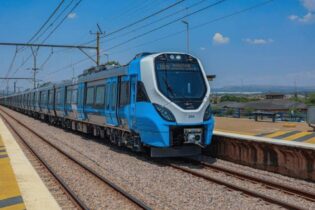
People and goods do not experience transport as a collection of separate projects or institutions. They experience a journey, a supply chain or a connection between a community and an economic opportunity. Effective transport planning must therefore bring together rail, roads, buses, minibus taxis, ports, aviation, freight, non-motorised transport and land-use planning. These elements must work together to deliver a connected, efficient and accessible network. The recovery of passenger rail services illustrates the importance of restoring affordable, high-volume public transport. However, rail cannot operate in isolation. It must be supported by reliable road-based public transport and safe pedestrian access, enabling commuters to complete their journeys efficiently. The same principle applies to freight. Efficient movement of goods depends on effective connections between rail infrastructure, ports and road networks. Reforms in the rail and port sectors, including greater private-sector participation, offer opportunities to improve capacity, investment and operational efficiency. Ultimately, integrated planning must be measured by its outcomes. Does it connect people to opportunity? Does it improve the efficiency of supply chains? Does it enable businesses to operate more competitively? These are the questions that should guide transport investment and decision-making.Maintenance is an investment in the future
While new infrastructure often attracts attention, maintaining and upgrading existing assets must be an equally important priority. A growing maintenance backlog threatens road safety, increases vehicle operating costs and creates a cycle in which deferred maintenance eventually leads to far more expensive reconstruction. These pressures are particularly acute where provincial and municipal authorities have limited technical and financial capacity. South Africa needs to move away from reactive repairs towards planned, lifecycle-based asset management. This means understanding the condition of infrastructure, identifying risks early and allocating resources according to need and long-term value. Protecting maintenance budgets, improving the quality of road-condition and traffic data, strengthening construction supervision and improving contractor performance are all important parts of this shift. Investment should also be directed towards the routes that matter most to the economy and communities. These include major freight corridors, roads serving industrial and agricultural areas, public transport routes and connections to rural communities. Infrastructure must be managed throughout its lifecycle, from planning and design through construction, operation, maintenance and renewal. This approach helps extend asset life, improve reliability and ensure that public investment delivers lasting value.Building resilience in a changing environment
Transport infrastructure must withstand increasingly complex environmental, economic and social pressures. Recent flood damage has highlighted the importance of incorporating climate resilience into the planning, design and rehabilitation of roads and other critical assets. Measures such as stabilised embankments, reinforced drainage and flood-resistant resurfacing can help protect routes and restore connectivity. When damaged infrastructure is repaired, the opportunity should be taken to improve its long-term performance rather than simply reinstate what existed before. Building back better requires resilience to be embedded throughout the infrastructure lifecycle. Risks must be identified during planning, addressed through appropriate design and managed through consistent maintenance. Authorities and operators must also be prepared to respond effectively when a disruption occurs. Resilience extends beyond the physical condition of infrastructure. South Africa’s transport networks must be able to respond to changing trade routes, supply chain pressures, passenger demand and technological developments.
Diversified networks, stronger rail and port capability, effective emergency planning and the ability to mobilise public and private investment will all contribute to this flexibility. A resilient transport system is one that can continue to serve communities and businesses, recover quickly from disruption and adapt as conditions change.
Technology must deliver practical benefits
Digital technology and innovation offer significant opportunities to improve the safety, efficiency and accessibility of transport networks. Digital asset management, real-time monitoring, predictive maintenance, traffic management and data-driven planning can help authorities identify problems earlier and make better use of limited resources. Digital tools can also strengthen law enforcement and support more informed investment decisions. Developing digital twins of towns, cities, provinces and the country as a whole could further support planning by providing a more integrated understanding of infrastructure, networks and future requirements. This would help decision-makers identify priorities and direct investment where it can have the greatest impact. The proposed Transport Digital Authority is another important development in the drive towards more integrated digital transport services. A single citizen interface for online permitting, alongside initiatives such as digital registration for e-hailing operators, digitised flight operator permits and online licensing for taxi operators, could improve efficiency, transparency and accessibility.However, technology must be implemented with a clear understanding of user needs. Digital services should reduce administrative burdens, address backlogs and support regulators, operators and passengers. They must also be inclusive, recognising that not everyone has equal access to connectivity or digital tools. Innovation delivers its greatest value when it improves real-world outcomes: safer journeys, more reliable services, more effective regulation and a better experience for passengers and freight operators.