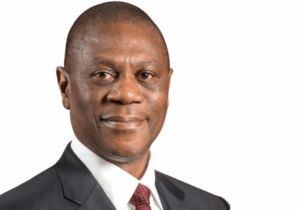
Deputy President Paul Mashatile calls for greater investment, stronger water management and climate-resilient infrastructure at the 2026 AWSISA Water and Sanitation Dialogue.
Key Points
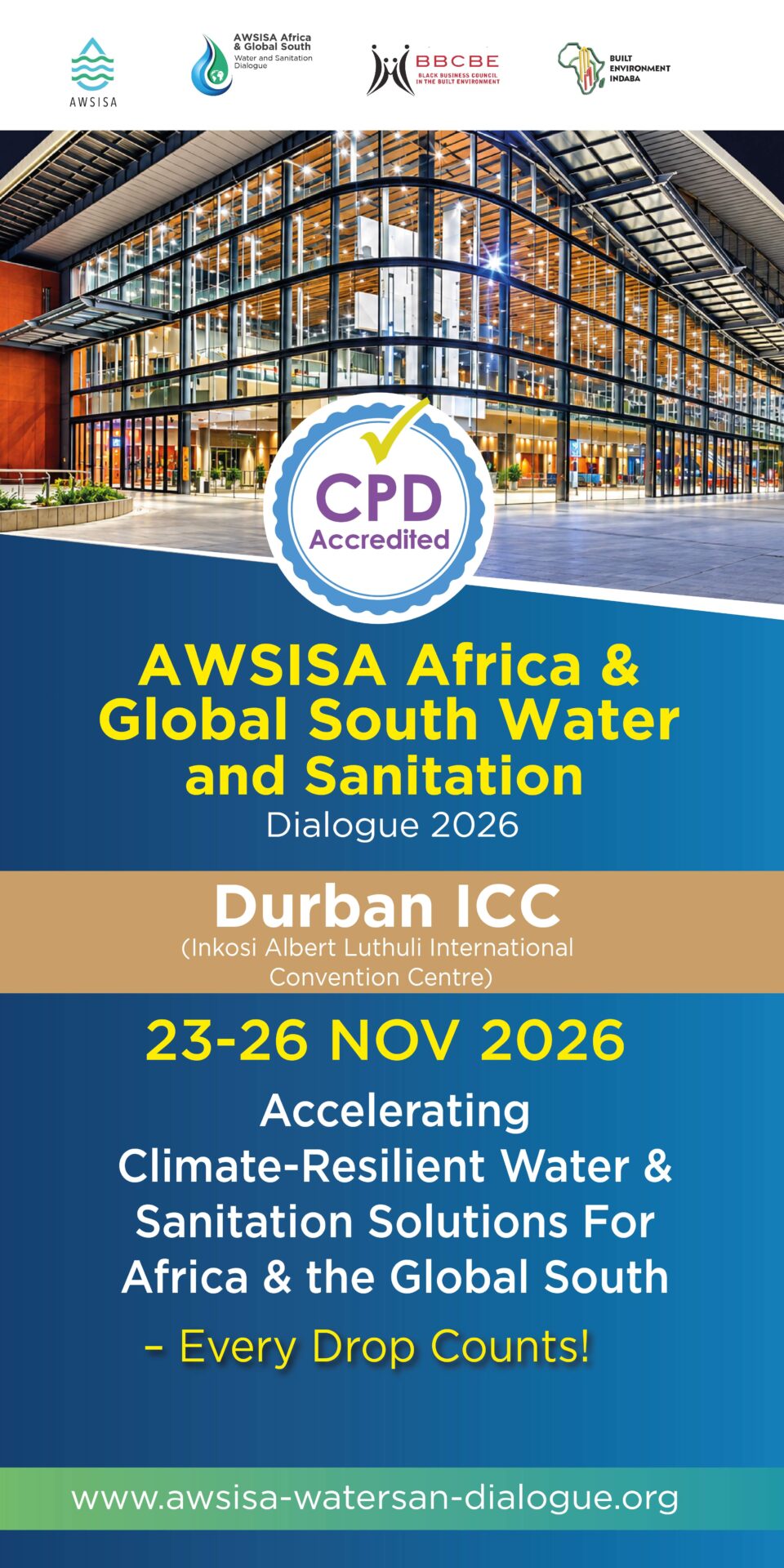
- 23 November 2026: Deputy President Paul Mashatile delivers the keynote address at the 2nd AWSISA Africa and Global South Water and Sanitation Dialogue in Durban.
- Infrastructure maintenance: Mashatile highlights the need to maintain and modernise existing water infrastructure alongside investment in new projects.
- Investment: Governments must work with private capital and development finance institutions to fund water infrastructure.
- Climate resilience: Water conservation, wastewater reuse, groundwater development and rainwater harvesting are identified as part of a broader water security strategy.
- Technology: Smart metering, digital monitoring and AI could help detect leaks, improve efficiency and support better planning.
Keynote Address
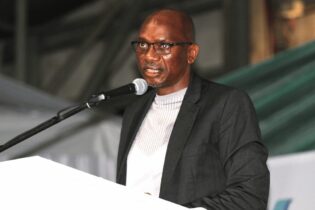
Keynote Address By The Deputy President Of The Republic Of South Africa, His Excellency Mr Paul Mashatile, At The 2nd AWSISA Africa and Global South Water And Sanitation Dialogue 2026, Durban, Kwazulu-natal, 23 November 2026. Masters of Ceremony, Ms Cathy Mohlahlana and Ms Cindy Mabe;Premier of KwaZulu Natal, Mr Thamsanqa Ntuli;
Minister of Water and Sanitation of South Africa, Ms Pemmy Castelina Pamela Majodina;
Minister of Human Settlements, Ms Thembisile Simelane;
Deputy Minister of Water and Sanitation, Mr David Mahlobo;
Finnish Ministry of Agriculture and Forestry, Dr. Annukka Lipponen;
Erongo Regional Council of Namibia, Councillor Lazarus Kanelombe;
MEC for KwaZulu-Natal Cooperative Governance and Traditional Affairs, Rev. Thulasizwe Buthelezi;
AWISA Chairperson, Mr Ramateu Monyokolo;
United Nations General Special Envoy on Water, Ms Retno Marsudi;
Director of United Nations University Institute of Water, Professor Kaveh Madani;
CEOs, Chairpersons and Members of Water Boards;
Directors General;
Representatives of the Private Sector and Development Finance Institutions;
Members of the Diplomatic Corps,
Members of the Media,
Distinguished Delegates,
Ladies and Gentlemen, Sanibonani, Good morning, It is a privilege to address you at the 2026 AWSISA Africa and Global South Water and Sanitation Dialogue in Durban, the warm heart of South Africa’s coastline and a gateway connecting Africa to the Global South. I wish to commend AWSISA for bringing together policymakers, practitioners, investors and development partners at a time when water security is emerging as one of the defining challenges of our century. The theme of this Dialogue, “Accelerating Climate-Resilient Water and Sanitation Solutions for Africa and the Global South: Every Drop Counts,” speaks to the scale of the task before us and the urgency with which we must act together. Water is essential for human dignity, public health, economic development, and social stability. It supports communities, industries, and food production, facilitating growth. Effective water systems are crucial for societal prosperity, while their failure negatively impacts all economic sectors and daily life. For this reason, water security cannot be treated as a sectoral concern. It must be recognised as a central pillar of our development agenda and a prerequisite for Africa’s sustainable growth and prosperity. Ladies and Gentlemen, We must also acknowledge that water security is becoming increasingly difficult to achieve. Across Africa and the Global South, demand for water is growing at the very moment that climate change is making supply less predictable. Prolonged droughts, changing rainfall patterns, severe floods and extreme weather events are placing unprecedented pressure on already constrained water systems. At the same time, many countries continue to grapple with ageing infrastructure, deteriorating water quality, rising urbanisation, inadequate investment and institutional capacity constraints.
The challenges surrounding access to clean water and sanitation deeply affect families, communities, farmers, and businesses, extending beyond mere statistics and policies to real-life hardships and uncertainties. These challenges are shared across much of our continent, and South Africa is no exception. While we have made considerable progress in expanding access to water and sanitation since the advent of democracy, significant challenges remain. Infrastructure maintenance needs more focus due to high water losses across the country. There is a necessity to strengthen wastewater treatment systems, as municipalities are under increasing operational and financial pressures. The central challenge before us is not simply one of water availability, but of water management. Having water resources is one thing. Managing them effectively, protecting them sustainably and distributing them equitably is another. Therefore, while investment in new infrastructure remains essential, equal attention must be given to maintaining and modernising existing assets. We cannot continue building new infrastructure while allowing existing infrastructure to deteriorate. If better management is the foundation of water security, then stronger coordination becomes indispensable. As Chairperson of the Water Task Team, I am acutely aware that progress will require coordinated leadership across all spheres of government, supported by meaningful partnerships with the private sector, development finance institutions, research institutions and civil society. We must move beyond fragmented interventions and embrace integrated solutions backed by collective action. Our ultimate objective is clear: to ensure that every family, in every community, can turn on a tap and have access to safe, reliable water whenever it is needed. This means strengthening accountability, improving coordination and ensuring that decisions made at national level translate into tangible improvements in local communities.
It also means addressing institutional weaknesses, building capable municipalities and ensuring that water institutions have the resources and expertise required to fulfil their mandates.
We need to deliver reliable service to our people in every corner of Africa. If we are serious about addressing water and sanitation challenges, we must be equally serious about mobilising investment. The scale of infrastructure development, rehabilitation and maintenance required across Africa cannot be financed by the public sector alone. Governments will remain central, but government resources must increasingly be complemented by private capital, development finance and innovative funding mechanisms. The investment must be strategic. We must direct resources towards projects that expand access, improve efficiency, strengthen institutional performance and deliver long-term value.
The case for investment is compelling because water infrastructure is a powerful economic enabler. Reliable water supply supports agriculture, manufacturing, mining, tourism, energy production and industrial development. It enables businesses to operate, attracts investment and creates jobs.

Conversely, water insecurity undermines productivity, increases costs and constrains economic growth. For our continent investing in water is investing in our development.
However, investing alone will not secure our future if our planning fails to account for a changing climate.
Responding effectively to climate pressures will also require innovation and new ways of working. Here I speak of emerging technologies that offer significant opportunities to strengthen water security and improve service delivery. Digital monitoring systems, smart metering, artificial intelligence and data-driven planning can help detect leaks, improve efficiency, optimise operations and support better investment decisions. Used effectively, these technologies can help us deliver more reliable services while using our resources more sustainably. Ladies and Gentlemen, Africa must prioritize investment in human capital to develop a new generation of water professionals capable of tackling complex environmental, technical, and operational challenges. The professionalisation of the sector, strengthened skills development and improved institutional capacity are not optional. If we neglect human capacity, even our most ambitious infrastructure programmes will struggle to deliver lasting impact. The scale of the challenge demands greater cooperation across the continent and throughout the Global South. No African country can achieve long-term water security in isolation. Many of our river systems are shared. Many of our climate risks are common. Many of our development priorities are interconnected. This creates an opportunity for deeper collaboration. Our objective should be to foster partnerships that move beyond dialogue towards implementation and measurable outcomes.
This is precisely why gatherings such as this Dialogue are so important. They should be able to provide a platform to mobilise partnerships, unlock investment and align our efforts around common objectives. As we deliberate over the coming days, we must remain focused on outcomes. Most importantly, we must move from commitment to execution. The people of Africa are not waiting for more declarations. They are waiting for practical solutions, reliable services and visible progress. Ultimately, this conversation is about far more than water infrastructure. It is about the future we are building for our continent. With the right choices and the right investments, water can become a catalyst for industrialisation, agricultural productivity, economic integration and inclusive growth. Indeed, every drop counts and each of us must be accountable for securing a water-secure and climate-resilient future for Africa. Water knows no borders, and neither should our commitment to protecting it. From the Cape to Cairo, and from the Atlantic to the Indian Ocean, our shared prosperity, food security, public health, and sustainable development depend on how we manage and protect this most precious resource. Let us leave this Dialogue with a shared determination of building water systems that are resilient, sustainable and fit for future generations. Let us ensure that every community has access to safe drinking water and dignified sanitation. In addition, let us work toward ensuring that we achieve the UN Sustainable Development Goal 6 that focuses on ensuring universal access to safe drinking water, adequate sanitation, and hygiene, while improving water quality, water-use efficiency, and ecosystem protection. Together, we can transform one of Africa’s greatest development challenges into one of its greatest development opportunities. I wish you fruitful deliberations and a successful Dialogue. I thank you, Inkomu.