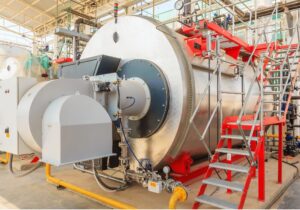
Kirsten Kelly speaks to Allmech MD Lionel Maasdorp about how water chemistry, treatment chemicals, and monitoring affect boiler efficiency and lifespan.

Lionel Maasdorp, MD of Allmech
Poor water chemistry can quietly undermine boiler performance, increasing energy consumption, accelerating corrosion and shortening equipment lifespan.
Boilers are used across a wide range of industries, from food manufacturing and hospitals to mining and industrial processing. Although their applications differ, they share a common challenge: The quality of the water entering a boiler can have a significant impact on its performance, efficiency and lifespan.
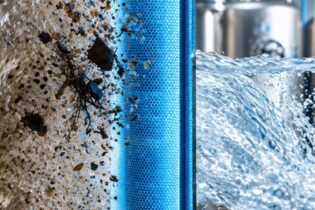
One such problem is scale. Water naturally contains dissolved minerals such as calcium and magnesium. When heated inside a boiler, these minerals can precipitate out of solution and accumulate on heat-transfer surfaces, forming hard deposits known as scale.
“Calcium and magnesium creates an insulating layer on heat-transfer surfaces, that restricts the movement of heat into the water. The result is a boiler that requires more energy to produce the same amount of steam, increasing operating costs and potentially contributing to equipment damage,” explains Lionel Maasdorp, managing director of Allmech.
Softeners
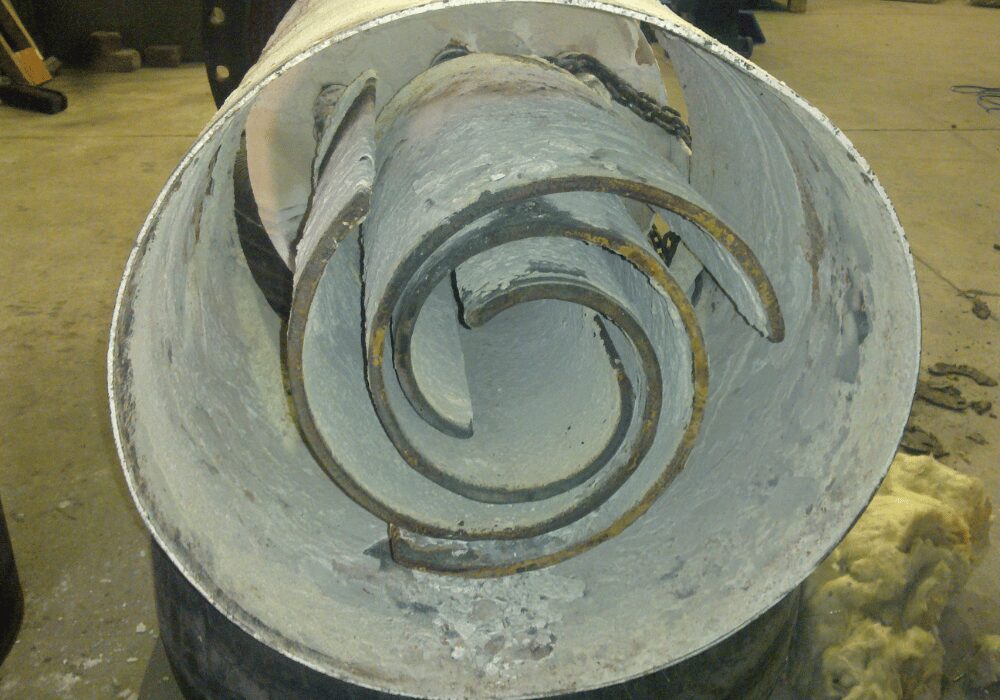
Light scale formation on electrodes
Allmech addresses this challenge through water softening systems that remove calcium and magnesium before water enters the boiler.
“Water softeners use ion-exchange technology, the system contains specialised resin that is negatively charged. The resin releases sodium into the water and then attracts and holds onto the hardness-causing minerals. Once the resin reaches its capacity, it is regenerated using a salt solution, allowing the process to start over again. By reducing water hardness, softeners prevent scale formation, improve heat-transfer efficiency and protect boiler components,” says Maasdorp.
However, he cautions that water softening alone cannot guarantee complete protection. “Sometimes there is a little slippage. The resin might be getting old, or an O-ring might be leaking,” he explains.
This is where other chemical treatment becomes essential.
Allmech supplies a range of specialised water treatment chemicals associated with heating and cooling systems and boilers of all types.
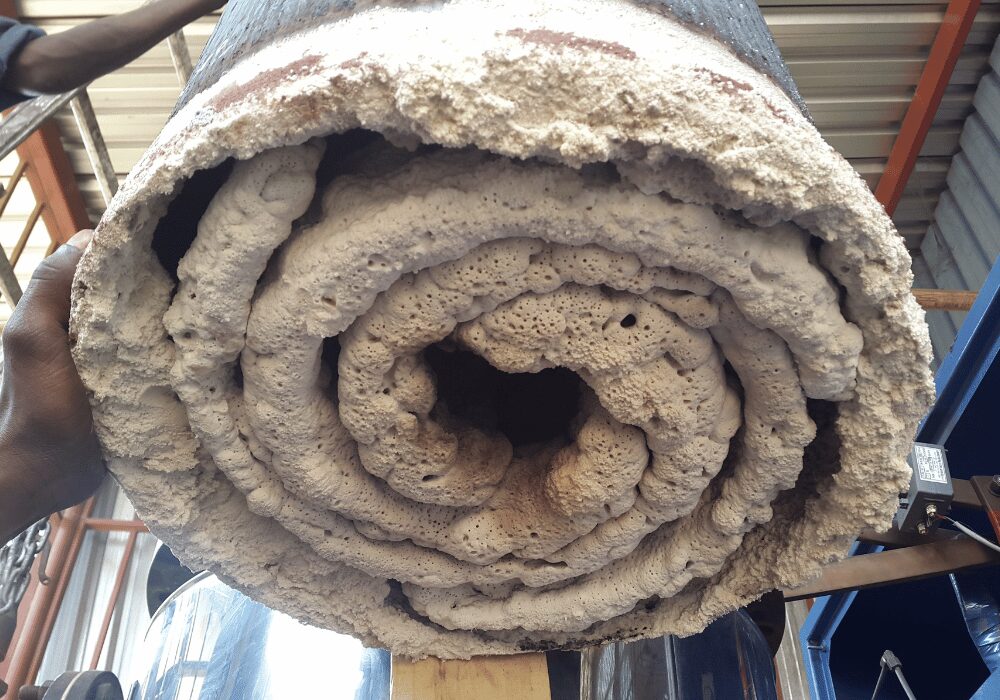
Excessive scale on electrodes
Designing a water treatment programme for boilers
One of the most common misconceptions Maasdorp encounters is that a single chemical treatment programme will work equally well across different boiler installations.
“One size does not fit all.”
In reality, developing an effective water treatment programme requires a detailed assessment of the boiler, its operating conditions and the quality and quantity of water being used as well as the product the steam is being used to produce. The food and beverage industry must use SANS 1827 compliant chemicals, where as other industries can use a greater range of chemicals that are not food-safe like anti-corrosion foam for pipes.
“We need to understand what type of boiler the customer has, how much water it uses per day and the maximum amount of water it might need within a single hour,” adds Maasdorp.
Steam demand can fluctuate dramatically during industrial production. A boiler might initially produce one tonne of steam per hour while a plant warms up, before demand increases to 20 tonnes per hour as additional production processes come online. Once the required temperatures have been reached, demand may decrease again.
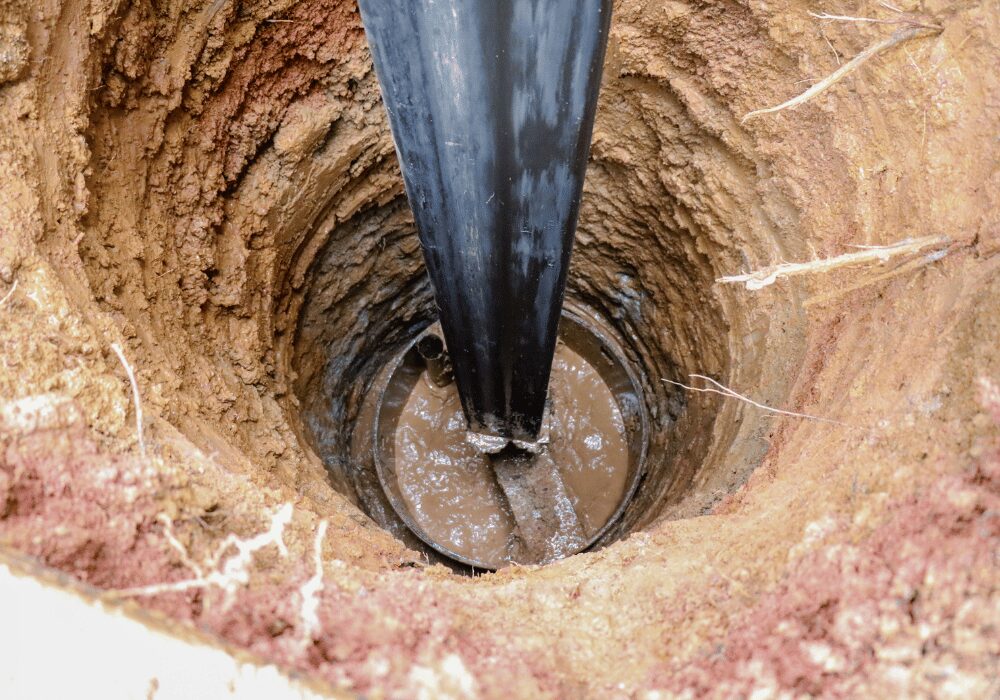
Borehole water hardness can vary seasonally, with changes occurring between wetter and drier periods
These variations must be considered when sizing the water softening equipment.
Water quality is equally important. Allmech typically requests a water analysis to establish parameters such as hardness, pH, sodium, iron and manganese concentrations.
Iron and manganese can interfere with the performance of softener resin, while the hardness of the incoming water determines how frequently the system must regenerate.
The treatment programme must also account for condensate recovery.
“Condensate is water that has already been heated. If you can return it to the boiler, you do not have to heat that water from scratch again,” Maasdorp explains.
Recovering condensate therefore reduces both the demand for fresh make-up water and the energy required to produce steam. Because the recovered condensate does not need to pass through the softener again, the volume of make-up water requiring softening may be considerably lower than the total volume circulating through the boiler system. However, condensate water does still need to be treated by other chemicals.
This distinction influences equipment sizing and chemical consumption.
Chemicals
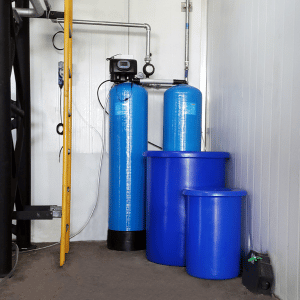
Duplex softener with brine and chemical tanks
In addition to softeners, Allmech provides a vast range of other water treatment chemicals. Their blend of chemicals contain an oxygen scavenger, reducing dissolved oxygen that could otherwise contribute to corrosion.
Polymers are also incorporated into boiler water treatment programmes to keep particles dispersed, allowing them to be removed through boiler blowdown. As water is heated and converted into steam, dissolved minerals and other impurities become increasingly concentrated in the boiler. Polymers work by preventing fine particles from clumping together and adhering to surfaces, keeping them suspended in the water instead. These impurities can then be removed through a process known as boiler blowdown, where a controlled volume of water is discharged in short bursts from the boiler to remove accumulated solids.
“Blowdown is not wasted water. There is the incorrect perception that reducing boiler blowdown will automatically save money. Without adequate blowdown, solids can accumulate, form sludge and deposits and interfere with heat transfer, significantly impacting on energy efficiency, and creating expensive maintenance problems in the long term,” explains Maasdorp.
The risks of incorrect chemical dosing
While chemical treatment protects boilers, Maasdorp emphasises that dosing must be carefully controlled.
Insufficient chemical dosing can leave dissolved oxygen in the boiler water, increasing the risk of corrosion. Excessive dosing can create a different set of problems.
Some boiler treatment formulations contain caustic components that raise the water’s pH to help maintain appropriate operating conditions. However, excessive caustic concentrations can contribute to caustic corrosion, potentially damaging boiler components and welds.The compatibility of different treatment chemicals must also be considered.
Maasdorp explains that chemicals formulated using different treatment approaches may not necessarily work effectively together.
The materials used in the system are another important consideration. For example, aluminium components will typically corrode with pH levels higher than 9 while iron components will corrode with lower pH levels.
This is why Allmech assesses the complete installation before recommending a treatment programme rather than simply supplying chemicals based on the boiler’s size.
“Furthermore, Allmech offers onsite water testing and monitoring services at intervals ranging from weekly to monthly or quarterly, depending on the customer’s requirements,” states Maasdorp.
Monitoring before problems become visible
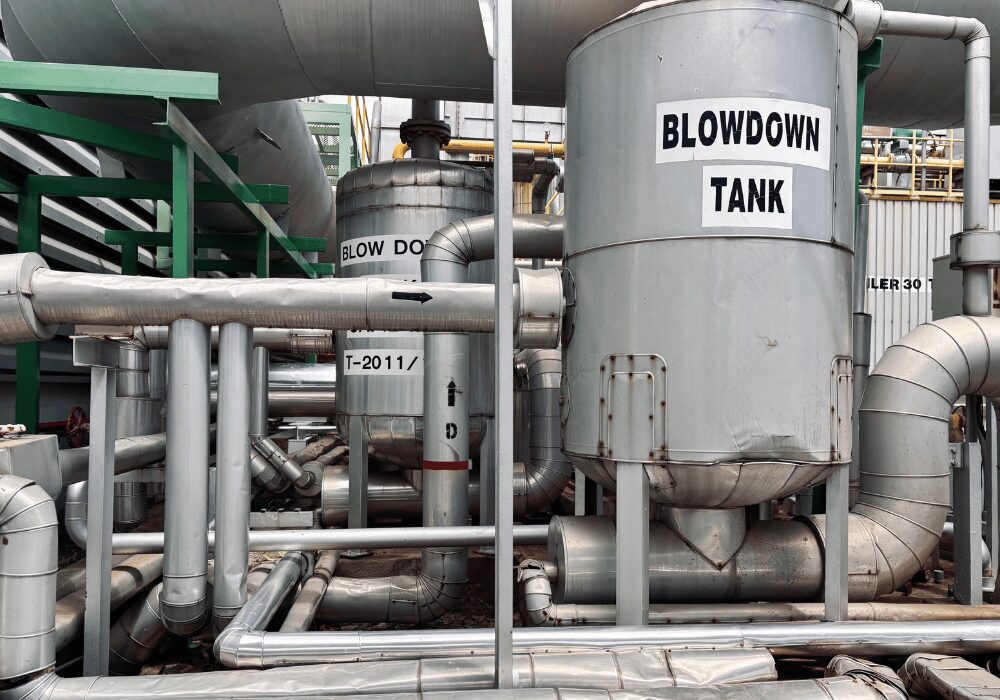
Without adequate blowdown, solids can accumulate, form sludge and deposits and interfere with heat transfer, significantly impacting on energy efficiency
Signs of boiler water treatment problems can develop before obvious physical damage becomes apparent.
According to Maasdorp, changes in pH, water colour, iron concentration and chemical residuals can provide early indications that the treatment programme is moving outside its required operating parameters.
Allmech also monitors the relationship between M and P alkalinity, , which provides additional information about boiler water chemistry. M is the total alkalinity of water down to a pH of approximately 4.5 while P measures the alkalinity of water down to a pH of approximately 8.3.
Monitoring these parameters help establish the correct dosage levels of chemicals, such as whether sufficient oxygen scavenger is present, whether the chemical treatment is maintaining the required conditions and whether corrective action is necessary. This allows treatment programmes to be adjusted as operating conditions change.
Changing water sources creates new challenges
As more South African businesses invest in alternative and backup water supplies, boiler water treatment programmes must increasingly accommodate changes in incoming water quality. Some facilities alternate between municipal water, borehole water and other sources depending on availability.
While this improves water supply resilience, it can complicate the management of water softening systems.
Maasdorp explains that borehole water hardness can vary seasonally, with changes occurring between wetter and drier periods. The frequency of regenerating softeners will therefore vary according to the season.
“Before using borehole water in a boiler, iron, manganese and calcium levels must be assessed and if necessary, treated. Sometimes customers only have water softeners for municipal water supply and they need a larger softener for borehole water supply. If a softener needs to be regenerated in a time frame that is shorter than eight hours, the salt will not have enough time to dissolve into a brine solution and become saturated, reducing the capacity of the softener. But often using borehole water only requires a mild adjustment to the existing water softener system.”