Rainbow Reservoirs explains how to size water storage based on peak demand, supply reliability, operational needs and the level of backup required.

Paul Warrener, operations manager of Rainbow Reservoirs
Water security is more than installing a reservoir and hoping it is the right size. The correct water storage reservoir depends on historical consumption, operational requirements, supply reliability, replenishment rates, and the consequences of an interruption.
According to operations manager of
Rainbow Reservoirs, Paul Warrener, the starting point should be a clear understanding of baseline consumption and the critical operational threshold, the minimum volume required to keep essential operations running. Other considerations include supply infrastructure, recovery times, and the rate at which alternative sources can replenish the reservoir.
“It is all about understanding your needs and context. Is it just household water? Then you can almost survive quite happily on 10–15 litres for drinking water. But if it is a factory and its people’s livelihood, it becomes measuring safety issues, fire response, and operations.”
A key consideration is days of autonomy: how long an organisation needs to remain operational if its normal water supply fails. The appropriate figure varies according to location, reliability, and the consequences of an outage. A relatively reliable municipal system experiencing occasional maintenance interruptions might require two to three days of storage, while areas with chronic infrastructure problems may require five to seven days.
Critical infrastructure such as healthcare facilities requires a more conservative approach. Warrener notes that hospitals can work towards as much as 14 days of autonomy because water is essential for drinking, sanitation, cleaning, and healthcare. Warrener adds, “It is about assessing what you need to do, what you can’t do, and what you can afford to do.”
Plan for peaks, not averages
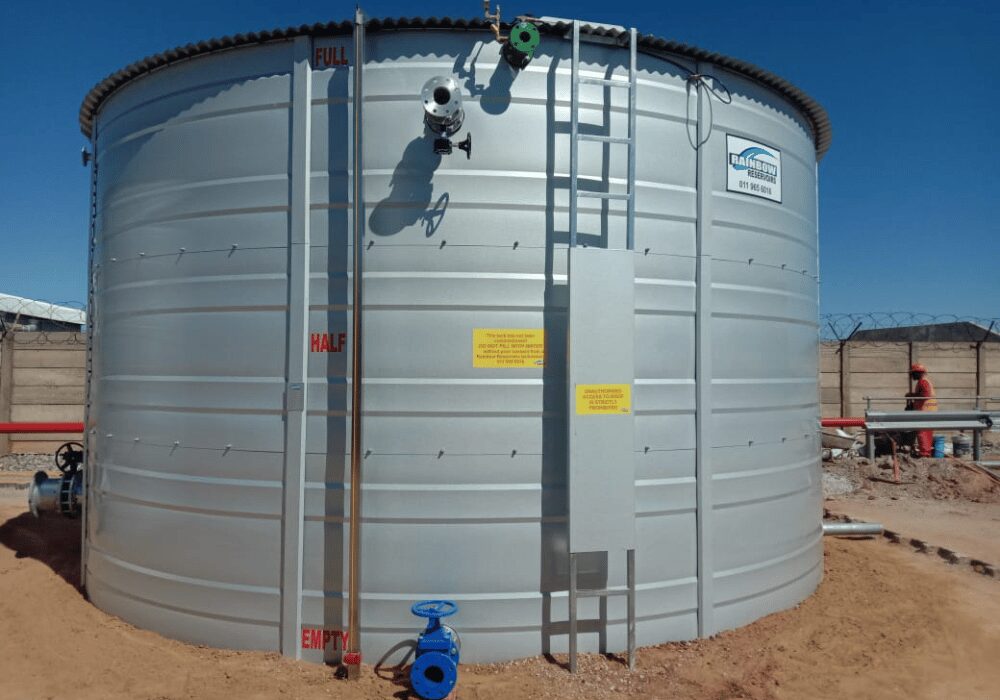
Averages are not enough to know how much water you need
Organisations should base reservoir sizing on actual consumption rather than assumptions. Warrener recommends collecting at least a year’s worth of utility bills and smart-meter data. However, average consumption alone is not enough. “What’s more important is the peak versus the average,” he says.
An organisation might use 1 000 litres a day on average, but that figure can become misleading if certain days involve significantly higher demand. “If you do that, then your backup will be 2 000 litres, for example. But you have not calculated in your peak movements, so the average is not enough.” The reservoir must therefore be able to supply peak demand, including periods when several water-intensive activities occur simultaneously. “Plan for peaks, not averages,” adds Warrener.
This also affects the reservoir’s outlet and flow rate. A tank may contain enough water but fails to meet demand if its outlet cannot deliver enough flow.
“If you have a small outlet, then you do not have the flow rate to do two water-intensive activities at the same time. In a factory, for example, you cannot clean machinery and flush a toilet at the same time if you have not planned for flow rate,” explains Warrener.
There is no universal safety margin. Rainbow Reservoirs typically add around 15–25%, although the appropriate allowance depends on the organisation, buyer, and cost. “It’s company-specific how much backup you need, and how much money you’re willing to spend at that time for just in case.”
Different users, different requirements
Storage size is determined by context and Rainbow Reservoirs assists clients to find the optimal storage for their context
There is no single formula for residential developments, hospitals, mines, and factories. The calculation depends on the nature and scale of the operation. Warrener notes that households can plan for approximately 250 litres per person per day, while hospitals can be calculated according to beds and theatres, at approximately 300–500 litres per bed per day. Industrial requirements depend largely on the size and nature of the operation.
For critical facilities, priority should be distinguished between essential and non-essential water use. “Non-essential operations must be aggressively shut down,” says Warrener. Essential requirements include drinking water, sanitation, fire protection, cooling, and core operations. Irrigation, vehicle washing, and other discretionary activities are not operationally significant, so they have to be stopped in the event of backup water use.
This requires organisations to be honest about what they actually need. “You have to be honest with yourself, with your needs. What are the requirements that you have, and what is your usage now?” If requirements are underestimated, the reservoir may be inadequate when needed.
Reliability changes the calculation
Historical supply reliability also determines how storage should be designed. An occasional 24-hour interruption is fundamentally different from recurring multi-day outages. “If it’s a day every now and then, you almost treat it like a balancing challenge,” Warrener says. In such circumstances, a two-day buffer may be sufficient.
“Multi-day outages change the entire engineering requirement.” The reservoir begins to function less as a short-term buffer and more as a primary source of water, including operational continuity and safety.
This is particularly important because a stated interruption time does not necessarily mean that normal water supply will return after it is over. Once major reservoirs are emptied, downstream pipes also need to refill and pressurise. “It is not just the reservoir; it is actually all the pipes that are leading into residential areas. If an outage is 24 hours, it may feel as long as 36 or 48 because water takes time to refill.”
Protecting emergency reserves
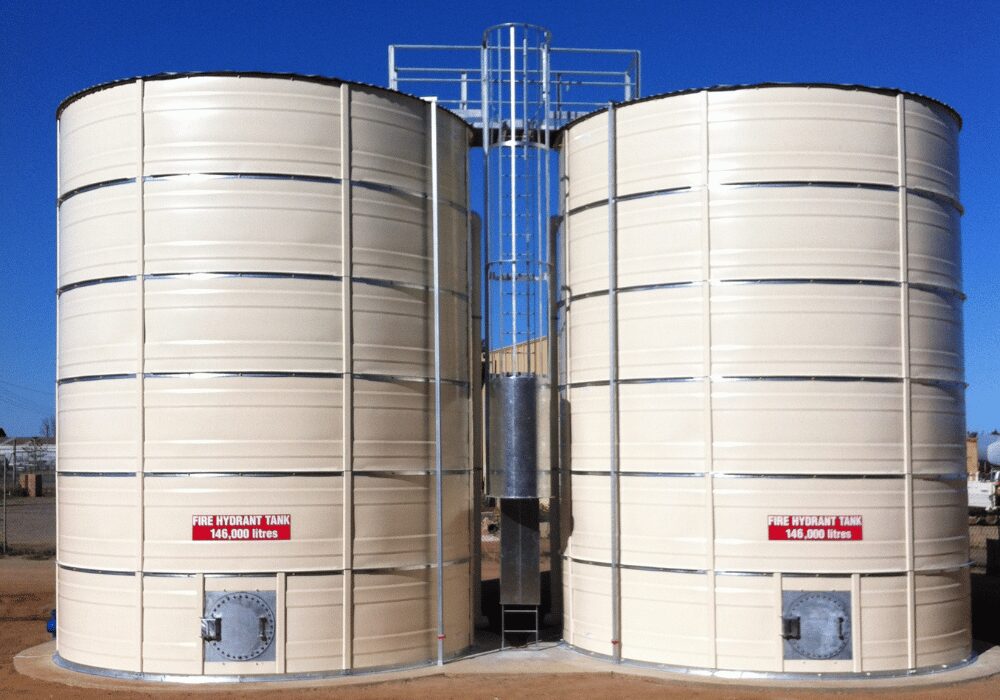
With fire water storage, it is better to be over prepared than under
Where a reservoir supplies both everyday water and firefighting, the emergency reserve must be protected from operational use. Requirements depend on the facility’s size and whether it uses hydrants, sprinklers, or other firefighting systems.
Warrener explains that the system can physically separate the two uses. If a fire engineer requires 75 000 litres to remain available, the tank can be designed to provide slightly more, while the everyday outlet is positioned so normal consumption cannot compromise the protected reserve.
Alternative sources and risk
Boreholes, municipal supply, and rainwater harvesting can reduce storage required, but each source has its own reliability risks. Warrener suggests using around 60–70% of a borehole’s maximum output as a long-term benchmark, rather than designing around its maximum yield. Rainwater harvesting can provide an important additional source, particularly for agriculture.
Ultimately, reservoir sizing comes down to understanding risk. “What risks are you, as the buyer, willing to take?” An organisation with a reliable borehole and municipal supply may require less storage than one dependent on an unreliable municipal network. Conversely, a hospital, mine or factory that cannot afford prolonged downtime may need significantly greater resilience.
The central lesson is that water-security storage cannot be reduced to a single litres-per-day formula. Historical consumption, peak demand, operational priorities, supply interruptions, alternative sources, and risk tolerance all need to be considered.