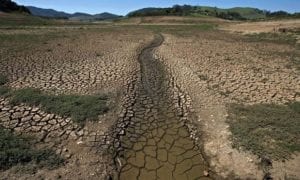
In a nightmare scenario, the people of Sao Paulo, Brazil, are hoarding water reserves ahead of a complete water shortage that is set to see taps run dry five days a week.
According to a report from Reuters, the city’s main reservoir is running at below six per cent and its second of three emergency supply reserves is close to empty as well. The scenario is not simply one of water rationing; there will be no water in the system for days on end. City officials have confirmed that they will be forced to shut off the water supply for up to five days at a time until the next rainy season in October. While the race is on to secure as much systemic water as possible, large institutions and industry , like hospitals, have already started installing in-house water treatment and recycling centres, whilst the demand from the companies for water deliveries made the sight of water trucks blocking traffic a common sight in the city. However, it is estimated that job losses in the small business and informal sector will be high.
Wealthier Brazilians have installed larger storage tanks and technologies that allow for recycling, but hardest hit will be the working class, for whom little provision has been made. The health implications are chronic, and know no class boundaries.
Out of the blueIn the history of civilisation, humans have never witnessed a calamity of this size and proportion. Whilst it is impossible to predict exactly what will occur in Sao Paulo, its population are being forced to face a reality that faces almost everyone living in urban settings worldwide. According to commentators in the US, ‘dry’ cities in the States will be facing even harsher scenarios, with Las Vegas, Southern California and cities in Arizona fast running out of local water reserves. National Water Week
It is a stark reminder that as a water-scarce nation, South Africa still loses between and 90 percent of our treated potable water to technical and non-technical losses. South Africa is also rare among developing nations in that we use our potable water for everything: from washing cars to watering our plants to drinking. Crises may appear to hit us out of the blue, but there is still so much that South Africa can do before it is too late. It is National Water Week from the 16 to 22 March and there is much that can be done to raise awareness, engage in solutions and change our behaviours now. Let’s use grey water, and save our blue.