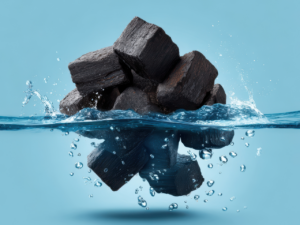

Gabi Mkhatshwa, senior manager of climate change and sustainable development at Eskom.
- Cooling: Cooling the generation units.
- Steam generation: The coal burned evaporates water that turns the steam turbine, generating electricity.
- Ashing: Managing burnt coal requires mixing the ash with water and storing it.
- Washing and,
- Air emission and abatement: Water used to reduce emissions
Water agreement
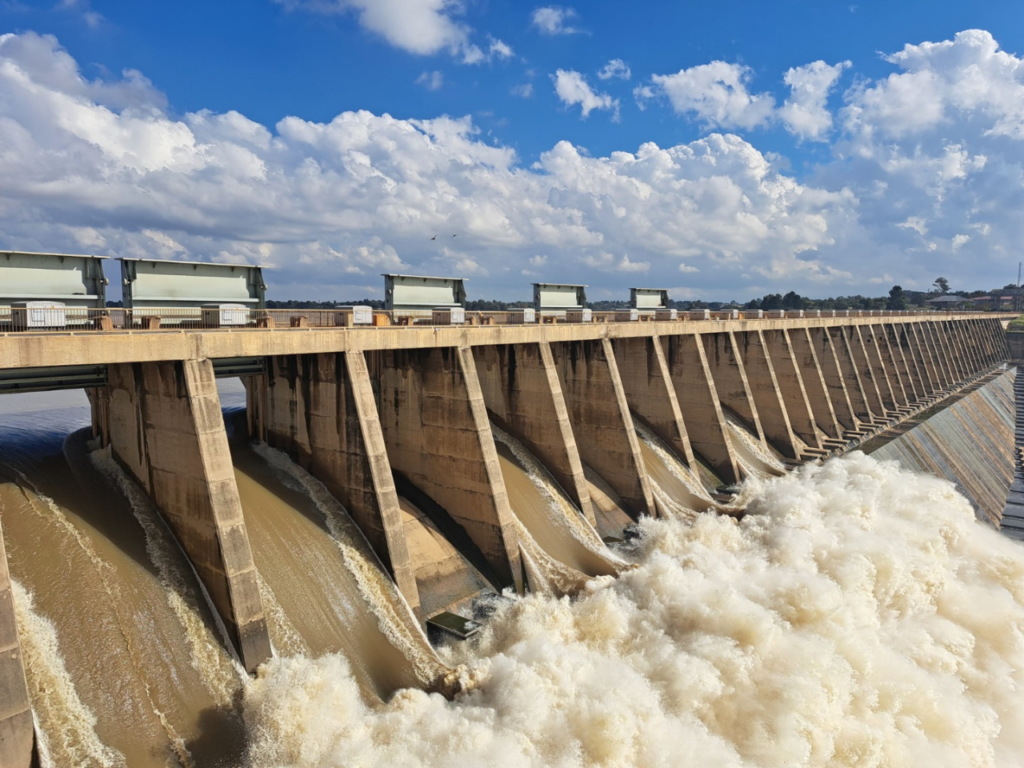
Most of Eskom’s water comes from bulk abstraction of the Integrated Vaal River through various license agreements
- Eskom’s agreement with Rand Water is pivotal, and the existing agreement has been extended to April 2038.
- The Vaal River Eastern Sub-Systems agreement lasts until April 2026, but there are negotiations in place for a new agreement of 11 years.
- The Komati Water Scheme expires in March 2034.
- Eskom’s bulk water abstraction license for the Integrated Vaal River System has been submitted to the Department of Water and Sanitation (DWS) for renewal by June 30th, 2025.
- Eskom’s Mokolo River System bulk water abstraction license was renewed by DWS and expires in 2051.
“In 1989, Eskom used 1.9 litres (ℓ) per kilowatt (kW) sent out; we have improved our water efficiency to 1.47 ℓ per kW sent out, and we have an internal target of 1.38 ℓ per kW sent out. Technological solutions, effective water management policies and procedures have improved our efficiency, specifically dry cooling and ashing systems that do not heavily rely on water,” says Mkhatshwa.Despite the improvements, Eskom still faces several obstacles regarding its water use. Eskom’s water management strategies and plans are not implemented consistently Mkhatshwa adds, “An example is the Zero Effluent Liquid Discharge plan, while it is in place, we have minimal water reuse and recycling.”
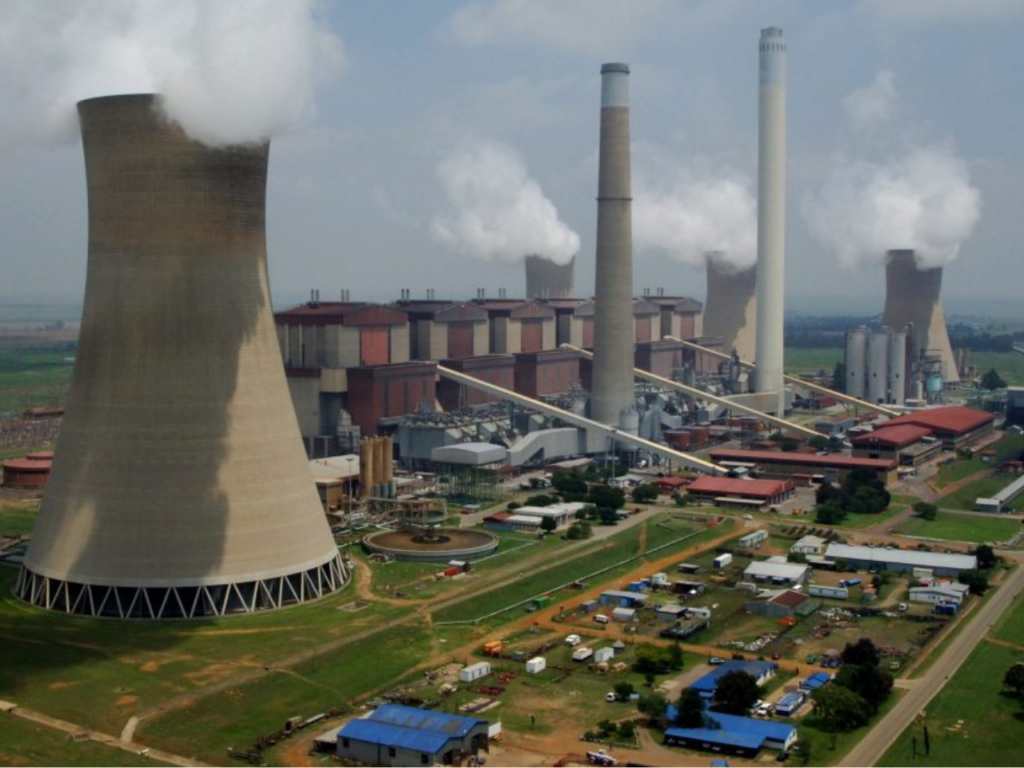
Coal power stations are high volume water users, necessitating a constant supply
Climate change and energy transition
The impact of emissions from coal power on the environment has led South Africa to pursue a diversification of its energy mix, primarily led through the Just Energy Transition (JET).
“The diversification of the country’s energy mix away from coal primarily will significantly reduce Eskom’s water footprint over the next 10-15 years,” says Mkhatshwa.Water supply assets are integral to South Africa’s water security, and DWS, Eskom and Sasol have launched a joint task team to manage bulk infrastructure assets to preserve and build the water security needed for continued operation. Mkhatshwa says, “South Africa must deal with years of poorly managed municipal infrastructure, water losses, and insufficient storage, as this affects us as Eskom and as every South African. Climate change is now an additional worry as the droughts and extreme weather events threaten not only the supply of water but also infrastructure, we need as a country.” The asymmetric and disproportionate effects of climate change mean that South Africa warms at twice the global average rate. An already water-scarce country, climate change threatens to:
- Decrease the average precipitation
- Increase the frequency and intensity of floods
- Increase heat waves
- Increase and prolong droughts.
Climate risk mitigation and strategy
Eskom’s approach to climate change involves three steps:- Understand the risks as comprehensively as possible and ensure that the measures put in place are achievable. This is detailed in Eskom’s climate change policy, strategy, and adaptation procedure, which are adopted across the entity.
- Ensure that these guiding documents are understood by all employees, and how their operational processes are impacted by climate and how the strategy shapes new practices and goals.
- Review the strategy and procedures by monitoring operations, and how they adapt or fall short. Monitoring and evaluation of implementation is critical in informing progress and necessary adjustments responding to the constantly evolving climate space.
Eskom’s adaptation journey
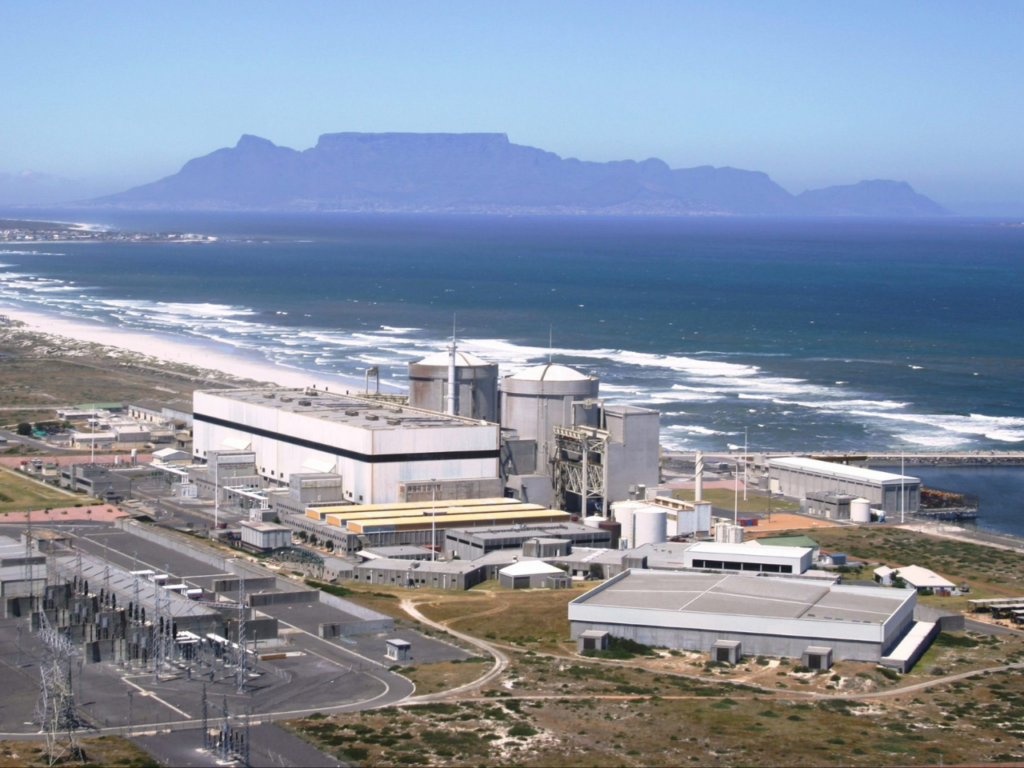
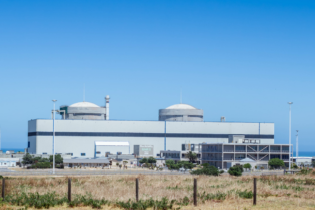
Power stations like Koeberg use seawater for cooling, which Eskom monitors for environmental impact
- 2010-2015: Eskom’s first climate Change adaptation strategy adopted.
- 2015-2018: Research partnership with the CSIR, focusing on modelling climate change projections up until the year 2100. An integrated risks and resilience Management procedure for adaption to climate change planning was developed and communicated.
- 2019: Initiated phased development of the divisional adaptation plans.
- 2020-2023: Additional modelling research on climate extremes was carried out by the CSIR. Related operational risk assessments were initiated and reviewed. Further research on the impact of climate change on catchments and dams is needed.
- 2025 and beyond: Drive the implementation of processes of divisional adaptation plans and adaptation related projects. Monitor and refine the metrics and continually review risks. Continuing research and further academic partnerships.