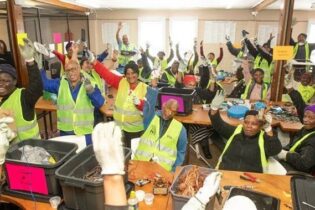
Pravashen Naidoo, CEO of EWaste Africa
The surge in consumer electronics has inadvertently led to a proportional increase in e-waste. This hazardous waste stream demands specialised handling, and with solar energy now firmly established in South Africa, the need for proper e-waste (including solar and battery) recycling has become even more critical.
EWaste Africa, a recycling company specialising in e-waste, has evolved alongside South Africa’s waste regulatory framework. Initially focusing on lightbulbs, they strategically positioned themselves for what they identified as the future of South African recycling.
Pravashen Naidoo, CEO of EWaste Africa, credits regulation as a key driver for the sector. He explains, “In 2013, there was a ban imposed on all lighting waste being sent to landfill (suspended for 3 years until 2016). At the same time, electronic waste to landfill was suspended for 8 years to come into effect in 2021. The government deserves credit for this foresight; we would not have existed if that legislation hadn’t materialised back then.”
The ban compelled corporations to act. “What the ban did was bolster the business-to-business market. It really pushed corporate South Africa to ensure that waste, which could have easily gone to landfill, was now directed to a licensed recycling facility, and that became the core of our business.”
Volumes have steadily increased since the regulations took effect. “Initially, we only recycled lighting. By 2021, we started processing electronic waste as well, and once our Johannesburg operations were running, we intensified this focus on electronic waste, subsequently also introducing solar panel and electric vehicle component recycling as part of our service offering.”
Collection: The master key to waste management
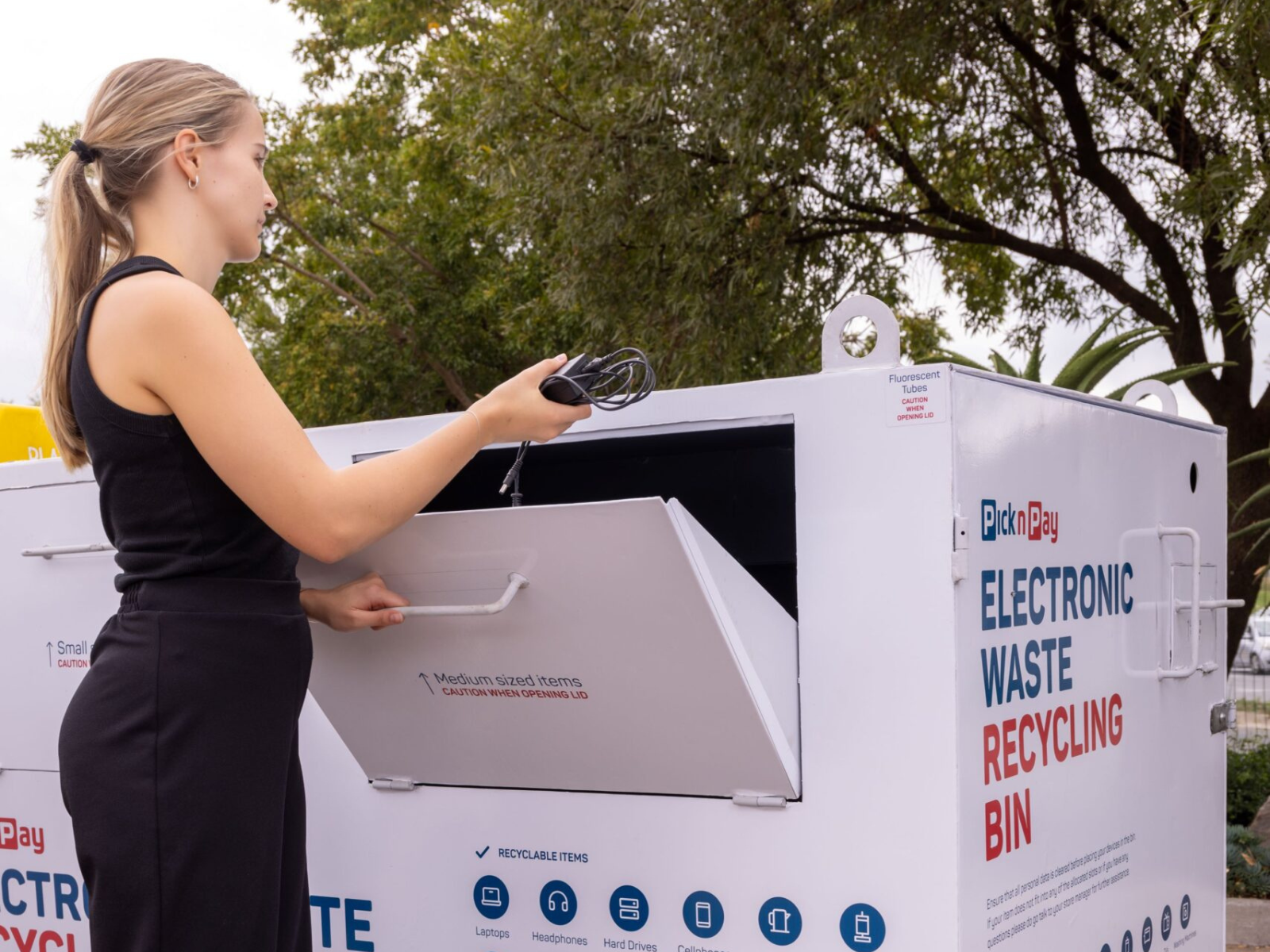
Ewaste Africa collects ewaste directly from consumers through Pick n Pay drop off points, aided by their PRO, ERA
A pivotal moment arrived in November 2021 with the introduction of Extended Producer Responsibility (EPR). “It’s the big buzzword right now, but it’s more than that,” says Naidoo.
“For the first time, it shifted solely from the polluter-pays principle to include the producer-pays principle. This regulation injected funds into the value chain. Producer Responsibility Organisations (PROs) are tasked with funding the establishment of collection networks (such as deploying bins), creating jobs, and driving the end-of-life management of specified products like electrical and electronic equipment, lighting equipment, and portable batteries.”
EWaste Africa, in collaboration with ERA (one of the PROs), helped initiate a consumer collection scheme by placing drop-off boxes at Pick n Pay stores nationwide and is now expanding this network.
“By October 14th (International E-waste Day), there will be 160 drop-off points for consumers to take their waste to. The plan is to reach 260 by the end of next year. We aim for over 1,000 drop-off points across the country. We’re observing significant volumes from the Pick n Pay drop-off points; in fact, more than anticipated, which indicates that South Africans are eager to do the right thing.”
Recycling is a business, yet it is a unique one because not all waste streams possess inherent commercial value. The EPR regulations have provided crucial financial support by subsidising recycling costs. Naidoo emphasises, “Our business was built on recycling light bulbs, which is a cost-negative stream. You do not generate enough revenue from a light bulb’s components to cover the costs of compliant collection, transport, and recycling. Without EPR fees as a subsidy, the recycling of items like lighting waste wouldn’t be viable.”
Naidoo stresses the importance of looking beyond climate impact alone. “Climate impact is undeniably important, but it’s only one of the nine planetary boundaries.” These nine critical Earth systems, which regulate planetary stability, were first proposed by the Stockholm Resilience Centre in 2009. “We validated the CO₂ and energy savings achieved through e-waste processing early on, but we must also measure impacts on land and water. Sustainability needs to encompass more than just carbon.”
Beneficiation
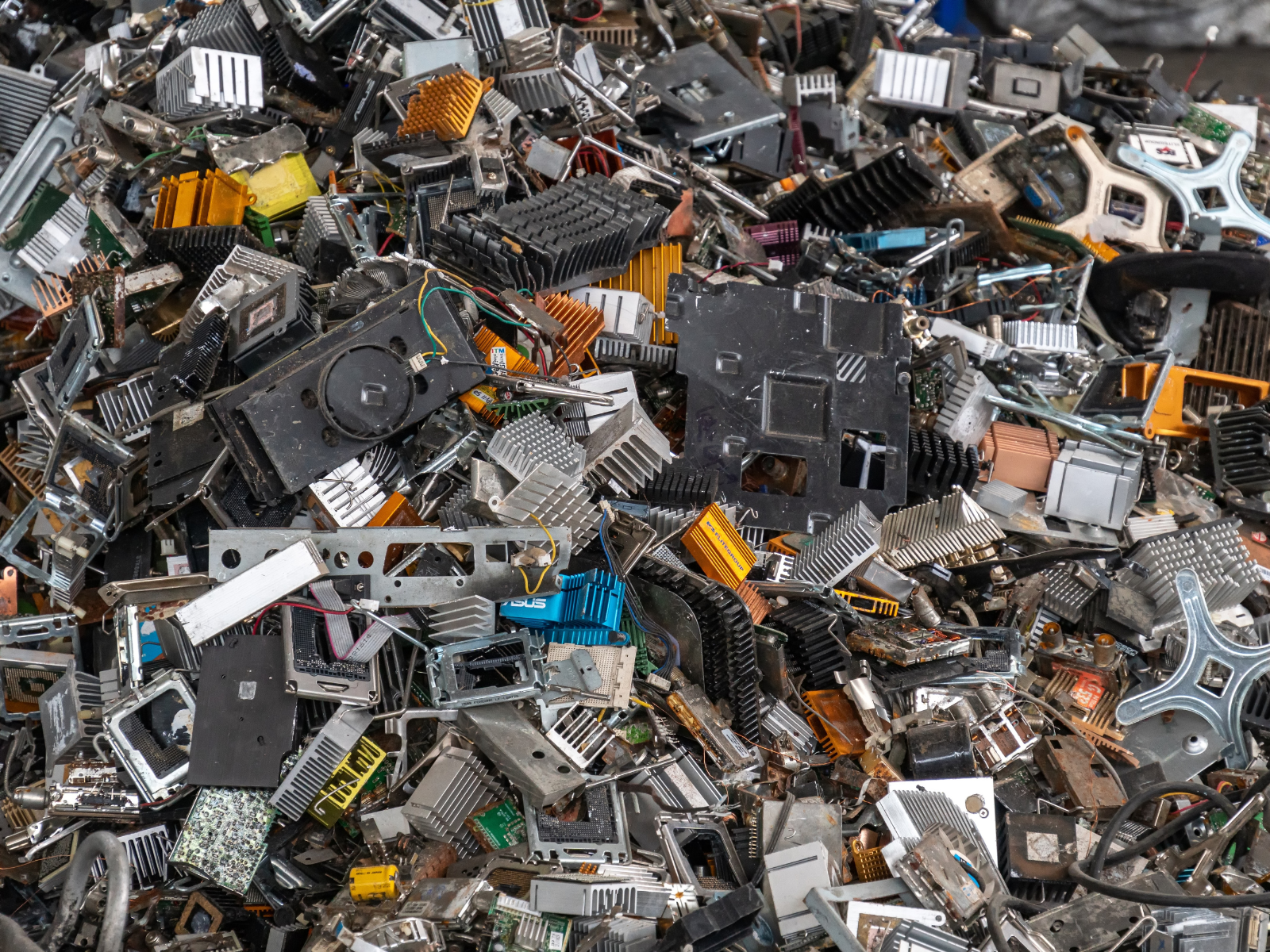
As electronic waste grows, so does the need to add value to the waste stream through sorting, recycling, and reuse
At its core, recycling involves perceiving waste differently, recognising its inherent value, and enhancing that value. While plastic often receives negative attention, EWaste Africa also found glass to be a major challenge. While ordinary consumer glass bottles are recyclable, much of the glass in South Africa, including that from solar panels, is not. This is why EWaste Africa prioritises beneficiation, or the creation of valuable components from waste.
“We can now beneficiate up to 98 percent of materials from lighting and solar,” Naidoo explains. “South Africa lacks a solution for the glass, so we’ve innovated solutions like eco-pavers. Approximately 90 percent of a solar panel’s material is glass, and all of that is reused in our process. We have international recognition for our solar recycling technology, and this motivates us to continue to innovate and create new solutions.”
The company integrates local inventions with international expertise. “We have a team of engineers, including two PhDs. We have not immediately sought global solutions, but have rather invented solutions in-house and then incorporated global technology to apply them. The world often looks to Europe for solutions, but with adequate investment, patience, and time, we can solve these problems ourselves in South Africa.”
This ‘home-grown attitude’ also directly addresses South Africa’s persistent economic and employment challenges. Naidoo states that the company is designing its future with social inclusion in mind. “My greatest passion has always been job creation. This is now evolving into examining our most struggling communities and exploring how we can integrate them through concepts such as micro-enterprise support. We are currently building new facilities in Johannesburg and Atlantis, and we are consciously designing them for gender equity and inclusive empowerment. Simple adjustments like lowering worktables or adding wheelchair ramps make the system more inclusive.”
While there’s public discourse on the value of e-waste, the reality is that most e-waste, including lighting and solar, holds little commercial value. This prevents these streams from being addressed by South Africa’s robust informal economy, which typically drives the waste sector. Despite this, EWaste Africa is considering strategies to integrate waste pickers as effectively as possible into their Johannesburg and Atlantis operations.
Solar Focus
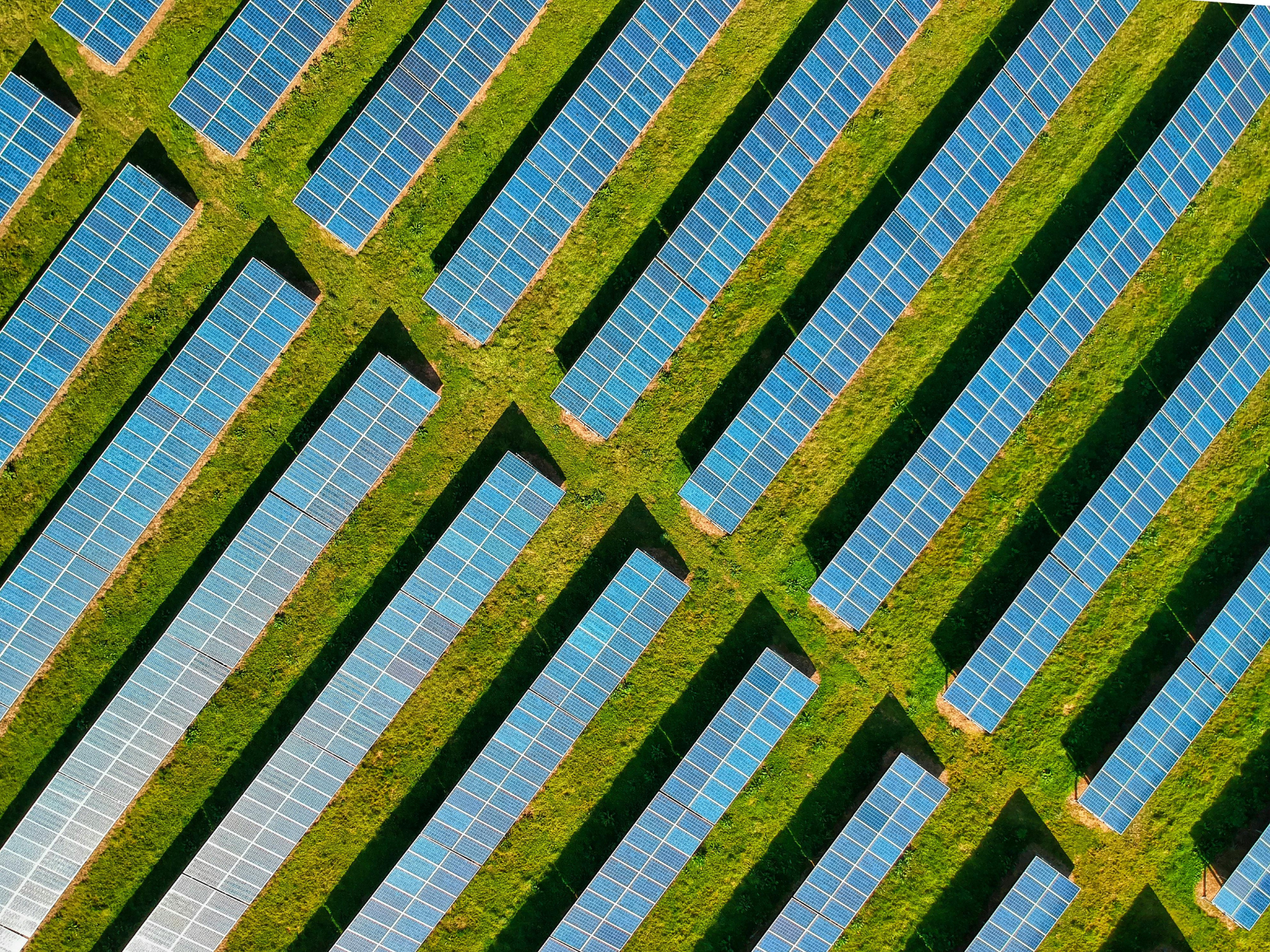
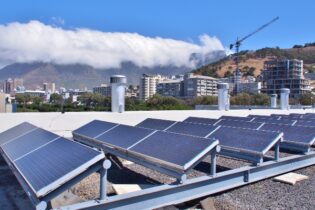
There are some 26 million solar panels installed in South Africa
EWaste Africa’s commitment to tackling solar panels stems from the fact that these panels, with approximately 26 million installed in South Africa, have shorter lifespans than initially anticipated. Managing their end-of-life process will become crucial for the industry.

Dr. Mark Williams-Wynn, CTO of EWaste Africa
Dr. Mark Williams-Wynn, chief technology officer of EWaste Africa, states, “Our PV module recycling operations are primarily driven by the need to divert waste from landfill. The amount of solar waste is increasing, and our main objective is to prevent it from ending up in landfill. Currently, the aluminium frame is the only component with real resale value, but we are continuously developing ways to increase the value derived from the modules.”
A key part of this strategy is the solar PV module triage facility currently under development. “Value comes from reusing modules versus complete recycling. The opportunity for refurbishment exists, but the market still needs to be created,” says Williams-Wynn. He points out that while new solar modules produce up to 700 watts, older models average less than 300 watts.
“That doesn’t mean they’re useless. Farmers can use them to power boreholes or irrigation systems. There are also niche applications like portable kiosks, or even school donations and hubs in informal settlements. Lower efficiency can still be useful in contexts where the demand is lower.” The triage plant, expected to come online in mid-2026, will utilise various industry-standard tests to determine whether modules are suitable for resale, refurbishment, or if they must be recycled.
Regarding circular economy applications, the company is already exploring ways to transform waste into new products. “We recover metals like aluminium and copper, but with few exceptions, glass cannot be recycled because there is no market. We are making interlocking eco-pavers from the glass, which can also contribute to a Green Star rating from the Green Building Council of South Africa,” Williams-Wynn explains. “Recovery of materials from the silicon layer is more complex. Purifying silicon for new panels is not necessarily feasible, but there are other ways to extract value from the modules.”
Service design is also critical. “All e-waste is considered hazardous and banned from landfill, so we provide a solution for compliance with these regulations,” Williams-Wynn says. The company manages transport, storage, and recycling, with logistics often being the most expensive part. “Transport is the biggest cost. Moving e-waste requires properly trained staff and certified, fit-for-purpose vehicles. For other types of waste, there are no local solutions, necessitating export, in which case compliance with the Basel Convention becomes essential.”
On the regulatory front, Williams-Wynn highlights the role of extended producer responsibility and national legislation. “We operate within the framework of the National Environmental Management: Waste Act of 2008 and its subsequent amendments, alongside norms and standards for classification, storage, and disposal of waste. Transport is governed by the Road Traffic Safety Act, which requires hazardous-specifically registered vehicles for the transport of waste.”
Looking ahead, he stresses that scaling up will prioritise social impact. “Manual disassembly is an ethical choice in South Africa. We could pursue automated separation or AI, but replacing jobs with machines is detrimental to society. One of our objectives is to create 200 jobs by 2030. Simultaneously, we are keeping up with global trends, where these are beneficial and create value, particularly in extracting precious metals, which require chemical processes. For now, we believe keeping everything manual for as long as possible makes sense in our specific context.”
Practicing what is preached
The company also applies sustainability internally. “We have taken our Pietermaritzburg facility completely off-grid. Taking a factory off-grid is no small feat, but we have to credit Sasol for supporting us in this process. Our Johannesburg facility will be completely off-grid by the end of next year, and our Atlantis facility will also be almost entirely off-grid. We do rainwater harvesting and use that for our paver production. We do not just sell sustainability; we live it as a company.”
Education is another critical component. “At the moment, only about seven to ten percent of e-waste is recycled in South Africa. To get to 30 percent, we need a generational change. That means starting in schools right now,” says Naidoo. “We do free activation days for corporates, but more importantly, we partner with organisations to run activations at schools. It is about creating a circular mindset early on during children’s formative years.”
Looking ahead

Electronic waste is considered hazardous and is banned from landfills
Naidoo says collaboration is key to scaling impact. “The more people that can recycle, the more volumes we can process, which drives more money into the circular economy. If one million of South Africa’s 63 million citizens actively support the collection network, we can continue to roll out the infrastructure for the whole country. The culture needs to shift so that separation at source becomes second nature.”
On solar panel recycling, he says demand is already here. “You cannot hide a solar panel. Once it reaches the end-of-life, you need a solution. We are already seeing massive amounts of stockpiles of end-of-life solar panels, and we are preparing for larger and larger waves of volumes to come. For the first time this year, solar will become a bigger waste stream in our facilities than lighting or electronic waste.”
Reporting on data is a key metric of growth and transparency, and EWaste Africa has also invested in digital systems to address this. “We have been building our own system for the last 24 months,” Naidoo explains.
“We QR tag every stock item that arrives at our facility, capturing information such as serial numbers, brand, and weight. This enables us to generate data directly for reporting to the South African Waste Information System and individual PROs. We are also able to provide clients with reports on CO₂ impacts and energy savings. For us, it is about applying innovation not just to recycling, but to logistics and reporting too.” The combination of collaboration, investment in local solutions, and effective monitoring is what EWaste Africa says, “will build the circular economy.”