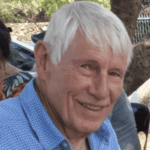
Jarrod Ball, waste management specialist and former IWMSA President
Navigating a new political landscape
Ball’s presidency of the Institute of Waste Management of Southern Africa (IWMSA) from 1994 to 1996 coincided with South Africa’s democratic transition. During that period, he represented IWMSA in making input into the Constitution of the New South Africa. Importantly, at that stage however, everything including waste management faced political scrutiny.“The political landscape was such that environmentalism became antagonistic rather than functional.” Ball explains. “There was an environmental lobby that saw landfilling as entirely bad.”He recalls opposition from people who could not accept that landfills are an unavoidable component of waste management, and who did not appreciate that the Minimum Requirements were there to upgrade landfilling, both environmentally and socially. What they offered instead of landfilling was “recycling alone” which is now understood to be unsustainable. Ball is happy that nowadays, environmentalists see landfills as assets to be conserved, with emphasis on diverting waste and enabling circularity. Another major theme of the 1994 transition to democracy was environmental justice. Landfills had historically developed in the “buffer zones,” associated with apartheid spatial planning. Invariably the poorer communities adjacent to these zones bore the brunt of the environmental and social impacts of the landfills, which were simply open burning dumps. At this point, the complexity of waste management met with the complexity of politics. Ball says. “It has taken much effort to address this problem and build the trust of the affected communities through social engagement. However, despite these efforts and the guiding Minimum Requirements, this issue persists.
From the “open burning dump and wet tipping” to the “circular system”
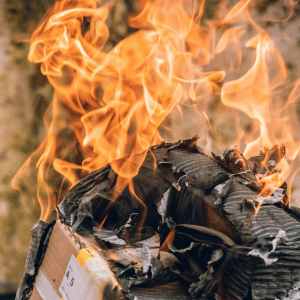

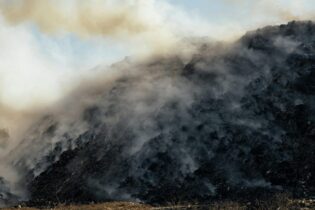
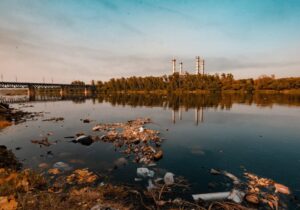
For much of his career Ball, “focused on eliminating open burning dumps, with their feet in the water and replacing them with appropriately engineered landfills that didn’t contaminate groundwater and didn’t harm people.” However, he adds, “You cannot just focus on end-of-pipe solutions forever. At some point, design, materials, and lifecycle responsibility must come into the picture.” Consequently, he says that the current IWMSA President, Patricia Schröder’s emphasis on Circular Systems “is music to my ears.” He also welcomes the introduction of functional Extended Producer Responsibility (EPR), stating that the concept is not new in South Africa.
“It has been around for a long time, actually on and off since the 1970’s. In the early days of Keep South Africa Beautiful, (KSAB), there were already discussions about producer responsibility, but back then, lobbying by the packaging industry and economics overrode the environmental argument.”Notwithstanding the above, Ball is adamant that even a circular economy will have significant residues that will need to be landfilled. He explains, “You always need safe, properly engineered and operated landfills as a fundamental component of the waste management system.” In this regard, with the difficulty associated with establishing new landfills, he foresees remote regional landfills and increased transport costs.
Persisting challenges and looking forward
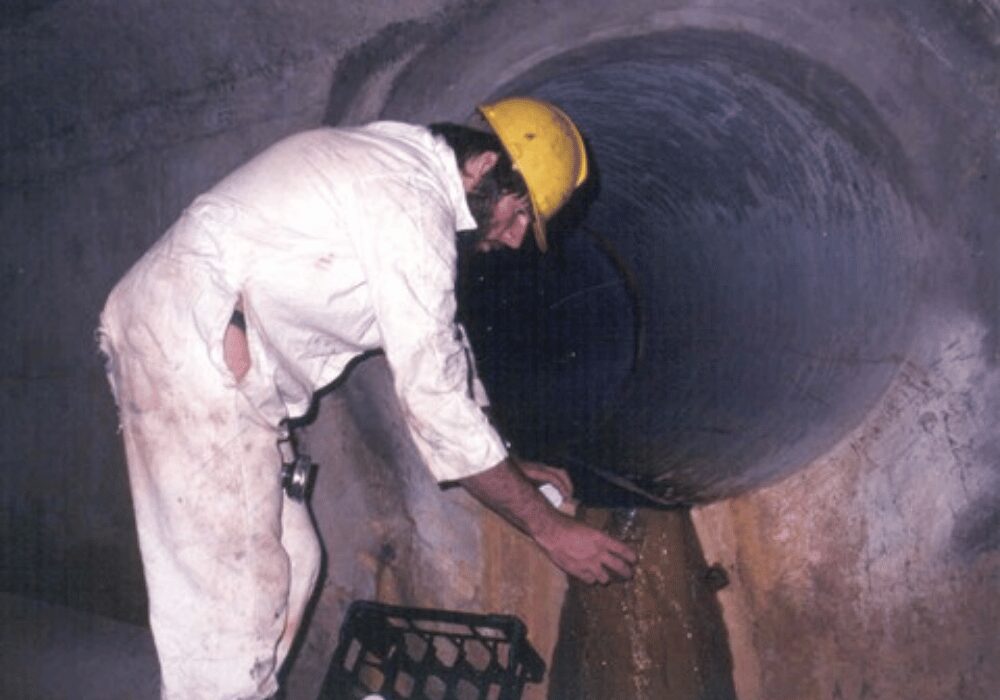
Jarrod Ball sampling water that had been contaminated by landfill leachate seepage
He notes that “Although wet tipping has largely been eliminated, many of the old operational problems still persist.”While the regulatory authorities are consistent on landfill design, regarding operations, they tend to be harder on the private sector, who generally have better qualified operators than on the public sector. This means that private sector landfills generally adhere to higher environmental and operational standards; large municipalities generally compact and cover their waste, while the smaller municipalities struggle. The problem within the public sector is that municipalities can construct technically sound landfill sites but fail to operate and maintain them properly. Ball says that the reasons for the problems in the Public Sector are complex. He suggests a lack of technically qualified personnel results in poor decision making. He adds, “Political interference in decision making and prioritisation; as well as underfunding and corruption are major hurdles.” Ball goes on to say, “you cannot manage waste properly without properly trained people. This is a technical discipline, requiring technical competence.” He adds with some pride that, since its inception, IWMSA has focused on training, with a view to professionalising waste management. As IWMSA marks its 50th anniversary, Ball remains deeply optimistic about the profession he was privileged to have had a role in developing.
“A career in waste management has been one of my greatest gifts! Throughout, it has kept me enthusiastic and committed. Importantly, I have also met numerous people in the IWMSA who feel the same.”His advice to the current IWMSA leadership is: “Promote the science and practice of waste management by continuing to prioritise education, mentorship, and technical rigor. Focus on central, provincial, and particularly local authority staff, so that the decision makers can make informed decisions. Through means such as WasteCon, reach out to and educate the politicians regarding the importance of waste management, so that they can be influenced to make appropriate policy and ensure correct prioritisation.” From a boy concerned about waste being dumped into water in a deserted quarry to someone, who through the support of many people, was able contribute to waste management in South Africa, by guiding the formulation of the national landfill standards, Ball’s career mirrors the evolution of South Africa’s waste sector itself. From open burning dumps and wet tipping, to regulated engineered landfill designs; and from end of the pipe solutions, to emerging circular waste management systems and extended producer responsibility. In its 50 years of existence, the achievements of the IWMSA stand as a testament to that journey.