
Deputy Minister of Water and Sanitation, David Mahlobo has resolved to set up a political steering committee to track the progress of the phase 2 of the Vaal Gamagara Bulk Water Supply Scheme (VGBWSS) currently on implementation in the Northern Cape.
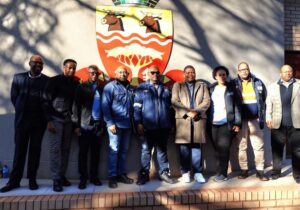
Deputy Minister Mahlobo together with MEC of Cooperative Governance, Human Settlement and Traditional Affairs (COGHSTA), Mr. Bentley Vass and the Executive Mayor of Gamagara Local Municipality, Cllr. Johannes Roman, yesterday (07 July 2026) met with various stakeholders including representatives from Vaal-Gamagara Water User Association, Vaal Central Water Board, Mining Labour Forum and Kalahari Water User Association in Kathu, Gamagara Local Municipality, Northern Cape to assess the project status of the bulk water supply project valued at R14.9 billion. The VGBWSS project, located in the John Taolo Gaetsewe District Municipality, is a landmark public private collaboration model between Government, and private sector including commercial water users such as mines, farmers and industries. The private sector water users are committing 56% of the required funding, while government is contributing 44%. Phase 1, valued at R1.4 billion, was completed in 2022 and is currently providing water to various mines, municipalities, the agricultural sector and approximately 6 000 households in Gamagara and Tsantsabane Local Municipalities.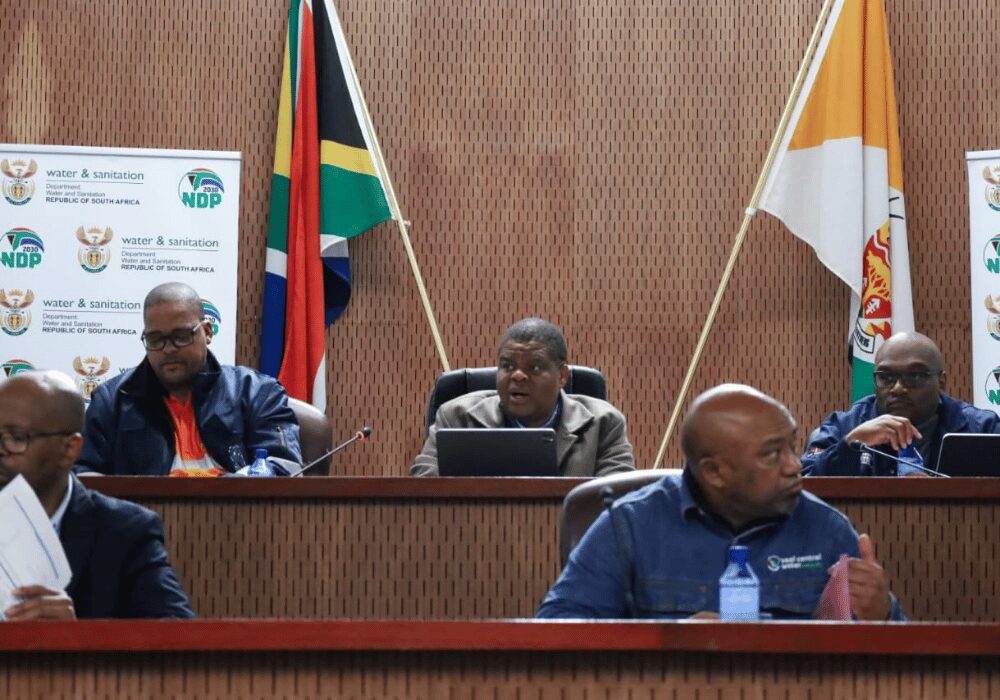 The second phase of the water project is also about the upgrading of about 300-kilometre remaining pipeline, from the Vaal River Pump Station to Roscoe near Kathu, as well as associated water infrastructure such as pump stations and reservoirs. The completion of the 2nd phase will benefit municipalities, mines, farmers and other industries within the John Taolo Gaetsewe District.
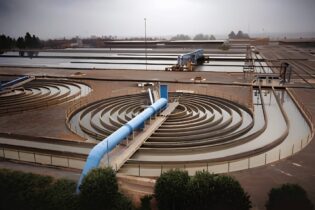
Deputy Minister Mahlobo was briefed on the performance of current scheme, progress on the Phase 2 project, governance arrangements, implementation milestones and challenges affecting progress of the whole mega bulk water supply project. The Deputy Minister said he was “pleased to note that the management of the (Gamagara Water Treatment Works) plant has improved because of the technical capacity that the Vaal Central Water Board is bringing on board. In am told in the months of April, May and June, water supply to water users has been stable in terms of pumping and distribution. I also visited the Olifantshoek water reservoir and pleased to see that the reservoir has a good chlorination system in place to address water quality issues”.

Deputy Minister Mahlobo also gave assurance that the water supply system was being managed to ensure that there is assurance of supply for all water users. “Due to the extreme weather in the Northern Cape that could affect capacity, the Vaal Central Water has come up with what they call Trigger Response Plan through which they will be working with municipalities and stakeholders to tackle any challenge that may arise. Water losses are also being addressed as there’s an optimisation system in place”.
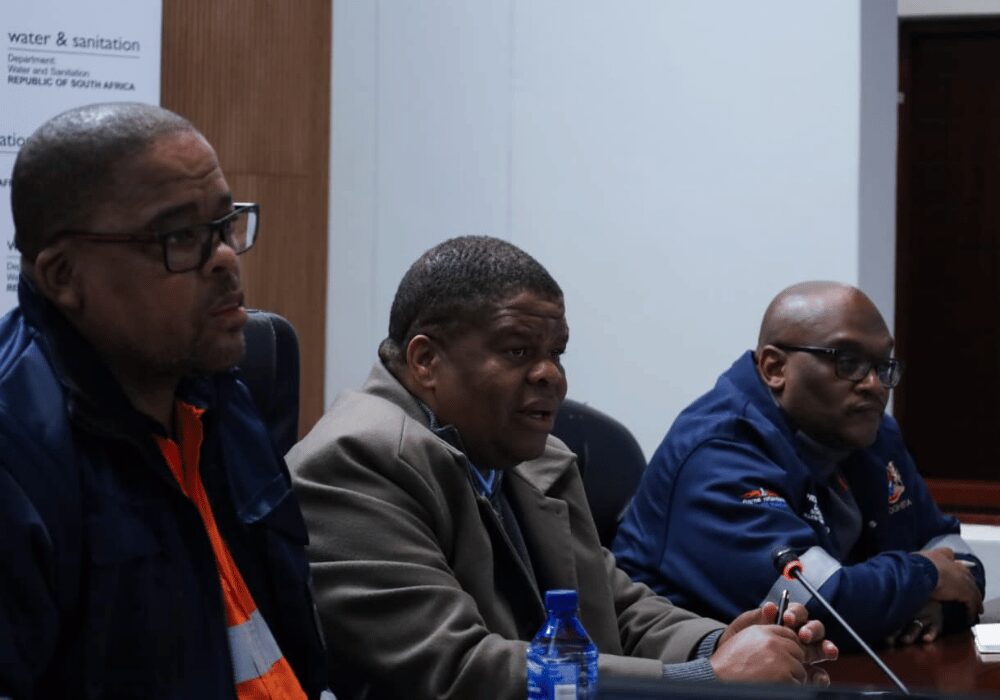 “Coming to institutional arrangements, we need to urgently finalise what we call Tripartite Memorandum of Understanding (MoU) between the DWS as the guarantor, Vaal Central Water as Asset Manager and the Mining Forum – to enable the Phase 2 to move with speed. It should not take us long to finalise issues of designs and water authorisations. Commitment on finances also need to be finalised”, the Deputy Minister alluded.
To fast-track progress on the project, Deputy Minister Mahlobo said his office will set up a political steering committee in the Northern Cape where the project managers will be expected to report on a monthly basis on progress of the project.
The VGBWSS is a critical water supply scheme that serves communities, municipalities, mines, farmers and industries across the Northern Cape which is mostly comprised of desert areas which lack rainfalls. The project is central to improving long-term water security, supporting economic growth and sustaining mining and industrial activities that contribute significantly to the provincial and national economy.
“Coming to institutional arrangements, we need to urgently finalise what we call Tripartite Memorandum of Understanding (MoU) between the DWS as the guarantor, Vaal Central Water as Asset Manager and the Mining Forum – to enable the Phase 2 to move with speed. It should not take us long to finalise issues of designs and water authorisations. Commitment on finances also need to be finalised”, the Deputy Minister alluded.
To fast-track progress on the project, Deputy Minister Mahlobo said his office will set up a political steering committee in the Northern Cape where the project managers will be expected to report on a monthly basis on progress of the project.
The VGBWSS is a critical water supply scheme that serves communities, municipalities, mines, farmers and industries across the Northern Cape which is mostly comprised of desert areas which lack rainfalls. The project is central to improving long-term water security, supporting economic growth and sustaining mining and industrial activities that contribute significantly to the provincial and national economy.