Learn why National Treasury is withholding equitable share transfers to 69 municipalities and what it means for governance and service delivery.
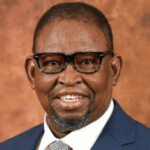
Minister of Finance, Enoch Godongwana
Minister of Finance, Enoch Godongwana, confirms that the National Treasury is temporarily withholding R13.5 billion in equitable share transfers to 69 municipalities across all nine provinces, including major metros like the City of Johannesburg.
This intervention targets persistent financial mismanagement, unauthorised, irregular, fruitless and wasteful expenditure and non-compliance with the Municipal Finance Management Act.
This is an important moment that shapes how the National Government can intervene in municipal governance, especially given the legislated context of equitable shares.. Equitable shares are the mechanism for dividing nationally collected tax revenue among national, provincial, and local governments to ensure they can provide basic services. It is an unconditional, needs-based allocation, meaning that the receiving sphere or municipality has the discretion to prioritise exactly how the funds are spent.
Godongwana explains that municipalities are the frontline of South Africa’s democracy and that while they bear the brunt of larger socio-economic pressures like rising service costs, consumer debt, and weak local economies, they are also responsible for their own financial conduct and misconduct.
Municipal failures have far-reaching consequences for the economy, and Godongwana notes that as public expectation rises, so does the scrutiny of municipalities. The minister notes, “The mismatch between municipal revenue authority and expenditure responsibilities has become a worrying factor, and the consequences are felt daily by households and businesses through service delivery challenges. A significant portion relates to the internal organisation of municipal finance itself. Many councils continue to adopt unfunded budgets, fail to process Unauthorised, Irregular, Fruitless and Wasteful Expenditure (IFWE) through their Municipal Public Accounts Committees, and neglect consequence management.”
As South Africa puts more pressure on municipalities to ‘do their job ’, and the growing expectations on the Government of National Unity (GNU) to make real change, the National Treasury has taken note. The minister says, “These internal weaknesses, poor governance structures, lack of accountability, and ineffective financial oversight compound external challenges and directly undermine service delivery.” This has led to what Godongwana calls an “extraordinary but necessary step.” The decision to withhold equitable shares is done according to Section 216(2) of the Constitution and the Municipal Finance Management Act (MFMA). The ministry says this is “not punitive but corrective”
Why this action was necessary
Despite years of support, guidance, and training, many municipalities continue to:
- Adopt unfunded budgets;
- Accumulate Unauthorised, Irregular, Fruitless and Wasteful Expenditure (UIFWE);
- Fail to meet statutory obligations to Eskom, water boards, SARS, the Auditor-General, and pension funds.
The numbers are sobering:
- Since 2021–22, municipalities have incurred R24.12 billion in fruitless and wasteful expenditure.
- They have accumulated R145.21 billion in irregular expenditure, with R40.14 billion in 2024–25 alone.
- They have disclosed R118.13 billion in unauthorised expenditure, more than half of which was on non-cash budget items.
- Budget credibility has deteriorated: in 2024–25, 116 municipalities, nearly half, adopted unfunded budgets.
- By year-end, municipalities owed R3.40 billion in interest to Eskom and R1.21 billion to water boards, while 48 municipalities had overdue third-party deductions.
Godongwana says the financial aspect affects the “financial sustainability of bulk suppliers, undermines statutory bodies, and disrupts service delivery. Non-payment of service providers results in penalties, interest charges, and service interruptions. Weak governance and failure to process UIFWE through Municipal Public Accounts Committees (MPACs) erode accountability and public trust. South Africans deserve municipalities that are financially sound, accountable, and capable of delivering services. By invoking the Constitution, we are signalling seriousness about governance, fiscal responsibility, and the rule of law.
National Treasury’s position
Despite ongoing support through circulars, training programmes and direct engagements, many municipalities have failed to adopt funded budgets, address unauthorised, irregular, fruitless and wasteful expenditure (UIFWE), and meet statutory obligations to entities such as Eskom, water boards, the Auditor-General of South Africa (AGSA), SARS and the Financial Sector Conduct Authority (FSCA). The withholding aims to protect essential services by redirecting funds directly to Eskom, water boards and other statutory bodies while encouraging municipalities to improve their financial management practices.
To have transfers reinstated, municipalities must demonstrate compliance by reducing irregular expenditure balances, adopting funded budgets, ensuring Municipal Public Accounts Committees (MPACs) function effectively, and implementing consequence management measures such as investigations, disciplinary action, recovery of losses and criminal referrals where necessary. National Treasury has set targets including a 15% reduction in irregular expenditure balances by August and a further 15% reduction by September. Compliance will be closely monitored by provincial treasuries, while National Treasury will continue providing support as part of a broader effort to restore accountability, financial sustainability and service delivery in local government.