
Meat Naturally Africa marks a new phase in its mission to professionalise herding and bring economic dignity to South Africa’s communal rangelands.
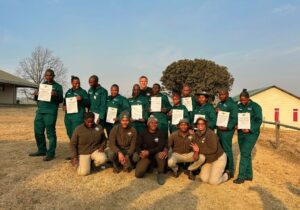
Eleven EcoRangers recently completed the classroom training phase of Meat Naturally Africa’s (MNA) EcoTrainer programme, in what the organisation is calling a significant milestone in an effort to build genuine career pathways for herders in South Africa’s communal farming heartlands.
The graduates – drawn from farming communities across KwaZulu-Natal and the Eastern Cape – will now fan out across the rangelands where MNA operates, delivering in-field training to the next generation of EcoRangers. In doing so, they make the transition from stipend-paid community members to salaried MNA employees with full benefits, becoming part of the organisation’s professional field staff. It is a shift that sounds modest. In the context of rural unemployment in two of South Africa’s most economically pressured provinces, it is anything but. Communal farmers collectively own 47 percent of South Africa’s livestock but supply just eight percent of the formal red meat market. The herders who manage that livestock have historically been among the least recognised workers in the agricultural sector – essential to the rural economy but invisible to it at the same time. MNA’s EcoRanger programme is built on the premise that changing this starts with the herder. “The herder is the most undervalued resource in communal farming,” says MNA founder and CEO Sarah Frazee.“We are not just training people but we are building a profession. Every EcoTrainer who graduates this week is proof that a young person from a rural community can move from following cattle to leading others, and that a farmers’ association can become a real employer. That is the economy we are trying to build.”The 11 graduates bring MNA’s total EcoTrainer cohort to 27, supported by approximately 700 active EcoRangers currently operating across KwaZulu-Natal, the Eastern Cape and the Free State. The programme uses an apprenticeship model: a five-day Foundations Course covers grazing management, fire management, soil erosion, invasive plants and rangeland ecology, followed by up to three years of monthly in-field coaching delivered by EcoTrainers like the ones who graduated this week. Wandile Dlamini, MNA’s Training and Development Manager, describes the EcoRanger designation as a deliberate reframing of what a herder can be. “We are capacitating herders to be more than just herders – we are building them to be trained and skilled rangeland stewards.” The most capable, he adds, go further still. Andile Silimela, one of MNA’s first EcoTrainers, has since moved into the organisation’s technical fire and soil management team, a career arc that was unimaginable when he started. MNA is also working toward AgriSETA accreditation, which would make the EcoRanger course a formally recognised qualification and further cement the profession’s standing. The 11 new graduates join a programme that has already connected 10 000 farmers to more than R134 million in earnings – 87 percent from livestock auctions held in their own villages, across 580 000 hectares of communal rangelands.