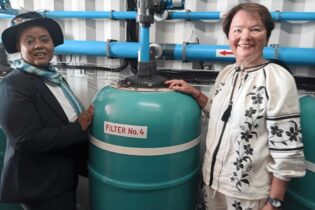

Refilwe Buthelezi sits at the intersection of engineering, regulation, operations, and infrastructure leadership.
As President of the Federation of African Engineering Organisations, having led the Engineering Council of South Africa, and a senior figure at Rand Water, she brings a wide-ranging perspective on the continent’s water challenges. Ahead of WISA 2026, she shared her views on climate resilience, professional standards, digitalisation, infrastructure investment, and Pan-African collaboration.Q: As President of the Federation of African Engineering Organisations, how do you see water security shaping engineering priorities across the continent, particularly in climate-vulnerable regions?
A: Water security is now a central engineering priority because climate change has made past assumptions less reliable. Engineers can no longer depend only on historical rainfall and weather patterns when planning infrastructure. They need better foresight, stronger data systems, and technologies that help them respond to changing conditions. But technology alone is not enough. Africa also needs to build its own skills and capabilities, so solutions work in local contexts. Regional collaboration will be key, especially for shared rivers and cross-border water systems. Buthelezi says Africa must organise itself better, collaborate more and align more deliberately around the Sustainable Development Goals.In your previous role with the Engineering Council of South Africa, how can professional standards better support resilient water infrastructure and reduce failures in municipalities?
Professional standards are essential because they protect public safety, strengthen infrastructure quality, and support long-term resilience. Buthelezi says regulation must keep pace with change, especially as new disciplines like digital systems, artificial intelligence and renewable energy reshape the profession. Municipal infrastructure also depends on the full engineering value chain, including artisans, technicians, and technologists. She believes these roles must be properly recognised and regulated. Just as important, professionals must be allowed to make technical decisions without any interference. For example, if a plant is not ready for commissioning, they should be able to say so.How is digitalisation transforming water management, and where do the biggest opportunities and risks lie?
Digitalisation is changing water management across the full system, from abstraction and treatment to distribution and asset management. At Rand Water, automation, smart dosing, automated laboratories, and machine-to-machine communication are helping improve efficiency and provide real-time visibility. One of the most promising developments is the use of digital twins, which lets operators test scenarios and diagnose problems without disrupting operations. Satellite-based leak detection, structural monitoring, and predictive maintenance are also creating new opportunities. However, digitalisation brings cybersecurity risks, so it must be implemented responsibly and with strong governance and internal controls and protection.As a board member of major infrastructure organisations, how do large-scale transport and logistics projects intersect with water stewardship?
Transport infrastructure and water stewardship are intricately linked because ports, rail corridors, and roads all interact with the natural environment. These projects must account for climate risk, conservation, and long-term environmental impacts.
At the board level, this is now part of ESG responsibility. Buthelezi emphasises the need for community engagement, environmental rehabilitation, and a social licence to operate. Infrastructure organisations must work with local communities and make sure environmental care is built into project decisions from the start.