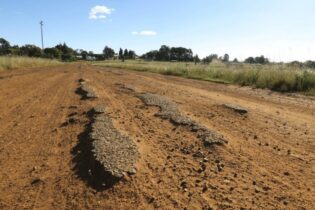
The equitable share freeze exposed deeper municipal finance failures, from unfunded budgets and debt to systemic service delivery challenges.
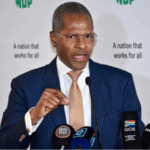
Velenkosini Hlabisa, Minister of Cooperative Governance and Traditional Affairs (COGTA)
The announcement to temporarily withhold equitable shares due to municipalities in July was met with both cheers and scrutiny. Equitable shares are ‘non-negotiable’, and the national government has no say in how those shares are used by the municipality, indicating the severity of the withholding measure.
By Duncan Nortier
The reason for withholding these shares, as stated by National Treasury, was to get municipalities to comply with financial obligations. Minister of Finance Enoch Godongwana says the municipalities continue to adopt unfunded budgets, accumulate Unauthorised, Irregular, Fruitless and Wasteful Expenditure (UIFWE), and fail to meet statutory obligations to Eskom, water boards, SARS, the Auditor-General, and pension funds.
The Treasury sent letters to 99 municipalities urging them to comply with their demands by June 30th; only 30 responded, and the remaining 69 had their equitable share transfer frozen in July. Since then, the Ministry of Finance confirmed that all 69 municipalities had responded to the letters and were assessed against the criteria to receive funds. This was done according to section 216(2) of the Constitution.
Following the freeze, 20 municipalities received their funding in full, 21 received partial funding to pay key creditors such as Eskom and water boards, leaving 28 with no funding. National Government cannot directly intervene in municipalities, and the shares can only be held for 30 days, so even if municipalities ignored the letters, these shares would be released eventually.
The decision to withhold these shares was not without criticism; Minister of
Cooperative Governance and Traditional Affairs (COGTA) Velenkosini Hlabisa stated that municipalities were also owed money from national and provincial departments, and that their finances were not solely due to irregular spending. The South African Municipal Workers’ Union (SAMWU) stood firmly against the decision to withhold funding, saying that municipal workers could not be paid. Another common criticism was that service delivery was already precarious, and this threatens a collapse of mandated service delivery.
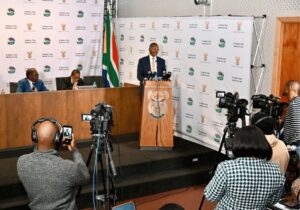
On the 28th of July 2026, both COGTA and National Treasury addressed the media, clarifying the stance of government and providing an update. Minister Hlabisa reiterated that municipalities should be supported, but this time reaffirmed the Treasury’s position of not adopting unfunded budgets. This media briefing showed a more concrete position from the national government; both departments stood by the decision to withhold funding, and both departments honed in on combating unfunded budgets.
The Minister of Finance also stated that the remaining R7.1 billion in equitable shares will be transferred to the remaining municipalities starting Friday, the 31st of July. However, he notes, “This is not due to some compliance turnaround; this is to prevent collapse of service delivery.” Minister Hlabisa adds, “That money should be paid to every organ of the state that needs to be paid; but the obligation lies with the municipalities to do so.”
A closer look
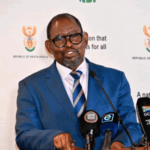
Finance Minister Godongwana
The action to withhold equitable shares demonstrates a limit to what the National Treasury can do to intervene in the municipal arena. The shares can only be held for 30 days, and the letters stating what municipalities must do to comply do not compel municipalities to do so. The division of government means that failing municipalities still receive equitable shares even if they don’t comply, even if they do not intend to comply.
Treasury and COGTA note that withholding the shares is a ‘last resort” and, along with the letters, act as corrective measures rather than purely punitive ones. However, it must be noted that municipalities reacted as if it was punitive. It was reported that 12 municipalities had failed to pay salaries, citing withholding as the reason for low liquidity. The hardest hit has been in the Free State, with six municipalities failing to pay their workers. SAMWU highlighted that while the funding freeze was meant to correct financial irregularities, the real damage was done to workers who have no say in financial matters, and that municipalities are already in financial precariousness, so withholding funds could worsen or even stop service delivery. This highlights the key point that both Treasury and COGTA maintain: municipalities are not managing their financial obligations and are exacerbating their financial predicament by adopting unfunded budgets that mostly go towards salaries rather than service delivery. Put another way, if municipalities are so reliant on the equitable share, which only gets distributed in March, July, and December, they are not operating in a financially sustainable manner.
Finance Minister Godongwana says, “Some of the municipalities that were unable to pay salaries have been unable to pay salaries in the past too,” and blaming the equitable share withholding is not the full picture.
In the case of municipalities receiving only a portion of their funding intended for creditors, like the City of Johannesburg, the goal of Treasury was to correct the non-payment of creditors that threaten the functionality of the entire country. Johannesburg received part of its share to pay Eskom and Rand Water, who are mandated to provide a service despite historic non-payment.
COGTA was also quick to point out that municipalities were also the victims of non-payment. “Residents who use municipal services as well as provincial and national departments do not pay municipalities”, says the COGTA minister. He adds, “The next step is to address non-payment of municipalities by all government, national departments, and provincial governments that owe billions of rands to municipalities; this may entail a similar withholding approach.”
This all illustrates a larger systemic problem in South Africa. The tension between mandated services and the ability to pay for them. Despite being mandated to provide basic services, many municipalities fail to do so, even before the equitable share freeze. Provincial and national government receive services from municipalities but do not pay them. There is also direct opposition to the user-pays principle among ratepayers. South Africa has legal requirements for the system to function, and in many ways there is no choice for the system to continue, but the system needs funding which is continually being neglected by multiple parties. While municipalities continue to adopt unfunded budgets, avoid transparency and accountability, fail their mandate and fail to pay creditors, all while not ring-fencing budgets and improving revenue collection, they will never be functional. Both Treasury and COGTA stress that they want municipalities to function, and this current wave of withheld shares aims directly at improving budgeting within municipalities, especially in light of the November elections where new members of council will have to work with the previous council’s budget issues.
The road ahead in preparation for the same process in December 2026
While the implementation of section 216(2) of the Constitution has been ongoing, with some municipalities receiving their withheld tranches in full or in part on a weekly basis, in consultation with my team, I have decided that all outstanding funding must be released by 31 July 2026, or on the next legally possible date in terms of the Constitution, to avoid a negative impact on service delivery, subject to the following:
- Letters to Premiers with strict conditions for consideration in withholding the December 2026 instalment of the Equitable Shares;
- Letters to both MECs for Finance and CoGTA with strict conditions for consideration in withholding the December 2026 instalment of the Equitable Shares; and
- A structured compliance programme will accompany the release. The first formal reporting deadline remains 30 September 2026, in accordance with my July 2026 letter.
Affected municipalities must submit the required quarterly reports and supporting evidence. They must also demonstrate achievement of the applicable UIFWE processing and reduction requirements.
- National Treasury will then require further measurable improvement during October and November 2026.
- By 31 October 2026, affected municipalities must demonstrate processing of matters outstanding as at 30 June 2026 through the required legal processes.
- By 30 November 2026, there should be a demonstrable increase in the number of matters as at 30 June 2026 that have progressed through the UIFWE reduction and disciplinary board processes to conclusion.
- Progress will not be measured only by reductions in UIFWE balances but also implementation of consequence management processes. National Treasury will assess whether matters have moved through the required investigation, disciplinary, recovery and criminal processes
Godongwana concludes, “National Treasury remains committed to support municipalities during this period on their road to compliance.”