The quiet rise of women in South Africa’s communal rangelands.
On August 9 1956, 20 000 women marched on the Union Buildings in Pretoria to protest the extension of apartheid pass laws, leaving behind the famous phrase that has echoed through South African life ever since – wathint’ abafazi, wathint’ imbokodo (you strike a woman, you strike a rock).
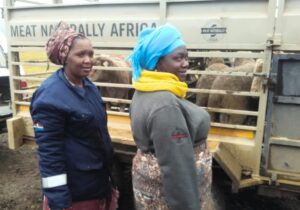
Seventy years on, as the country marks National Women’s Day, that image of women as the rock beneath the nation’s progress finds an unexpected echo across the communal rangelands of KwaZulu-Natal and the Eastern Cape, where a farmer-owned social enterprise called Meat Naturally Africa has spent a decade proving that rural women are not bystanders in conservation and agriculture but rather its backbone.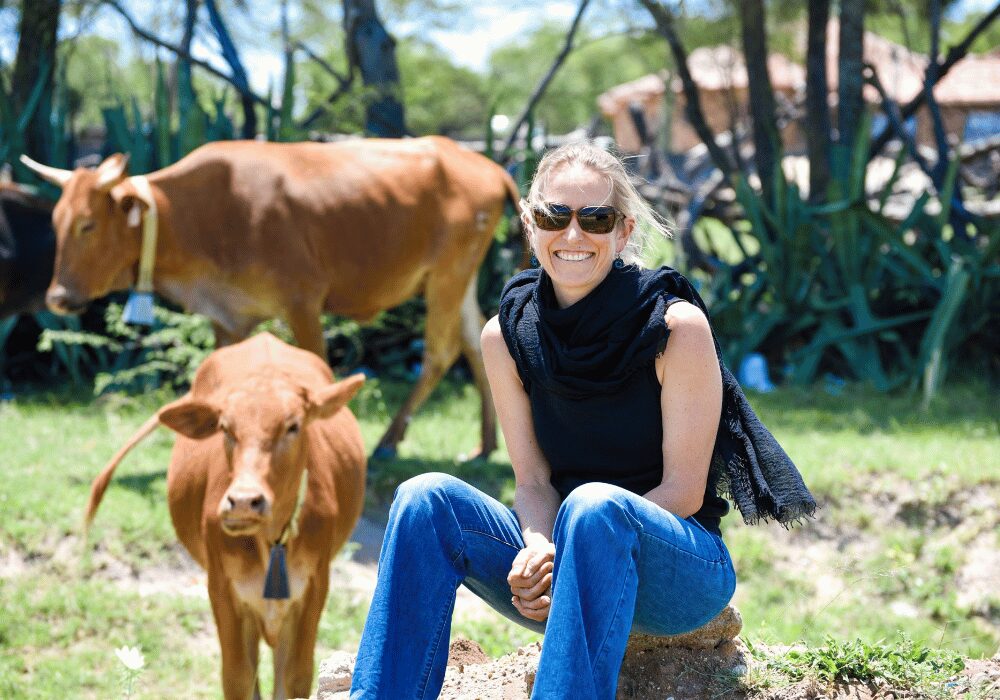
Sarah Frazee is the founder and CEO of Meat Naturally Africa
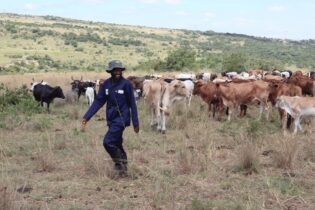
“If conservation only speaks to game reserves and national parks, it will always miss critical places South Africa’s wildlife needs to survive. We had to find a way to ensure communities are able to take care of the biodiversity on their land. Livestock was the obvious answer because it’s the asset communal farmers already know and value.”In 2013, Frazee began sketching out that idea with Guy Deacon (currently MNA’s technical director) and colleague Gerbrand Nel. Three years later, Meat Naturally Africa (MNA) was formally founded on a simple premise, to reward communal farmers with access to formal markets in exchange for better grazing, fire management and land stewardship. It is a model that has since facilitated more than R134 million in livestock sales, involves more than 10 000 communal farmers, and is restoring hundreds of thousands of hectares of communal rangeland. This year MNA achieved a global first when a partner carbon project became the first anywhere in the world to issue carbon credits carrying both Verra’s VM0042 methodology and the Climate, Community and Biodiversity label. But scratch beneath the headline numbers, and it is women who anchor much of that transformation. Within the GRASS carbon programme, women make up 35 percent of registered livestock farmers, steering decisions about grazing plans, livestock health and land management on the ground. Of the roughly 600 herders currently being upskilled into long-term rangeland management careers across the organisation’s footprint, close to a third are women, which is a striking figure in a profession that has, for generations, been treated as exclusively male terrain. That shift has been deliberate rather than accidental.

Meat Naturally Africa’s wool business, Fleece Naturally Africa, counts women as roughly half its participating farmers, supported through mobile shearing services and training in wool grading, spinning and felting that keeps more value inside rural communities rather than flowing out to middlemen.
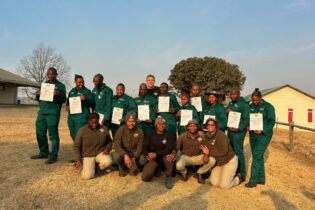
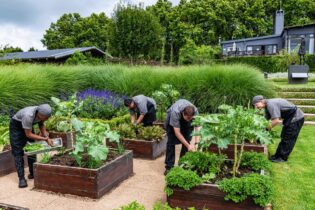
Since 2025, an initiative called Women in Wool Against Wildfire has trained 44 local women and young people as community champions across nine communities, equipping them to run fire-awareness sessions in schools and neighbourhoods while deepening their own knowledge of wool production and pricing. The thinking behind it is simple: most veld fires in these areas start not out in the grazing lands but close to home, often sparked by cooking fires or children playing near dry grass. As the primary caregivers in most rural households, women are uniquely placed to shift that behaviour before a spark becomes a disaster. In return for their time, champions receive practical incentives, along with something less tangible but just as valuable: recognition as leaders within their own communities. It is a philosophy Frazee returns to often. Women don’t merely need to be included in rural economic development; they need to be positioned to lead it.“Women are often expressing their concern about what the land will look like for their children and grandchildren,” she reflects. “That instinct makes them natural stewards of regenerative agriculture.”Meat Naturally Africa’s inclusion of women extends beyond livestock and wool. In the Kruger National Park buffer zone, visitors can purchase meat from MN Kruger Meats in support of local farmers, with a portion of the proceeds donated as meat to an early childhood development school bordering the park. Elsewhere, youth-focused programmes are widening that pathway further. The three-year EcoRanger Apprenticeship gives young people, including many young women, structured training in grazing coordination, livestock monitoring and fire management. Frazee is candid that the road to building the MNA model has not been without friction, particularly as a female leader in agriculture and conservation, two fields that have historically been dominated by men. “In the early years it was often hard to be taken seriously, but not being seen as the obvious expert had its advantages too. It meant I could ask the basic questions and challenge assumptions that everyone else had simply accepted as fact. I found I could lead through building trust and support rather than authority, and that has worked far better with communal farmers than any top-down approach ever could.” That trust-first model now underpins an organisation working across 180 communities and roughly 580 000 hectares of communal rangeland, with ambitions to reach one million hectares in South Africa by 2028 and five million across the African continent by 2030. For Frazee, Women’s Day this year is as much a moment to look forward as to look back. “I’d love to see more women in this sector finding the links between livestock, land and the wellbeing of their households and communities. This is where women can lead better than anyone.”