
Thabo Mngomezulu, director of Kasi Gas
The challenges of rural life
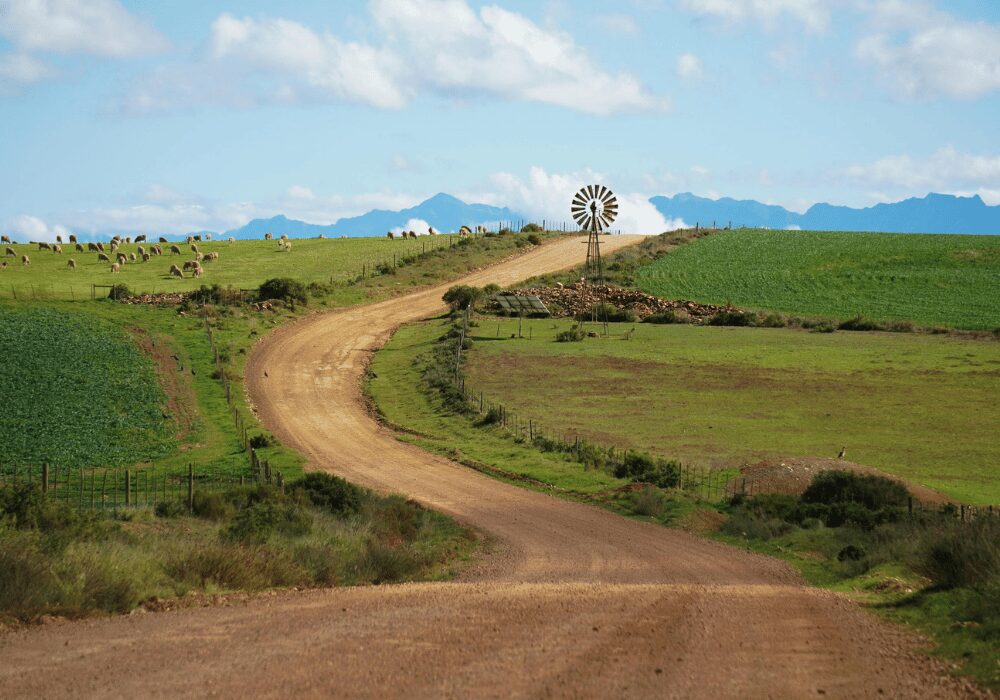
Many biogas initiatives in the global north focus on scalability whereas South Africa benefits from smaller localised solutions
“The dangers of paraffin are well documented, LP gas can leak and lead to fires, and often, rural communities’ use of wood is unsustainable and inefficient.”
Biogas
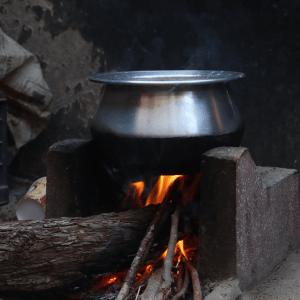
Rural communities often use wood for
cooking, which is unsustainable and
less reliable than biogas

“Having a massive digester that requires too much input is a liability in rural South Africa. Making these digesters smaller and manageable means that people can use and benefit from them daily without much interruption.”
While Mngomezulu says that securing funding for these smaller-scale projects is challenging, he hopes that his case will make way for more serious investment. In 2014, when he set out to make this project a reality, he ran into this problem, but his belief in this project led him to apply for the Mercedes-Benz Fellowship, where he was shortlisted to pitch and secure funding. “When Kasi Gas was selected, it was very affirming; it showed me that my ideas and beliefs were worth investing in, and allowed Kasi Gas to get the funding it needed to run a pilot project. South Africa is very risk-averse, and investors like projects that are already proven, and now this was the opportunity to have a working model to show South Africa that rural investments are worth taking note of.” The location for the pilot project is near the village where Mngomezulu grew up in Mpumalanga.Micro-franchising and community engagement
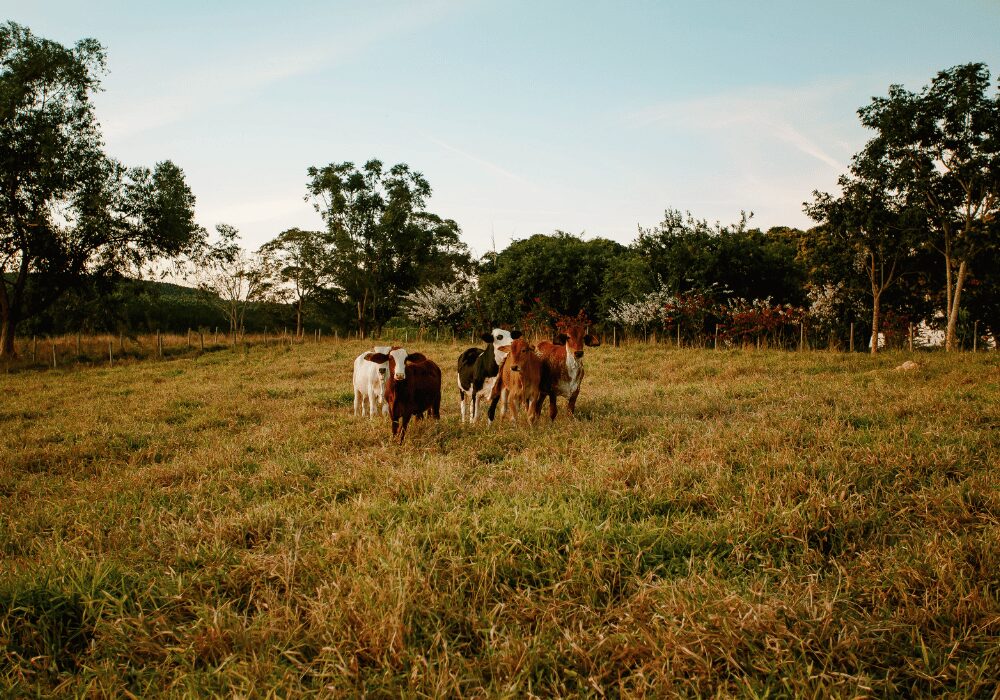
Using cow
manure from subsistence
farmers, the system
is highly circular
“We wanted something smaller, so we commissioned a one-tonne digester,” adds Mngomezulu.This smaller scale allows villages to create the gas they need and maintain the amount of organic waste needed to sustain the use. Too big and there would be lags in waiting time where gas is not created, and too small, then there would not be enough gas to be useful. Sourcing the organic waste was a crucial step, and Mngomezulu explains, “I wanted the waste to come from the communities it would serve. Kasi Gas partook in extensive community engagement to ensure that local businesses like the women selling food are able to discard their waste to be used in the digester. We have also partnered with schools in the area that are reliant on feeding schemes to ensure a constant stream is made available. Farmers are also encouraged to give the waste over during harvest.” The business model that Kasi Gas is exploring is that of a micro-franchise, which means that villages own and operate the biogas digesters for their own use, and the design, installation, and maintenance are handled separately. This ensures that the community feels part of the process, “We did not want to come in and give away the digester. What we wanted was something the community could own and take pride in, which opens them up to the project and its benefits while making it as easy as possible,” adds Mngomezulu. Rural areas are ideal locations for co-operative ownership models and decentralised networks that immediately add value to an area by directly addressing the needs there. The value proposition is more than just offering sustainability, and Mngomezulu wants to avoid this sort of moralising, instead focusing on how this project can help communities and be sustainable in tandem. “If biogas ended up being more expensive than LP gas, it would not work. These are fragile economic ecosystems, and the competitive price point of biogas is a big draw for villagers. LP Gas is more expensive outside the city due to travel costs and is not always available. The price of Biogas is R150 for 5 kgs, which is significantly lower than LP Gas in rural areas, and always available because these plants will be in the community they serve. This means the women who operate small food businesses can make more money on their product, and those who need heat have a constant and cheap source.” The byproduct of these biogas digesters is a nutrient-rich fertiliser, which further adds to the economic and sustainable goals of Kasi Gas. Rural areas in South Africa rely on subsistence and small farms, which can pose their own challenges. Using chemical fertilisers and depleting the soil is a real problem according to Mngomezulu, who says, “By having fertilisers sold for cheaper than chemical fertilisers, it encourages farmers to buy locally and opens up the conversation about sustainable farming too. Having this byproduct also generates income and helps the local community is as important as the energy generated.” For an initiative like this one, the circular economy and the push for sustainability can create real economic growth in rural South Africa, and by partnering with local companies like Agama and engaging with the communities directly, Kasi Gas are paving the way forward for sustainable businesses to develop in rural areas.
“I hope that Kasi Gas can serve as a touchpoint for people looking to invest in rural-based solutions and show investors that this is not just doable but necessary in terms of the circular economy and aiding these communities who get left out.”