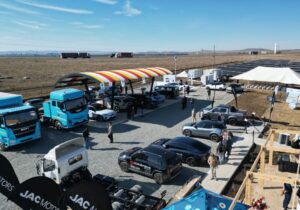

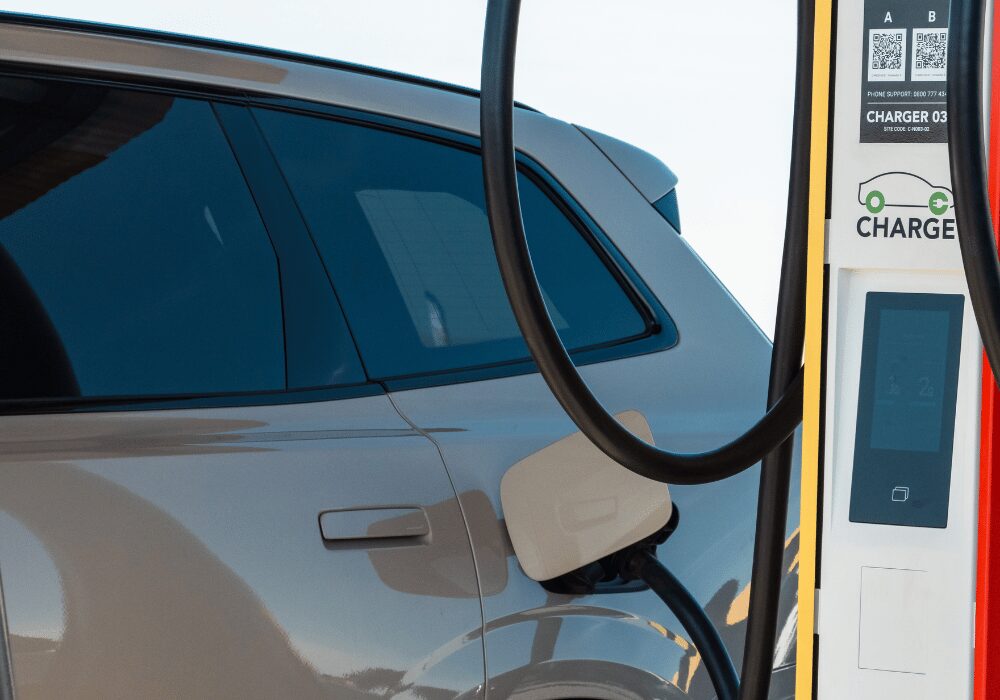
Off-grid EV charging along the N3 is accelerating South Africa’s electric logistics shift, combining renewable energy, battery storage and charging infrastructure.
South Africa’s transition to electric mobility may be closer than many realise, with new off-grid charging infrastructure projects aiming to tackle one of the country’s biggest transport and energy challenges: how to electrify long-distance logistics without relying on an already constrained national grid.
According to Joubert Roux, co-founder and director of Zero Carbon Charge, the future of electric logistics in South Africa will depend less on the vehicles themselves and more on the energy systems supporting them. Roux says, “The truck is not the revolution; the energy source is.” The company recently launched two new charging stations along the N3 corridor, marking what it describes as the country’s first renewable energy-powered electric-vehicle charging corridor. The development follows over four years of technical development and testing.“The N3 is a central point of logistics in South Africa,” Roux explains, “You don’t realise the volume of traffic until you stand there for extended periods. It’s seven days a week, 24 hours a day.”According to Sanral, the N3 handles 60% of South Africa’s road freight, and if South Africans remember the 2021 riots that rocked KwaZulu-Natal, having the N3 closed for only a short period had prolonged knock-on effects on the prices and availability of everyday items.
Off-grid charging designed for South African conditions
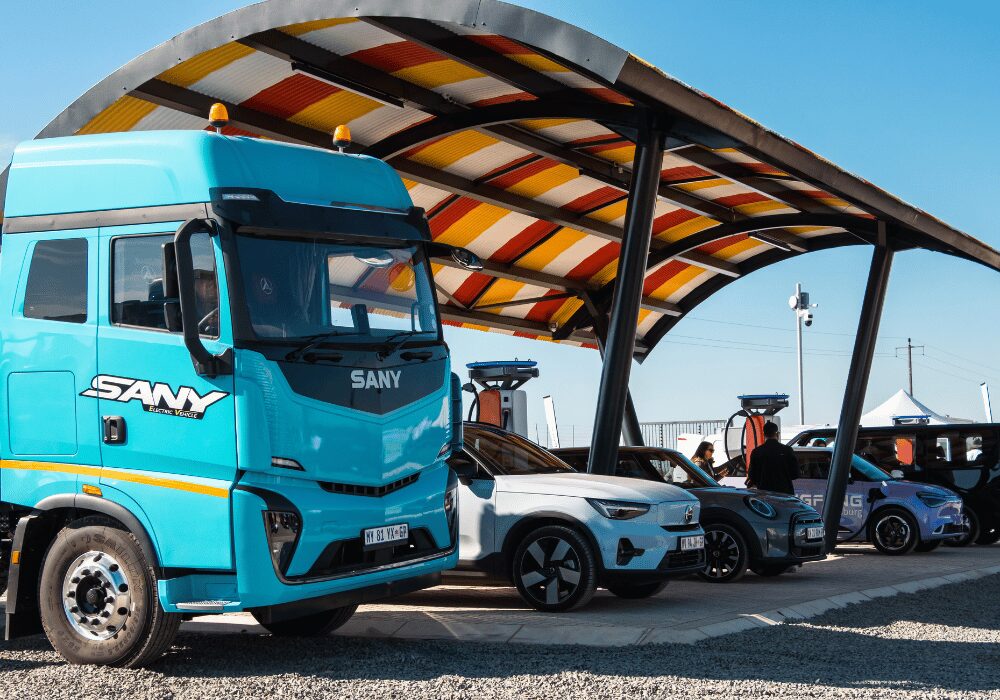 Unlike many international EV charging models that depend heavily on established electrical infrastructure, CHARGE’s system was designed specifically around South Africa’s energy constraints.
“What makes South Africa unique is that we have population centres, urban centres and harbours far apart from each other,” says Roux. “That forces long-distance travel, both passenger and commercial, and we simply do not have the grid infrastructure to supply the power required.”The company’s approach combines solar generation, battery storage, and charging infrastructure in an off grid microgrid model. While the chargers, batteries and solar panels themselves are commercially available fore for technologies, Roux says the challenge lies in configuring them into a reliable, scalable energy system capable of supporting logistics operations. “We generate electricity, store it and supply it where it’s required,” he says. “If you strip everything away, that’s what we do.” According to Roux, developing the software and management systems required to coordinate generation; storage and charging also proved technically demanding. He explains, “What had not been done anywhere in the world was creating a charging network specifically aimed at supplying energy to vehicles entirely off grid.” The company’s first proof-of-concept station went live in November 2024 after approximately 16 months of construction and testing.
Rising fuel prices are accelerating the EV case
Roux argued that rising fuel costs and energy insecurity are rapidly strengthening the business case for electric fleets, particularly in logistics, agriculture and waste management sectors. “The war in Iran has again highlighted how fragile energy systems are,” he says. “You cannot build a modern economy while depending on geopolitics and imported hydrocarbons.” According to Roux, CHARGE’s internal studies show Eskom electricity tariffs increasing at roughly 12.5% annually, while petrol and diesel prices continue to establish progressively higher baselines after each global oil shock.“Every time oil prices spike; the baseline resets higher,” he says. “It never goes back to where it was before.”At the same time, battery and solar technology costs have dropped dramatically over the past two decades. Roux pointed to the price trajectory of lithium-ion batteries, which he says had declined from approximately US$7,600 per kilowatt hour in the late 1990s to US$71/kWh today. “The combination of batteries and solar panels has completely reset the economics of energy,” he says. He compares the pace of EV adoption to the rise of smartphones. “The iPhone launched less than 20 years ago,” Roux noted. “Now you can’t imagine life without one. Electric mobility will follow a similar path.” While this may seem hyperbolic
Hub-and-spoke logistics model gaining traction A central component of CHARGE’s strategy is its “hub-and-spoke” charging model, aimed particularly at businesses operating regional fleets within defined driving radii.
The company says its charging network will initially cover South Africa through approximately 60 sites spaced at 300km intervals before eventually densifying to 150km intervals as EV adoption increases. “When we started the business, we thought we needed 150km intervals immediately,” Roux explained. “But battery technology evolved so quickly that now even smaller urban EVs can comfortably travel 300km.” The company plans to permit and develop up to 138 charging sites along national routes. Roux says interest from logistics operators accelerated once the N3 charging corridor plans became public.
“The logistics revolution initially seemed far off,” he says. “But as soon as we started talking about opening corridors, people came on board.”The company is also targeting sectors such as waste management, municipal services,, and farming operations where vehicles typically operate on predictable daily routes.For fleets operating within 150km of a base, electric vehicles are already viable, he says.
Economics driving fleet electrification
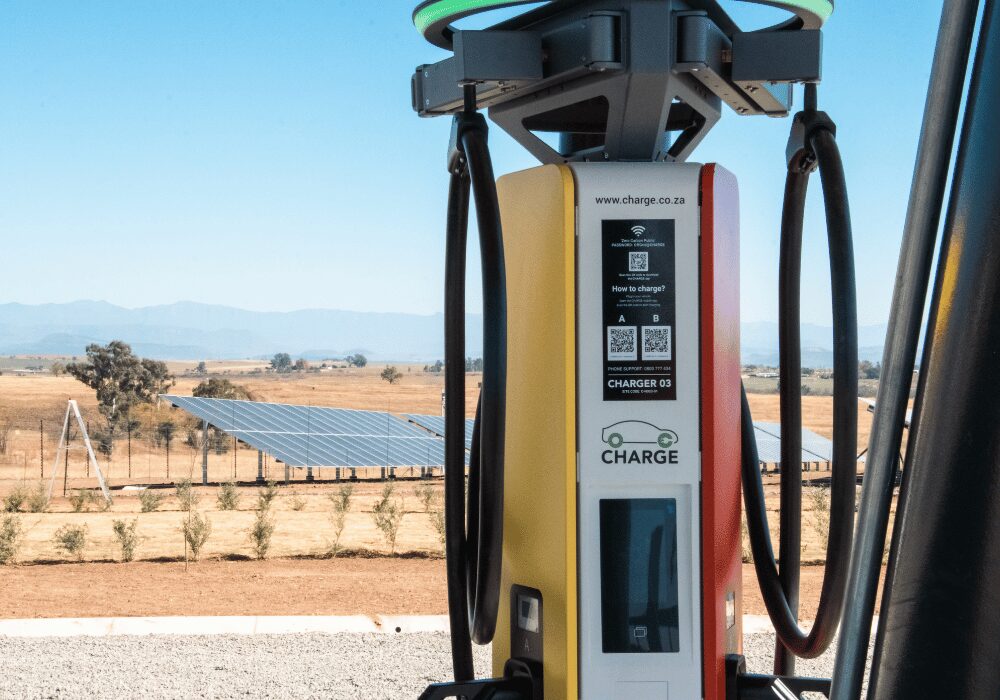
If “green” mobility is the future, charging stations will form the infrastructure backbone of this transition

“The total cost of ownership is definitively lower now,” he says.Fuel savings and reduced maintenance costs are major contributors. “With electric vehicles, you remove internal combustion engines, gearboxes and many moving parts that require maintenance,” he explained. “Manufacturers in China work on at least a 50% maintenance saving.” He noted that while large transport companies may have fuel recovery clauses built into contracts, many smaller operators do not. “If diesel doubles overnight, smaller operators absorb that cost themselves,” he says. “With renewable electricity, we can provide predictable long-term energy costs.” Under CHARGE’s proposed model, operators commit to fleet usage targets while the company provides charging infrastructure and energy supply solutions. “We can say to operators: give us your current fuel usage and costs, and we can provide an electric fleet solution at a lower cost per kilometre,” Roux says.
Battery technology remains key challenge for heavy freight
While Roux believes medium-duty electric trucks are already commercially viable in South Africa, ultra-heavy freight remains dependent on further battery improvements.“Anything under 14 tonnes, and up to non-rigid 20-tonne payloads, is absolutely workable today,” he says.However, vehicles operating in the 36-tonne to 90-tonne range remain more challenging due to energy demand and battery limitations. “To make the heavier payloads viable, battery technology still needs to advance,” he explained. “But that is happening rapidly.” Roux expects developments in battery density and charging systems over the next 12 to 24 months to significantly improve the economics of long-haul heavy freight electrification.
He noted that European commercial trucks are already adopting megawatt charging protocols, while passenger EV charging systems continue improving rapidly.
There’s no difference between truck and passenger EV charging, Roux says. “The difference is scale. A truck uses about nine times more energy than a passenger vehicle.”
Local manufacturing and partnerships expanding ecosystem
 Roux also pointed to increasing local assembly activity as a sign that South Africa’s EV ecosystem is maturing.
Chinese manufacturers including SANY and Foton have already announced or begun local assembly operations, while operators such as Golden Arrow Bus Services are progressively transitioning fleets toward electrification.
According to Roux, Golden Arrow’s decision to electrify its fleet was driven primarily by economics.
“They ran BYD buses for several years, and the numbers made sense,” he says. “They are now replacing buses with electric units as part of their normal fleet renewal cycle.”
Roux also pointed to increasing local assembly activity as a sign that South Africa’s EV ecosystem is maturing.
Chinese manufacturers including SANY and Foton have already announced or begun local assembly operations, while operators such as Golden Arrow Bus Services are progressively transitioning fleets toward electrification.
According to Roux, Golden Arrow’s decision to electrify its fleet was driven primarily by economics.
“They ran BYD buses for several years, and the numbers made sense,” he says. “They are now replacing buses with electric units as part of their normal fleet renewal cycle.”The company is also partnering with mobility platform Zimi Charge and CHARGE partnership announcement to help accelerate EV adoption and charging accessibility in South Africa.
Roux believes Chinese manufacturers have fundamentally reshaped the global EV sector. “Five years ago, people laughed at Chinese vehicles,” he says. “Now many of those vehicles outperform established brands at significantly lower cost.”
Energy security and localisation opportunities
Beyond emissions reductions, Roux believes transport electrification could become one of South Africa’s biggest economic localisation opportunities. South Africa currently imports large volumes of petroleum products annually, much of which is consumed by transport fleets. “If we migrate passenger and commercial transport to locally generated renewable electricity, we replace that hydrocarbon import bill with local economic activity,” he says. He argued that distributed renewable charging infrastructure could also strengthen national energy resilience. “Energy security means being realistic,” Roux says. “You still need backup systems where required, but renewable systems with storage can already provide 80% to 90% supply security in many regions.” According to Roux, the modular nature of renewable systems allows charging infrastructure to scale alongside demand growth far more efficiently than relying on grid expansion alone.“The grid simply was not designed for this,” he says. “It also makes no sense to charge electric vehicles using coal-generated electricity.”He adds that South Africa’s energy transition could mirror how the country leapfrogged fixed-line telecommunications infrastructure directly into widespread mobile adoption.
“With telecoms, Africa skipped the fixed-line era entirely, saved a few places, and moved directly to smartphones,” Roux says. “I think mobility and logistics are going to follow a similar path.”