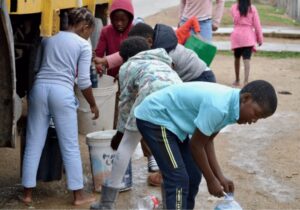
South Africa is one of the world’s most water-scarce countries. South Africans know what water shortages look like: taps dry, water restrictions, failing municipal infrastructure and growing competition for water between cities, farms and industry.
When there is not enough water to meet everyone’s needs, deciding who has access to water first is not just a technical question – it’s also one of fairness. Most discussions focus on water scarcity. However, having enough water is only part of the challenge. Water needs to be shared fairly between households, farmers, businesses and the environment. This raises a difficult question: what does “fair” actually mean?Three principles for sharing water fairly
- Human rights are not just for people. When we talk about the human right to water, we usually think of drinking and bathing. While the United Nations formally recognised this right in 2010, water equity goes further. It includes ecological integrity, the idea that nature itself has a legal right to water. If we pump a river dry for irrigation or industry, the river’s ecosystem dies, which eventually destroys the water source for the people living downstream and all of the elements that depend on that river for life – they have rights too.
- Social justice: this can be split into two parts, namely procedural equity and distributive equity. Procedural equity is about the process – how decisions regarding water are made. For example, who gets to say how decisions about water are made? Is the information about water easy to understand, or is it hidden behind technical jargon? Distributive equity is about the outcome. It looks at how the benefits (such as water for agriculture) and the burdens (like the cost of fixing pipes or the pollution from a factory) are shared.
- Context: this involves taking into consideration the unique history, culture and socio-politics of a place.
What water fairness means in practice
A strength of the water equity concept is that it can change over time. For example, as we learn more about climate change and become better at predicting and responding to hazards, our ideas about what is “fair” in the way water is shared may also change. We also have to think about fairness between generations. The way we use water today should not leave today’s people or future generations with nothing but dry riverbeds. This is what sustainable development is: managing water not just for ourselves, but for the well-being of future generations.
If we ignore the past and the inequalities it created, decisions about water can continue to leave disadvantaged people behind. If communities are not listened to, water can remain in the hands of the most powerful rather than reaching the people who need it most. This can leave people without enough water and damage the rivers and natural systems we all depend on.
South Africa shows how difficult this is to fix. Under apartheid, many Black South Africans were deliberately denied adequate access to water. After 1994, the government introduced new laws saying that water must first provide for people’s basic needs, such as drinking and washing, and keep rivers healthy. Only after that should water be available for farming and industry. But putting these ideas into practice has proved difficult, and many people still do not have fair access to water.