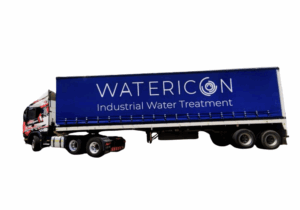
Across Africa, the conversation around water infrastructure is shifting, from centralisation to decentralisation, and from capital-heavy investments to agile, service-based models. At the heart of this transformation lies a powerful offering: mobile, rental water treatment plants.
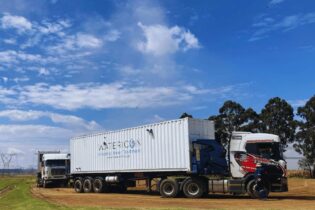
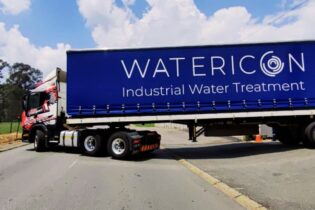
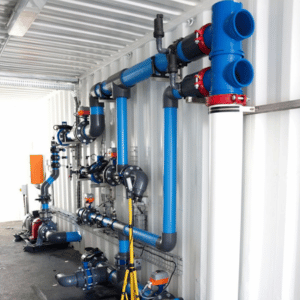
What was once considered a temporary solution is rapidly becoming a cornerstone of a resilient water strategy. At Watericon, we identified a critical gap while working with a power producer: routine maintenance often forced a reduction in output. Although plants are typically designed with three treatment trains, two in operation and one on standby, the backup unit is frequently brought online to maximise production, leaving no redundancy when it’s needed most. This insight led us to introduce rental water treatment plants, enabling maintenance to proceed without disrupting operations. We soon recognised that the applications for rental plants extended far beyond this initial case, and we developed a fleet of standardised rental units including: ultrafiltration, reverse osmosis, softening systems, and electrodeionisation for ultrapure water (ranging from 100m3/h to 10MLD). Africa’s complex political, economic and geographical environment creates a uniquely challenging operating environment for water infrastructure. Add climate volatility, population growth, and industrial expansion to the mix, and the reality is that traditional, fixed systems cannot keep up. Africa has 15% of the global population but only 9% of global renewable freshwater resources. Drought cycles are reducing reservoir capacity and placing immense pressure on already-strained municipal systems. At the same time, extreme weather events, from floods to hurricanes, can wipe out existing infrastructure overnight, leaving entire communities without safe water. In these moments, speed is everything. Mobile, containerised plants are uniquely positioned to respond. Unlike conventional plants that can take years to design and construct, modular systems are factory-built and rapidly deployed, making them ideal for emergency relief and to add extra capacity where it’s needed most.The rise of decentralisation
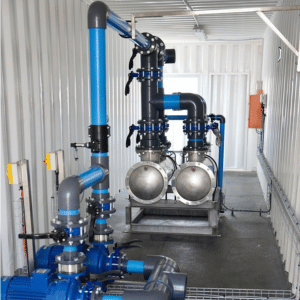
Modular solutions have significant
advantages for Africa’s water climate
Remote mining operations
Africa’s resource sector presents a significant opportunity for plug-and-play solutions. Mining operations are often located in remote and water-scarce regions, yet they require reliable, high-quality water for processing, dust suppression, and workforce needs. For mining operations, modular rental plants offer a compelling value proposition:- Rapid mobilisation to remote sites
- Scalability as operations expand or contract
- The ability to treat challenging water sources (e.g. mine-impacted water, brackish groundwater)
A flexible financial model
 Traditional water treatment infrastructure requires substantial upfront capital. In contrast, rental and lease models convert this into an operational expense.
This shift means that businesses can access world-class treatment without committing to large capital outlays, particularly valuable for new developments or uncertain demand scenarios. At Watericon, ownership models are designed to be flexible, from short-term rentals to long-term leases, offering the ability to scale as demand grows.
Rental plants are powerful tools for optimisation and innovation. Water treatment is rarely one-size-fits-all. Feedwater quality varies dramatically across regions – whether from rivers, boreholes, industrial effluent, or seawater – and selecting the right treatment train is critical. Rental plants allow operators to:- Pilot different technologies (e.g. ultrafiltration vs reverse osmosis)
- Optimise process configurations
- Validate performance before committing to permanent infrastructure
Engineering for speed and simplicity
Decentralised approaches
to water are quickly becoming
more viable with rent-to-own
- Minimal civil works
- Reduced installation time
- Lower reliance on specialised on-site skills
- Ability to scale when needed