
How can South African plastics manufacturers compete against cheap imports, rising operating costs and an increasingly challenging trading environment?
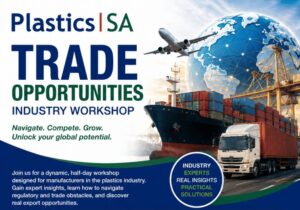
This was the focus of Plastics SA’s Trade Opportunities Industry Workshop, held at its Midrand head office on 8 September 2026. The well-attended hybrid event brought together manufacturers, regulators and trade experts to share practical advice on navigating obstacles, identifying opportunities and strengthening local competitiveness.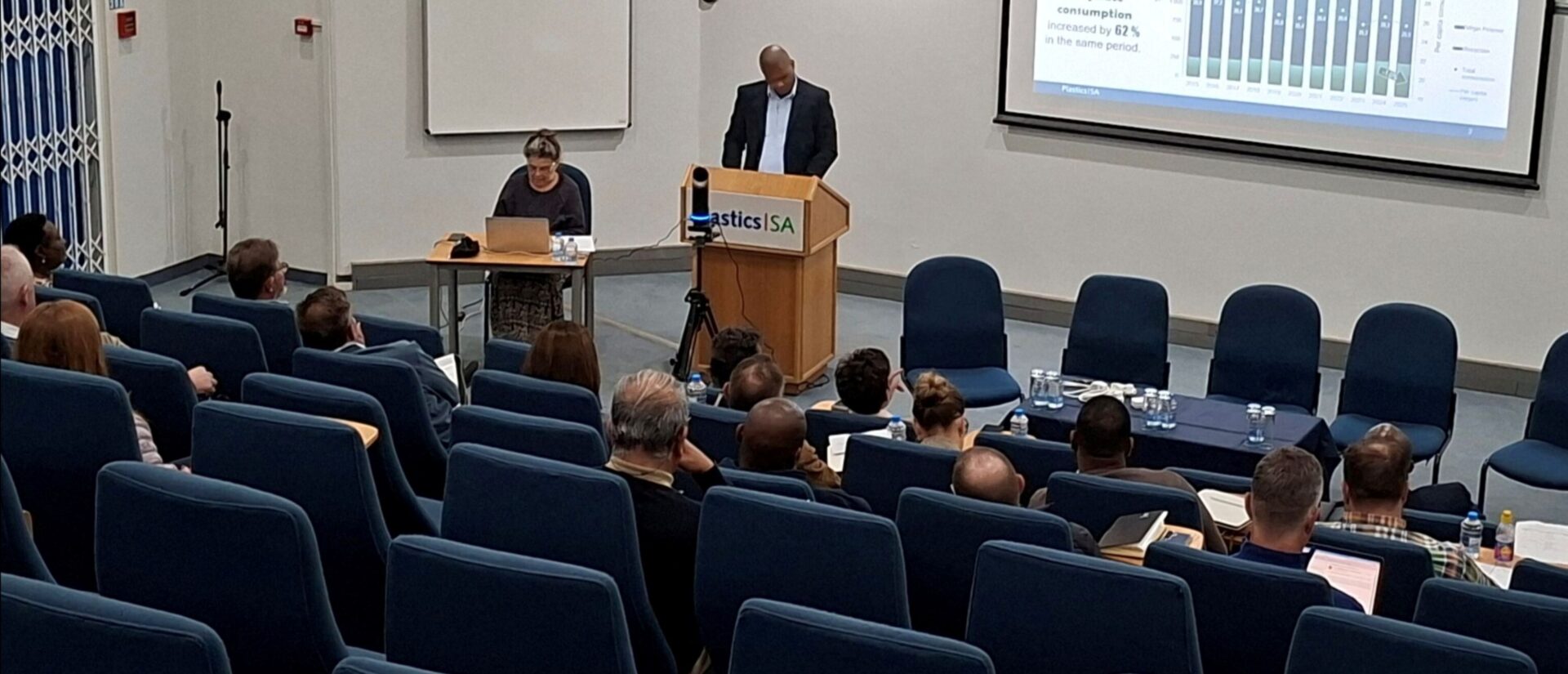 According to Annabe Pretorius, Executive: Technical Operations at Plastics SA, who organised the workshop, the aim was not simply to discuss the challenges facing manufacturers, but to explore what businesses can do about them.
“South African manufacturers are resilient and innovative, but they are not always competing on a level playing field. We wanted delegates to leave with practical information, fresh ideas and greater confidence about where opportunities exist and how to pursue them,” Pretorius said.
 Opening the workshop, Donald MacKay of XA International highlighted the “inefficiency tax” local manufacturers face because of electricity, water, security and infrastructure challenges. He also pointed to the significant pressure created by imports: plastics imports under Chapter 39 approached R50 billion last year, with just 122 traders responsible for half of all import activity.
MacKay also highlighted the considerable export opportunities available to South African manufacturers across Africa, identifying markets such as Zimbabwe, Zambia, Mozambique, Tanzania and South Sudan as offering growth potential.
Pretorius reinforced both the scale of the challenge and the opportunity by highlighting South Africa’s plastics trade deficit. Polyethylene sheeting imports alone have reached approximately 26,000 tonnes, despite the country having around 100 local film extrusion companies. PVC products such as ceilings, cladding and cornices are experiencing a deficit of around 22,000 tonnes.
Regulators also provided valuable insight into efforts to combat non-compliant and illicit imports. Emmah Monyanga of the NRCS revealed that approximately R700 million worth of non-compliant goods were removed by the NRCS from the market last year, while Thabo Pase of SARS explained how artificial intelligence, data analysis and targeted inspections are increasingly being used to identify high-risk shipments, undervaluation and incorrect tariff classifications.
Opening the workshop, Donald MacKay of XA International highlighted the “inefficiency tax” local manufacturers face because of electricity, water, security and infrastructure challenges. He also pointed to the significant pressure created by imports: plastics imports under Chapter 39 approached R50 billion last year, with just 122 traders responsible for half of all import activity.
MacKay also highlighted the considerable export opportunities available to South African manufacturers across Africa, identifying markets such as Zimbabwe, Zambia, Mozambique, Tanzania and South Sudan as offering growth potential.
Pretorius reinforced both the scale of the challenge and the opportunity by highlighting South Africa’s plastics trade deficit. Polyethylene sheeting imports alone have reached approximately 26,000 tonnes, despite the country having around 100 local film extrusion companies. PVC products such as ceilings, cladding and cornices are experiencing a deficit of around 22,000 tonnes.
Regulators also provided valuable insight into efforts to combat non-compliant and illicit imports. Emmah Monyanga of the NRCS revealed that approximately R700 million worth of non-compliant goods were removed by the NRCS from the market last year, while Thabo Pase of SARS explained how artificial intelligence, data analysis and targeted inspections are increasingly being used to identify high-risk shipments, undervaluation and incorrect tariff classifications.
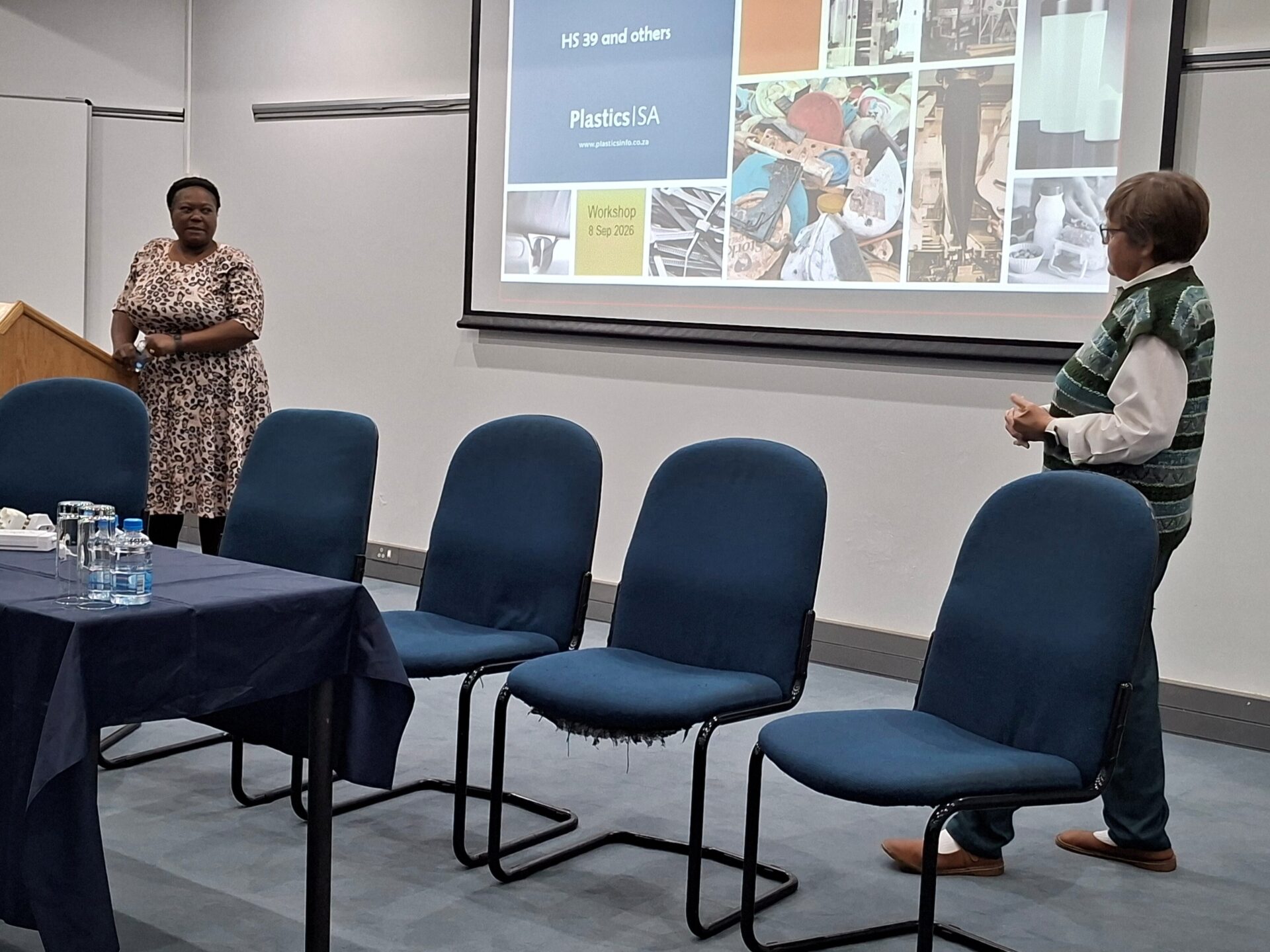
Emmah Monyanga of NRCS & Annabe Pretorius, Executive: Technical Operations at Plastics SA

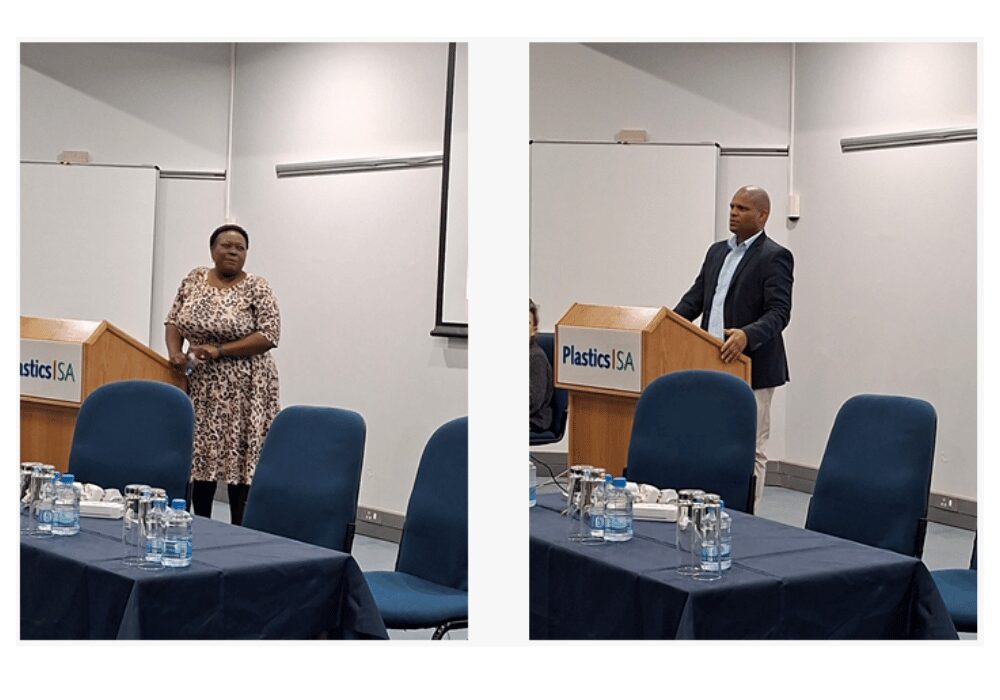
Sean Stuttaford of Penflex
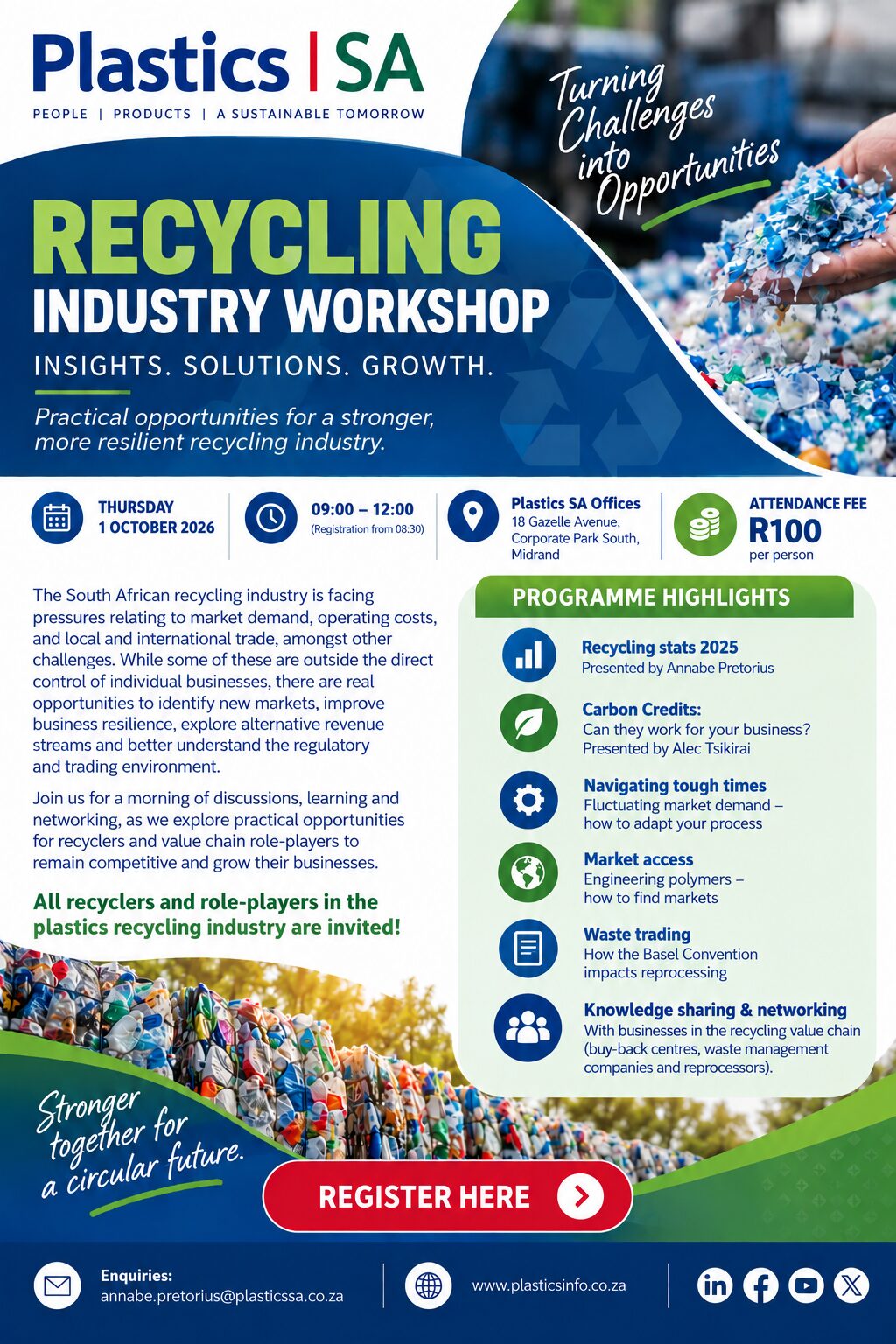 Click here to register for the recycling workshop