
The Lesotho Highlands Development Authority (LHDA) officially opened the Khubelu and Mabunyaneng bridges in Mokhotlong on Friday 11 September, completing the trio of major bridges built under Phase II of the Lesotho Highlands Water Project (LHWP) following the earlier completion of the Senqu Bridge.
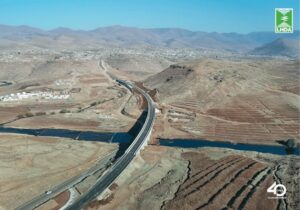
The ceremony, held at the Mabunyaneng Bridge site at Mapholaneng, was officiated by the Honourable Mohlomi Moleko, Minister of Natural Resources of the Kingdom of Lesotho. He was accompanied by the Honourable Pemmy Majodina, Minister of Water and Sanitation of the Republic of South Africa.“These bridges were not built to be admired from a distance. They were built so that a pupil in Mapholaneng can reach school, a farmer can reach a market, and an ambulance can reach a household, in every season and at every reservoir level,” said LHDA Chief Executive, Mr Tente Tente.“The engineering is exacting and it deserves the recognition. But the measure that matters most to us is whether the communities of Mokhotlong are better connected after this project than before. On that measure, together with the Senqu Bridge, we can say the commitment made to these communities has been kept.” The Khubelu and Mabunyaneng bridges sit within 500 metres of each other at the confluence of the Mabunyaneng and Khubelu rivers, some 22 kilometres before the Senqu Bridge, which is itself 15 kilometres from Mokhotlong town. Together, the three structures keep the A1, the national road linking the Mokhotlong district in the mountainous north-east to Maseru, open and usable even when the Polihali Reservoir reaches full supply level.
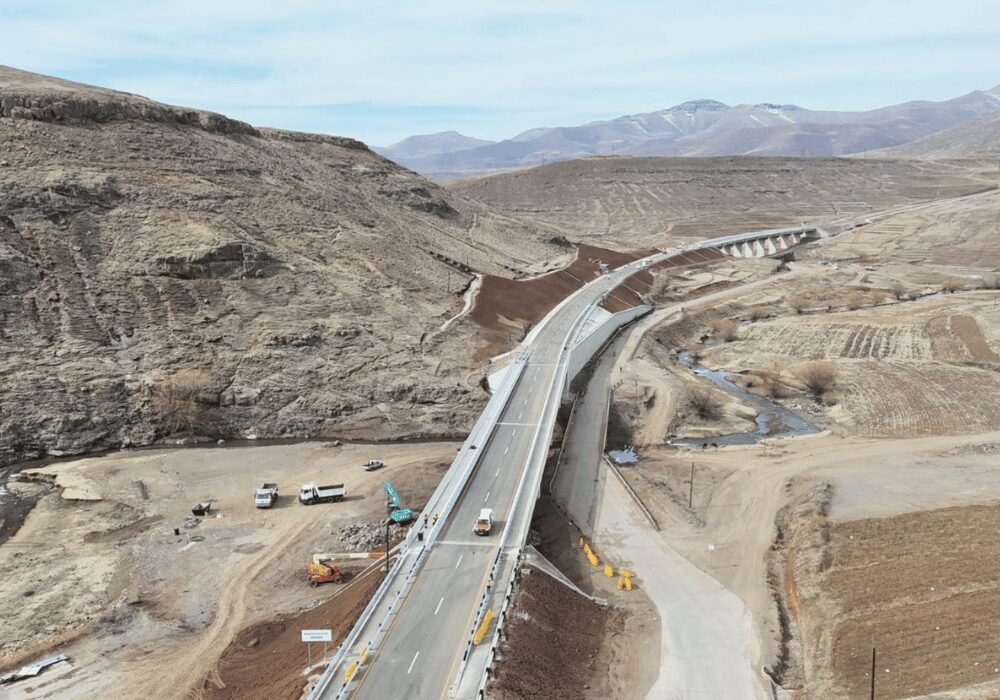 Both bridges share an identical design. Foundations for the in-situ cast abutments and piers were built on hard rock, or on concrete piles where the rock was less sound. Each span features seven precast beams cast off-site with pre-curved soffits and reinforced by post-tensioned cables to counter deflection from the weight of the deck and traffic. Precast concrete planks placed between the beams carried much of the deck steel and served as formwork for the 250 mm thick in-situ cast deck.
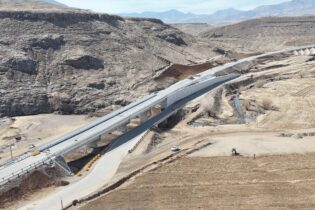
The Khubelu Bridge, the second largest of the three, carries a 270-metre curved deck of nine 30-metre spans, supported by eight piers and two abutments, and standing approximately 25 metres above the valley floor. Its spans required 63 precast beams, each weighing 52 tonnes.
The Mabunyaneng Bridge is 120 metres long, with four 30-metre spans supported by three piers and two abutments, all at a height of 12 metres. Its spans required 28 precast beams, each weighing 52 tons. The bridge is distinguished by a 190-metre-long, 9-metre-high mechanically stabilised earth (MSE) retaining wall, built from just over 700 reinforced earth panels. This allowed the existing A1 to remain open to traffic while the new alignment was raised above the future reservoir level.
Both bridges are 13.55 metres wide, with an 8-metre carriageway flanked by 2-metre walkways on either side. The works also included realigning a two-kilometre section of the A1 and constructing retaining walls, storm water drainage and road safety infrastructure. Safety barriers are designed to catch and redirect errant vehicles back onto the roadway, while higher-than-standard anti-climb handrails protect pedestrians, cyclists and people travelling on horseback.
Both bridges share an identical design. Foundations for the in-situ cast abutments and piers were built on hard rock, or on concrete piles where the rock was less sound. Each span features seven precast beams cast off-site with pre-curved soffits and reinforced by post-tensioned cables to counter deflection from the weight of the deck and traffic. Precast concrete planks placed between the beams carried much of the deck steel and served as formwork for the 250 mm thick in-situ cast deck.
The Khubelu Bridge, the second largest of the three, carries a 270-metre curved deck of nine 30-metre spans, supported by eight piers and two abutments, and standing approximately 25 metres above the valley floor. Its spans required 63 precast beams, each weighing 52 tonnes.
The Mabunyaneng Bridge is 120 metres long, with four 30-metre spans supported by three piers and two abutments, all at a height of 12 metres. Its spans required 28 precast beams, each weighing 52 tons. The bridge is distinguished by a 190-metre-long, 9-metre-high mechanically stabilised earth (MSE) retaining wall, built from just over 700 reinforced earth panels. This allowed the existing A1 to remain open to traffic while the new alignment was raised above the future reservoir level.
Both bridges are 13.55 metres wide, with an 8-metre carriageway flanked by 2-metre walkways on either side. The works also included realigning a two-kilometre section of the A1 and constructing retaining walls, storm water drainage and road safety infrastructure. Safety barriers are designed to catch and redirect errant vehicles back onto the roadway, while higher-than-standard anti-climb handrails protect pedestrians, cyclists and people travelling on horseback.
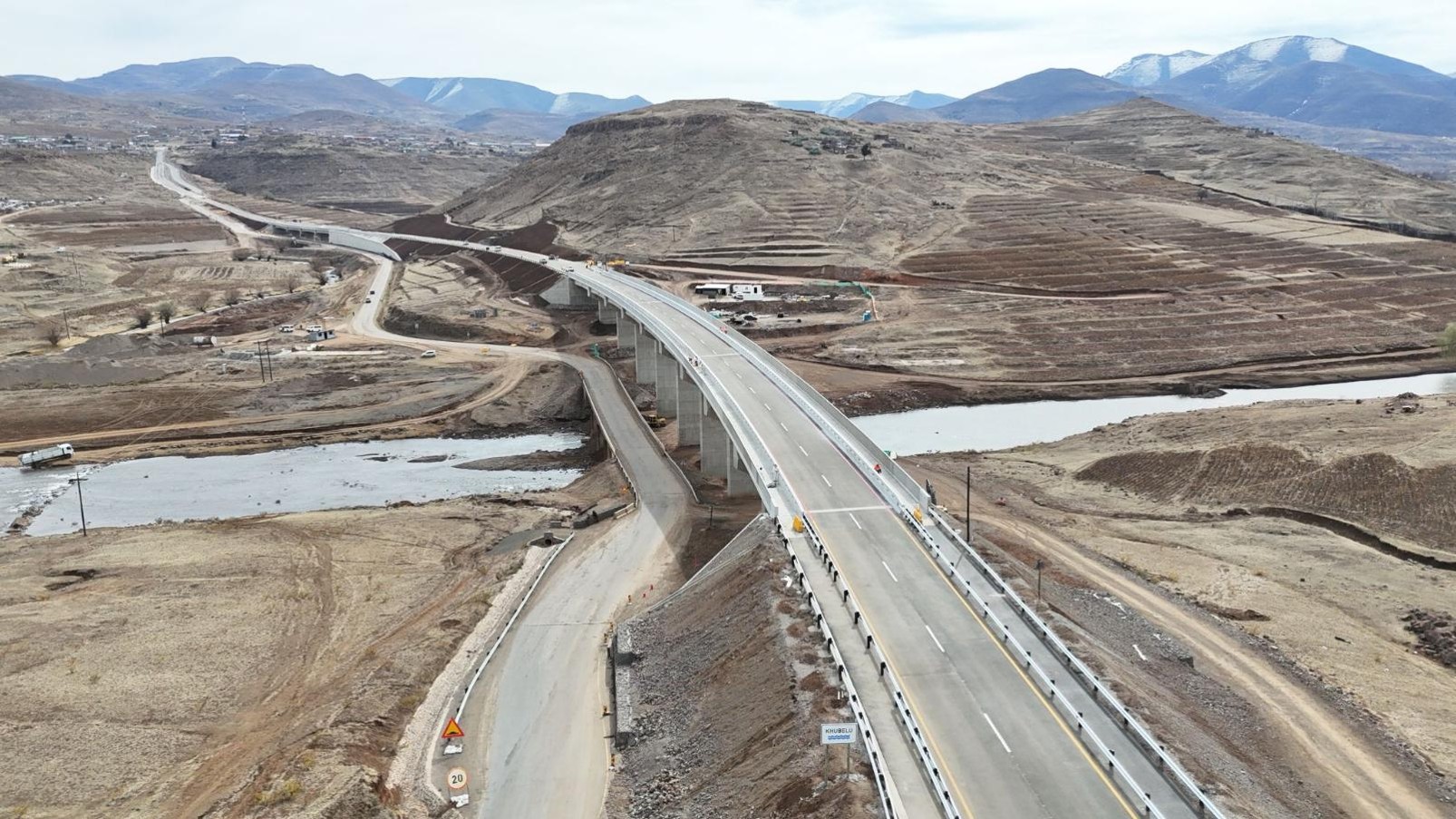

The single greatest risk during construction was transporting each 52-ton beam to site and placing them using two 60-tonne cranes.
At peak construction, the project employed 327 site workers: 94 local general workers and 218 semi-skilled workers from Lesotho, together with 29 semi-skilled South African workers, supported by 45 permanent staff. The project created 66 permanent positions in total, and women held 32% of roles across engineering, safety, quality control and laboratory management. The project invested R5.3 million in training and development, delivering 515 training sessions that reached 140 site labourers, 24 staff members and 37 local enterprises. Twenty-nine unskilled workers progressed into semi-skilled technical roles, and 12 graduate engineers received experiential training and mentorship. The project spent a further R218.2 million with Lesotho-based suppliers and subcontractors. The South African Institution of Civil Engineering (SAICE) named the Mabunyaneng and Khubelu Bridges Project a finalist in the Technical Excellence, International Project of the Year category inthe 2026 SAICE National Awards. Zutari, formerly Aurecon Lesotho (Pty) Ltd, supported by subcontractors White Life Consultants (Pty) Ltd of Lesotho and Leporogo Specialist Engineers CC of South Africa designed the bridges and supervised their construction. The construction contractor was the Concor-Nthane Brothers M&K Bridges JV, comprising main partners Concor Construction (Pty) Ltd (South Africa) and Nthane Brothers (Pty) Ltd (Lesotho), with sub-contractors Post Tensioning and Structural Solutions (Pty) Ltd (South Africa) and Bridge Joints and Rehabilitation Contractors (Pty) Ltd (Lesotho).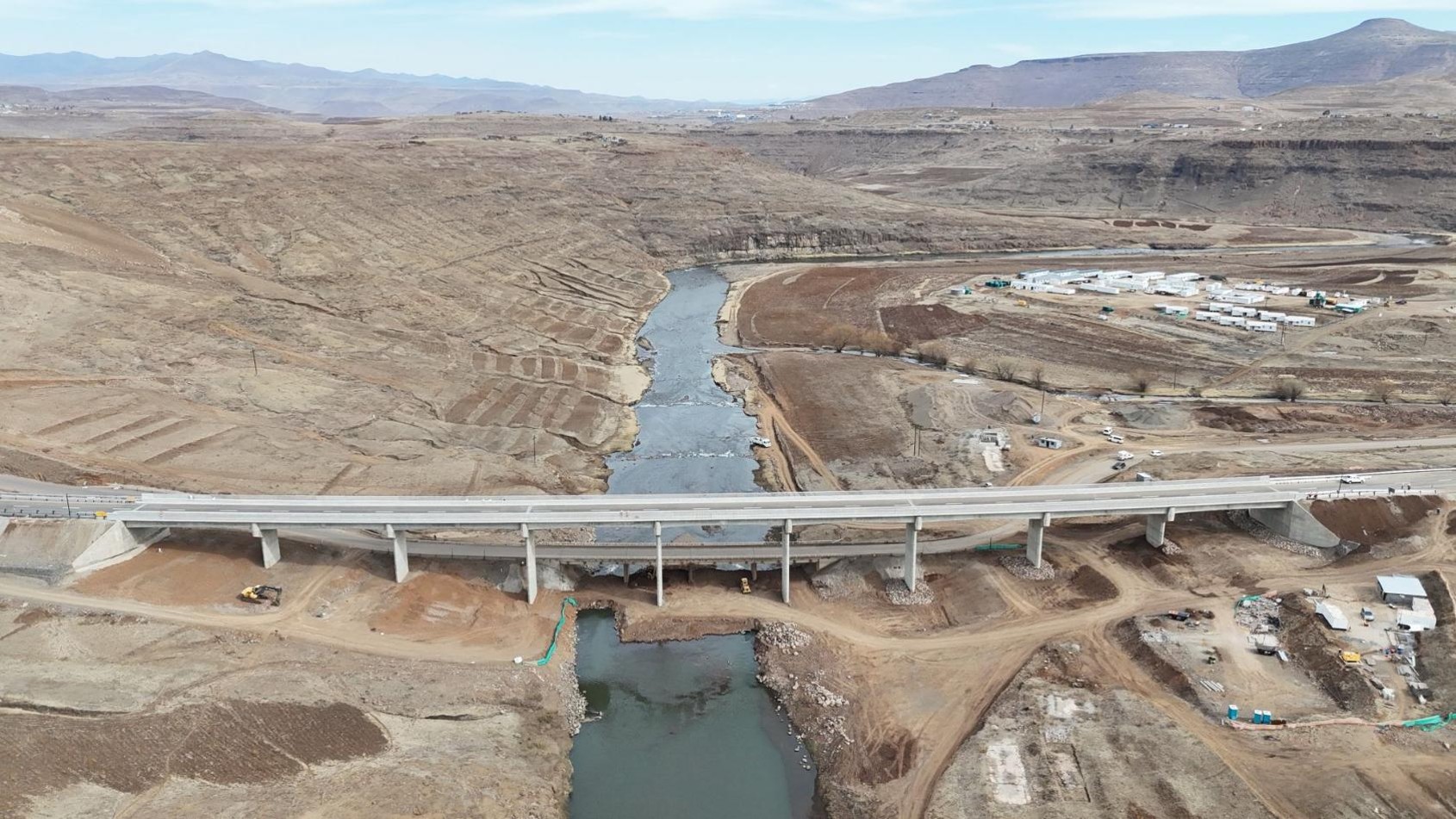
The LHWP is a bi-national water resource management project governed by the 1986 Treaty between the Kingdom of Lesotho and the Republic of South Africa. It harnesses the water resources of the Lesotho highlands through a series of dams and tunnels, providing mutual benefit to both countries by transferring water to South Africa and generating hydropower for Lesotho. Phase I, completed in 2003 and commissioned in 2004, delivered the Katse and Mohale dams, the ‘Muela hydropower station, and more than 100 kilometres of tunnels. Phase II, governed by the Phase II Agreement signed in 2011 and fully ratified in 2013, is currently underway. Its main water transfer infrastructure comprises the 165-metre Polihali Dam and the 38-kilometre Polihali Transfer Tunnel, supported by advanced infrastructure, including roads, bridges, telecommunications and bulk power networks, accommodation, housing, a commercial centre and an operations centre, as well as socio-economic and environmental programmes. Phase II will increase the volume of water transferred to South Africa incrementally from 780 million cubic metres a year to 1 270 million cubic metres a year, while raising output from the ‘Muela hydropower station by approximately 50%, a further step towards energy independence for Lesotho and reduced reliance on imported energy.