WasteCon 2026 to put landfill capacity, waste diversion, and the future of South Africa’s waste economy under the spotlight.

Reon Pienaar IWMSA President
“We urgently need to increase the amount of waste we prevent, reuse, recover, recycle and treat, while ensuring that the waste that does ultimately reach landfill is managed according to the highest environmental and engineering standards.”
From waste disposal to waste diversion
One of the country’s most significant opportunities lies in Extended Producer Responsibility (EPR). South Africa’s EPR framework has already driven investment in collection, sorting and recycling infrastructure, increased participation by producers and created opportunities for partnerships between industry, municipalities, and waste reclaimers. DFFE has identified EPR as an important mechanism in the country’s transition towards a circular economy, while also acknowledging that challenges remain around reporting, compliance, and the development of inclusive value chains. Recent developments demonstrate what is possible when these elements come together. In September, a R19-million PolyAl processing plant was commissioned in Germiston, Gauteng, creating a new pathway for the polyethylene and aluminium component of used beverage cartons to be converted into products including roof tiles, pipes, and outdoor furniture. The initiative brings together industry, recycling, manufacturing, research, and producer-responsibility partners – illustrating how innovation can transform problems into solutions.“The circular economy cannot remain a concept on paper,” states Pienaar. “We need investment in the infrastructure, technology, markets and systems that make material recovery commercially and practically viable at scale.”
Technology can help us see and solve the problem
Better data and technology will also be critical. From tracking waste flows and collection points to improving reporting, monitoring landfill operations, and identifying opportunities for recovery, reliable data can enable municipalities and industry to make better-informed decisions. The recent PolyAl initiative, for example, incorporates a monitoring system providing real-time visibility of collection points and buy-back centres, demonstrating how technology can strengthen the link between waste generation, collection, and recycling.
Landfills still matter – but they must be managed better
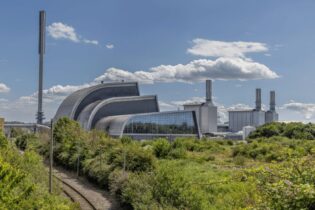
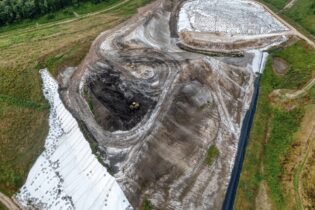
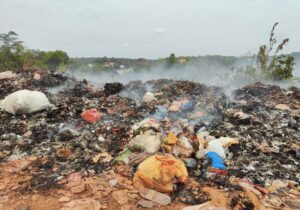
Importantly, reducing dependence on landfill does not mean that landfill will disappear. There will always be residual waste requiring safe disposal, making sound landfill engineering, environmental management, and operational standards essential. At the same time, alternative treatment technologies have a role to play. Landfill gas-to-energy, for example, can capture methane generated through the decomposition of organic waste and convert it into electricity, reducing greenhouse-gas emissions while recovering energy from an existing waste stream. The challenge is therefore not to find a single solution, but to develop an integrated system in which prevention, reuse, recycling, recovery, treatment, and responsible disposal work together.The conversation comes to WasteCon 2026
These challenges – and the opportunities to address them – will be central to WasteCon 2026, the flagship conference of the IWMSA, taking place at Emperors Palace from 20 – 22 October 2026. The event will bring together professionals, municipalities, government, researchers, technology providers, and industry leaders to examine the issues shaping the future of waste management in Southern Africa.“WasteCon 2026 takes place at a pivotal moment for our industry,” emphasises Pienaar. “We know the challenges. We also know that there are technologies, businesses, policies, and people already developing solutions. What we need now is greater collaboration, investment, and implementation at scale.”South Africa’s waste challenge comes down to a deceptively simple question: what happens when there is nowhere left to put the waste? The answer cannot be another landfill alone. It must be a fundamentally smarter waste system – one that treats waste as a resource wherever possible, invests in infrastructure and innovation, and ensures that the waste that cannot be recovered is managed safely and responsibly. WasteCon 2026 will provide a platform for that conversation.