
Jay Bhagwan explores how water-efficient sanitation solutions can address water scarcity, reduce pressure on sewer networks and support more sustainable sanitation services.
When I started my journey in the sanitation field, I was driven to bring about a change in the world by closing the sanitation gap for the unserved people on this planet. But with all the efforts, innovation and creativity, the needle has only moved a small shift. However, over the last two decades, much was achieved – as a sector we managed to get Sanitation on the MDG target, and this in itself was a big achievement as the attention shifted. On the back of this, many countries put out very ambitious programmes, and India’s Swachh Bharat Programme is worth mentioning. Further, our pioneering efforts with Faecal Sludge Management (FSM) brought forth the importance of management of this invisible problem.
Failures by Government, mainly in the developing world, to service people with onsite sanitation systems resulted in the growth of a thriving informal sanitation service market, which allowed us to mainstream FSM services into policy and practice, and today this is recognised as an essential service. All of these achievements while we continued to reinvent the toilet of the future. However, today, we continue to try to solve the plight of the 3.6 billion people on this planet who still do not have access to sanitation. We have also learnt that this problem cannot be solved by technology alone; enablement lies in changing paradigms, policy, regulation, and a market for sanitation services and goods. Recognising that huge strides have been made in conventional waterborne sanitation and its societal impacts, these all come at a significant financial cost and energy requirement. Climate change and stresses on water availability put added pressure on water resources available for flushing and transporting human wastes. Today’s water crisis in the urban world is in reality growing into a sanitation/sewerage crisis. Thus, new Water Efficient Sanitation Solutions (WESS) are needed, and these are the next-generation climate-resilient, off-grid, innovative and novel technological options for sanitation that take into account available water and energy resources, user preferences, variable user population, and can contribute to revenue generation through beneficiation of waste products or reduce operational and maintenance costs. Such interventions can potentially contribute to a 50% reduction in water used and supplied, possibly huge savings on capital associated with sewers and resource-intensive traditional wastewater treatment systems, reduction or elimination of pollution pathways, as well as a net reduction of NRW, as lower volumes of water will be supplied. The further benefit offered by WESS is the potential for a sustainable new sanitation circular economy, which offers opportunities for job creation and social upliftment, as well as industrialisation, localisation and a new services industry. The biggest challenge is reluctance to change due to perceived operation and maintenance (O&M) impacts related to the choice of technology. Municipalities tend to lean towards systems that are easy to operate and maintain (not costly to operate and maintain), and have clear responsibility delineation between the household/consumer and the municipality in terms of technology use and O&M. Municipalities are thus also disinclined to change due to a lack of understanding of what water efficient system requirements entail in terms of their responsibility versus the household/consumer’s responsibility. The issues are:- Low awareness and exposure of water efficient technologies amongst officials, planners, and design and process consultants contributes to a reluctance to change due to lack of understanding of water efficient system requirements and positive impacts,
- Lack of readily accredited or certified water efficient treatment technologies and systems in the market place,
- Complex and lengthy authorisation processes, as well as the lack of understanding or interpretation of guidelines regarding the requirements, roles and responsibilities,
- Delays in processing of applications or fast-tracking new greenfield development or major brownfield redevelopment, that does not necessarily negatively impact on water services infrastructure,
- Cumbersome environmental approval requirements and impacts of alternative and/or water efficient sanitation technologies include:
- Environmental Impact Assessment studies are required for construction of WWTWs,
- Final effluent quality needs to meet national norms and standards as set out in the regulations,
- Environmental impact on the ground and in water sources (rivers, streams, etc.) needs to be assessed,
- Any mechanical / chemical processes and moving parts that use oils / chemicals in any conversion of waste, these process oils /chemicals cannot contaminate the surrounding land and water, e.g. mini plants that convert waste to pellets / gas cannot be close to any river streams.
| Key opportunities | Key barriers |
| Efficient resource use in limited water resources and stressed water resource areas | Lack of prioritisation of WESS in regulation |
| Not adding to overstressed capacity of sewer networks and WWTWs | Lack of readily accredited water efficient treatment technologies |
| Unlocking service extension and blocked bulk related projects | Ineffectual awareness creation and lack of readily available guideline and standards |
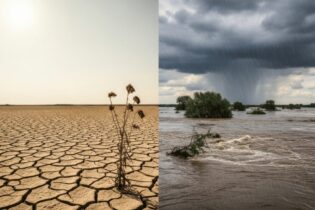
| Having sanitation systems that are effectively designed to manage impact of climate change in terms of drought and floods | Reluctance to change |
National Shifts
South Africa is at the forefront and leading this change. It is based on the premises that we will not have enough water for flush toilets to be uniformly provided and the fact that many areas are already reaching their limits in terms of demand. This is further exacerbated by high level of failures of existing sanitation systems as reported in the recent Green Drops reports, indicating that conventional waterborne is the necessary solution, but a serious problem.
In leading the change, the DWS recently introduced far reaching and enabling legislation to drive WESS in the sector. Key tenants of the Compulsory Norms and Standards for water services published in 2026 in relation to WESS highlight the flowing:
- Municipalities cannot deliberately and consciously further compromise already failing systems. This is prohibit and recognised as a serious criminal breach.
- Where there are water resources constraints, WESS solutions should be considered as the preferred option
- And, where private developers are delayed to further their developments due to lack of bulk services, they can proceed if they can adopt and demonstrate the use of WESS interventions.
Global shifts
WESS is slowly scaling under several different names such as onsite reuse, dual reticulation, package onsite treatment and reuse, closed loop sanitation and several others. The recent IWA 2027 Glasgow Conference shared these prospects as follows:- San Fransico leads onsite reuse by mandating their application. A strategy emerging from the 2015 droughts has now realised nearly 48 permitted systems, which are resulting in decreases in water consumption of between 20 and 50%. Using a strategic approach of partnering with the private sector, the experience has unleashed the formation of the Blue Ribbon Commission to expand this intervention across the USA.
- Bengaluru stands as one of the exemplary developments of onsite water supply and sanitation services. With nearly 40% of the City covered by such systems pushing the development of a private sector O&M industry, as well emergence of innovative solutions driving better water quality production. The developments have a new challenge as they have now moved to net positive water production due to the lack of use and acceptance of non-potable water suppliers. Lack of regulations and compliance is a huge gap.
- South Africa has led by developing national legislation to unlock the WESS potential. This prohibits the use of conventional solutions where existing systems are over-capacitated or where there are water resource constraints the preferable use of WESS. Enabling it is also supported by punitive actions to breaches. This has led to various scaled initiatives supporting WESS in commercial, industrial and domestic environments. The WESS approach is solving sustainability and climate mitigation in both low income settlements and remote settings.