
The Lesotho Highlands Development Authority has awarded a R432 million contract to build homes and community infrastructure for families displaced by the Polihali Reservoir.
The Lesotho Highlands Development Authority (LHDA) has awarded a R432 million contract to UNIK Construction Engineering Lesotho (Pty) Ltd, together with several local subcontractors and suppliers, to build homes and supporting infrastructure for families in the area that will be flooded by the Polihali Reservoir under Phase II of the Lesotho Highlands Water Project (LHWP).
Construction began in September and is expected to be completed by late 2028. The contract is the second major resettlement housing contract awarded under the project and follows a separate housing programme already underway in areas affected by the Phase II advance infrastructure works.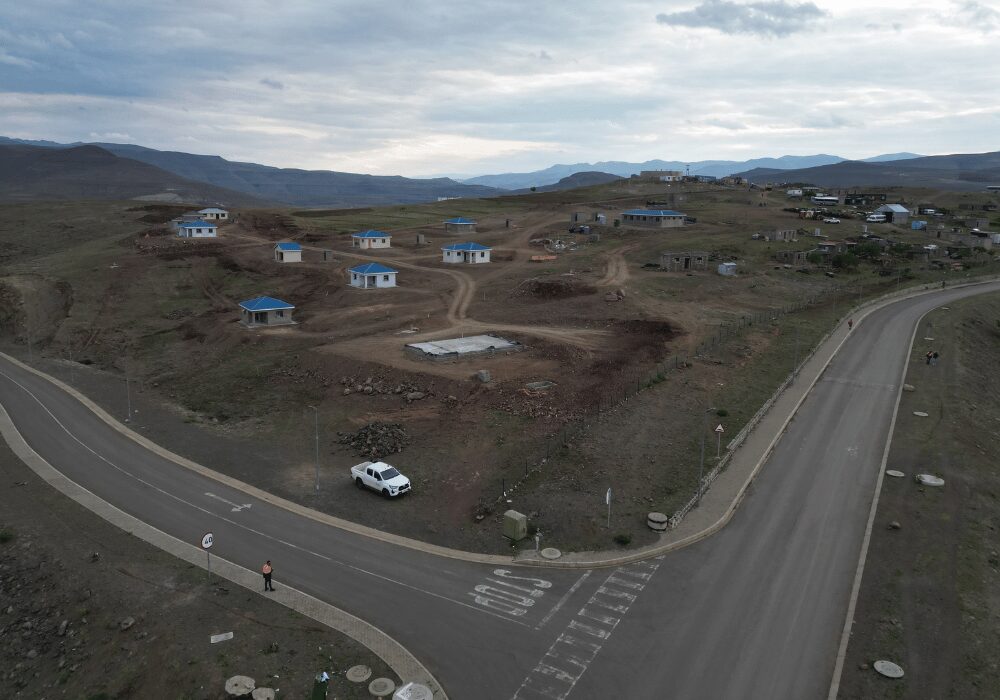 The latest contract will see the development of two relocation villages at Koung Ha Phohla and Thabang, where just over 100 households currently living within the future reservoir footprint will be resettled. The villages are located between the Senqu Bridge area and Mokhotlong, under the jurisdiction of the Mphokojoane Community Council and Mokhotlong Urban Council.
The scope of work extends beyond housing construction. It includes residential roads, stormwater drainage, bulk water infrastructure, pump stations, boreholes, water distribution networks and sanitation facilities. Community infrastructure such as pre-schools and community halls will also be built, while every resettlement homestead will be connected to the national electricity grid.
The housing programme forms part of a broader resettlement effort associated with the creation of the 5,053-hectare Polihali Reservoir. Despite the scale of the reservoir, fewer than 300 households across fewer than 20 villages are expected to be physically displaced.
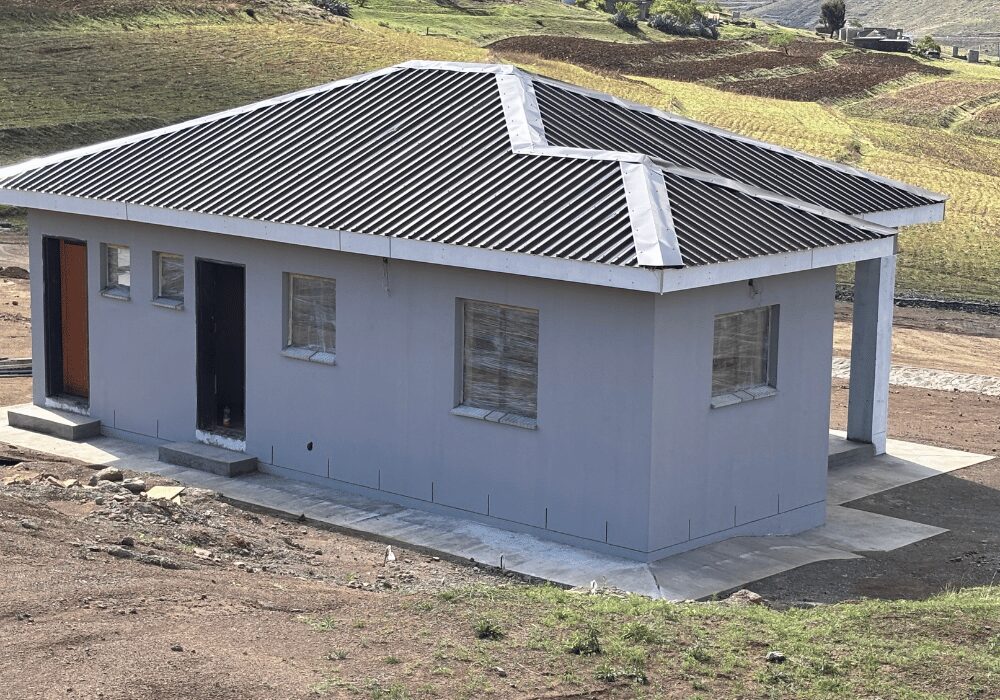

Under the LHDA’s Phase II Compensation Policy, affected households are entitled to project-built replacement homes at designated relocation sites. Households may alternatively choose to relocate to a site of their choice or accept cash compensation for affected assets. In total, approximately 210 replacement homesteads are planned, most of them at six designated resettlement sites: Koung Ha Phohla, Thabang, Sekokong, Lilimala, Makalong and Tloha-Re-Bue.
Affected communities played a central role in selecting relocation sites and shaping the design of replacement housing. The new homesteads will replicate existing residential arrangements and include fully fenced residential plots, space for vegetable gardens and livestock enclosures, rainwater harvesting systems and electricity connections.Meanwhile, construction of replacement housing and community infrastructure in the project’s site establishment area is progressing steadily. That programme, which began in early 2025, is expected to conclude in early 2027.
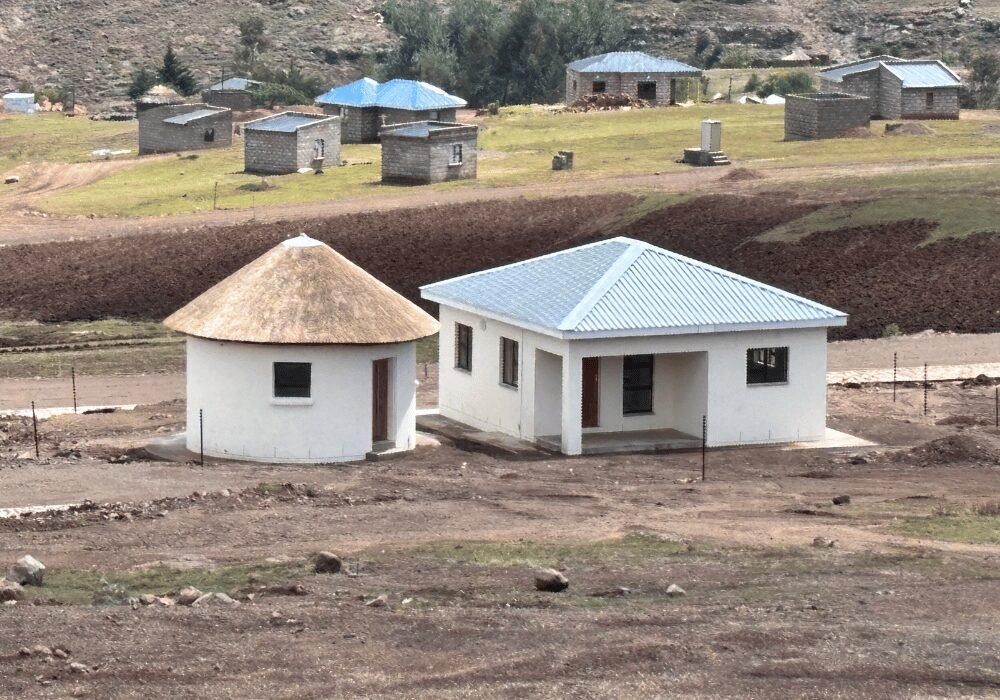 The first phase of resettlement construction affects 99 households in Masakong, Ramonakalali, Makalong, Tloha-Re-Bue and Lilimala. The works include housing, pre-schools, a church, community halls, road improvements and upgrades to village water supply systems. The first completed homes are expected to be handed over during the first quarter of 2027.
The initial resettlement housing contract, valued at R372 million, was awarded to the Sixty 15 Joint Venture, comprising Eagle Construction (Pty) Ltd, AfroAsia Engineering (Pty) Ltd and Geo Construction (Pty) Ltd, together with several Lesotho and South African subcontractors.
Approximately 30% of the replacement houses under that contract are now in the finishing stages, while water infrastructure upgrades in three villages are about 90% complete.
Beyond housing delivery, the construction programme has become a significant source of economic activity in the project area. To date, it has created more than 600 jobs, invested over R47.8 million in local enterprise development and directed more than R102 million toward the procurement of goods and services. The resettlement initiative forms part of the LHDA’s wider socio-economic mitigation programme, which includes livelihood restoration, compensation for lost assets, skills development, public health support and environmental management measures designed to sustain communities affected by Phase II of the Lesotho Highlands Water Project.