Founded in 1903 amid Johannesburg’s early gold-rush chaos, Rand Water has spent more than a century proving that water, not gold, is South Africa’s most valuable resource. From pioneering bulk supply systems to leading today’s infrastructure megaprojects, the organisation continues to deliver dignity, development and resilience to millions.
“Our work is more than the average nine-to-five job; it is about service, about providing dignity and life,” says Sipho Mosai, group chief executive of Rand Water.That ethos has guided Rand Water’s growth from supplying water to the gold diggers of the Witwatersrand to becoming the largest water board in the Southern Hemisphere. Today, the utility provides bulk potable water to over 21 million people across Gauteng and parts of Mpumalanga, the Free State and North West — an area spanning some 18 000 km².
Infrastructure
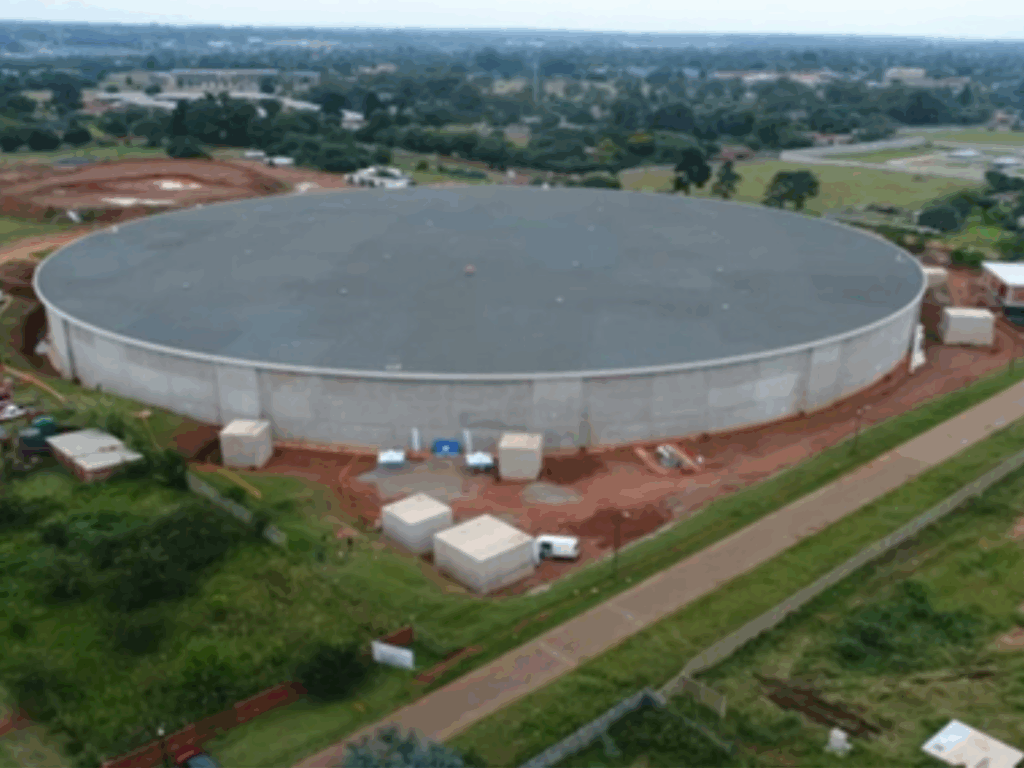
Vlakfontein is the largest cylindrical post-tensioned concrete reservoir in the world
“Amid all the economic challenges, Rand Water invested its redemption reserves wisely, yielding a competitive return averaging 9.15%,” notes Mosai. “We intend to use this approach to build future sustainability and retain investor confidence.”Notably, throughout its 121-year history, Rand Water has never received a government bailout and remains fully self-sustaining. Fitch Ratings has affirmed its AA+(zaf) credit rating — a clear indication of strong liquidity, sound governance and low default risk.
Municipalities
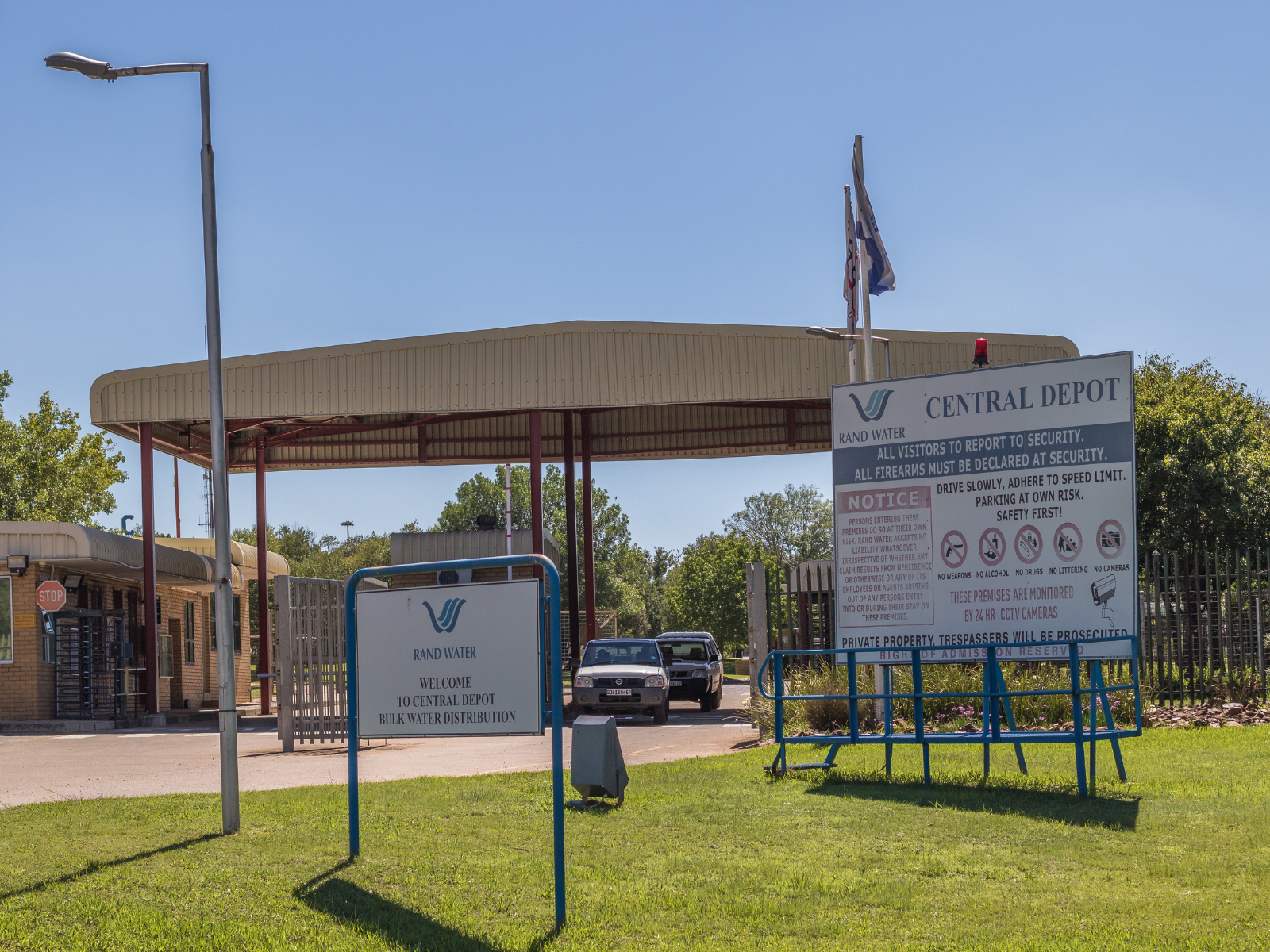
Rand Water is the largest waterboard in the southern hemisphere

“Rand Water Services will operate as an independent, professionally run special-purpose vehicle,” explains Mosai. “It will manage operations, maintenance and billing, ring-fencing revenue for water and sanitation activities so that funds are not absorbed into wider municipal budgets. This is how we can ensure that every rand collected for water goes back into water.”He believes the proposed amendments to the Water Services Act will further enable such models, creating conditions for stronger collaboration between water boards and municipalities. “There is little point in having pockets of excellence like Rand Water when some households still go dry,” he says. “We must be part of the solution.”
SDGs
 The organisation’s approach aligns closely with South Africa’s development goals and the United Nations Sustainable Development Goals (SDGs). Rand Water’s operations directly support Goal 6 (Clean Water and Sanitation), achieving 99.70% on its water-quality composite indicator and maintaining uninterrupted bulk supply exceeding 24 hours. It also contributes to Goal 5 (Gender Equality) with 43% female staff and 76% female managers; Goal 8 (Decent Work and Economic Growth) with over 3 000 jobs created through the Rand Water Foundation; Goal 12 (Responsible Consumption and Production) via its Project 1600 water-efficiency programme; and Goal 13 (Climate Action) through energy-efficiency and carbon-reduction initiatives.
Education and advocacy remain another pillar. Through its Water Wise campaign, Rand Water educates communities, schools and industries about conservation and demand management. Its Water Wise Education Team runs workshops, roadshows and puppet shows promoting responsible water use, pollution prevention and source protection – helping to foster a culture of stewardship from classroom to community.
“Scaling water access isn’t just about building more pipes,” says Mosai.
The organisation’s approach aligns closely with South Africa’s development goals and the United Nations Sustainable Development Goals (SDGs). Rand Water’s operations directly support Goal 6 (Clean Water and Sanitation), achieving 99.70% on its water-quality composite indicator and maintaining uninterrupted bulk supply exceeding 24 hours. It also contributes to Goal 5 (Gender Equality) with 43% female staff and 76% female managers; Goal 8 (Decent Work and Economic Growth) with over 3 000 jobs created through the Rand Water Foundation; Goal 12 (Responsible Consumption and Production) via its Project 1600 water-efficiency programme; and Goal 13 (Climate Action) through energy-efficiency and carbon-reduction initiatives.
Education and advocacy remain another pillar. Through its Water Wise campaign, Rand Water educates communities, schools and industries about conservation and demand management. Its Water Wise Education Team runs workshops, roadshows and puppet shows promoting responsible water use, pollution prevention and source protection – helping to foster a culture of stewardship from classroom to community.
“Scaling water access isn’t just about building more pipes,” says Mosai.
“It’s about re-imagining how things are done, financed and measured. We are investing in modern infrastructure, strengthening partnerships and building the skills required to meet future challenges. This facility is more than a plant; it is a promise – a promise to deliver life-giving water now and for generations to come.”Rand Water’s constructive engagement with stakeholders is guided by five corporate values: innovation, excellence, caring, partnership and integrity. “These values shape our behaviour and our accountability,” Mosai emphasises. “Our reputation rests on the value we deliver and how we support South Africa’s economic and social development agenda.”
While proud of what has been achieved, Mosai is mindful of the challenges that lie ahead: climate stress, financial instability in municipalities and widespread non-payment for bulk water. “Hard work and innovation must inspire municipalities to reticulate the water they receive from Rand Water to every tap,” he urges. Quoting President Ramaphosa, he adds: “Water is not just a basic human need. It is the lifeblood of any thriving society. It sustains life, supports industry, empowers agriculture and fuels innovation.” For Mosai, that belief defines both the past and the future of Rand Water. “The legacy we are building is one of resilience, innovation and inclusive water provision — a legacy proving, once again, that water is truly more precious than gold.”
Who is Sipho Mosai?
Sipho Mosai, group chief executive, Rand Water
- Bachelor of Science (University of the North)
- Bachelor of Science (Hons) (University of the North)
- Master of Science (University of Free State)
- Post Graduate Diploma in Management (University of KwaZulu-Natal)
- Master of Business Administration (University of KwaZulu-Natal).
Station 5A Zuikerbosch Water Purification Plant
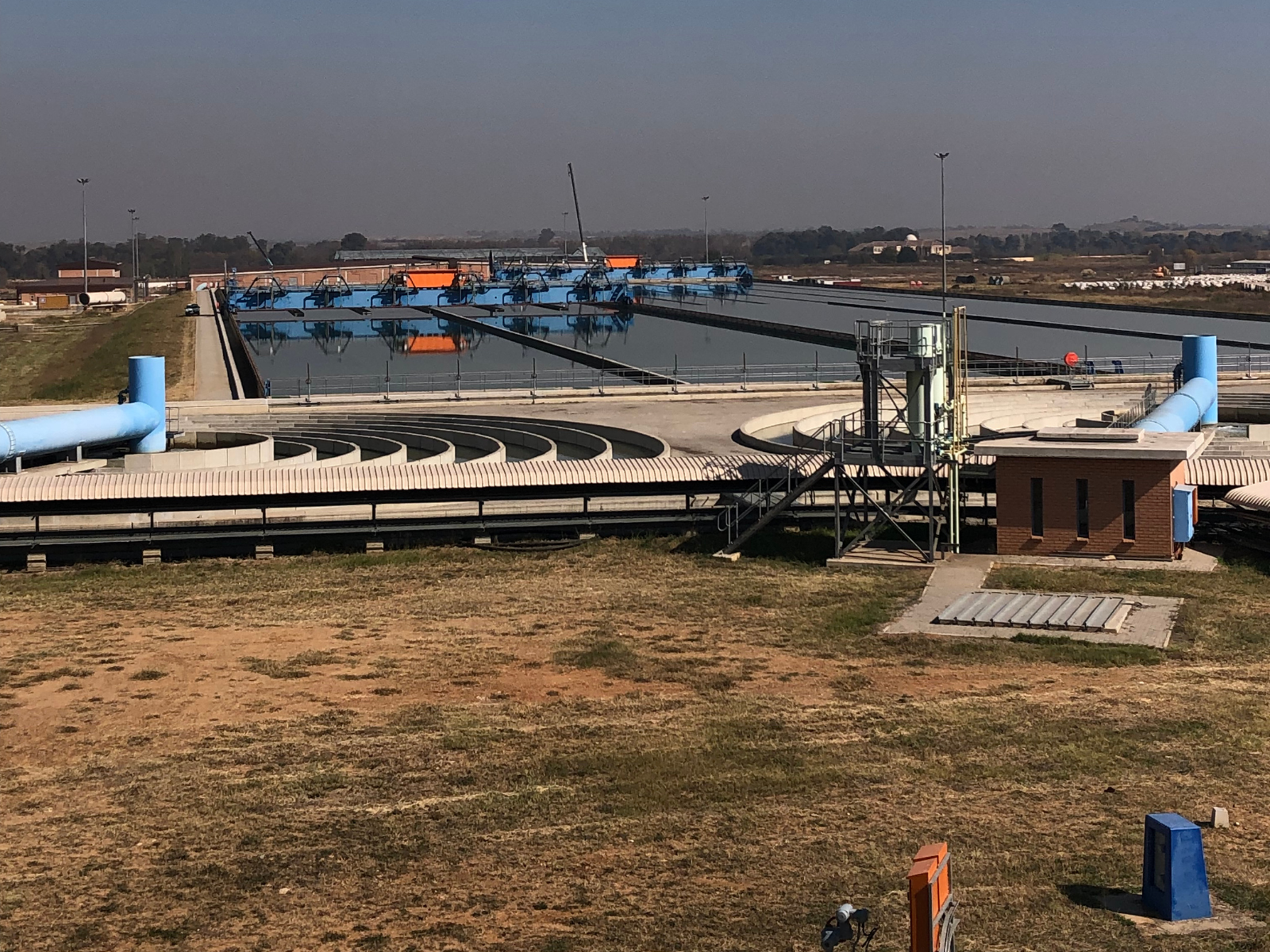
Station 5A Zuikerbosch Water Purification Plant
- Location: Zuikerbosch Water Purification Plant, Vereeniging, Gauteng
- Launched: August 2025 by President Cyril Ramaphosa
- Project value: R4.8 billion
- Construction period: Initiated in 2019; commissioning and optimisation ongoing
- Water production capacity: 600 Mℓ/day – equivalent to filling 240 Olympic-sized swimming pools daily
- Purpose: To secure Rand Water’s future supply capacity and meet rising urban demand across Gauteng, Mpumalanga, Free State and North West
- Project type: State-of-the-art water purification expansion forming part of Rand Water’s long-term augmentation strategy
- Technology: Incorporates advanced coagulation, flocculation, sedimentation, filtration and disinfection systems, monitored through an integrated SCADA control network
- Engineering design: Built to allow modular expansion for future phases and to ensure operational redundancy during maintenance or peak demand
- Employment impact: Over 3 000 direct and indirect jobs created during construction; significant skills transfer in civil, electrical and mechanical trades
- Environmental efficiency: Reduced carbon footprint through energy-efficient pumping systems and optimised chemical dosing; full compliance with SANS 241, EPA and WHO water-quality standards
- Strategic importance: Strengthens supply resilience, supports regional economic growth and underpins South Africa’s water security for decades to come