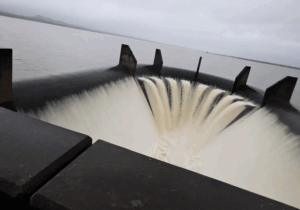
The Department of Water and Sanitation (DWS) welcomes the high water levels in the Middle Letaba Dam, which reached over 100% of its supply capacity and overflowing, due to above normal rainfall that has pushed several dams to full or above capacity in the northern region of the country since last week.
The Middle Letaba Dam, located near Giyani in Limpopo with a storage capacity of 171.93 million cubic metres (mᵌ) has made a giant leap in the last few days, increasing from 89.9% last week to 105% and overflowing after the catchment received a cumulative rainfall of 150 millimeters over the last four days. Middle Letaba dam plays a crucial role in supplying water for irrigation and domestic use to surrounding communities, but it has struggled with very low water levels and has rarely reached full capacity. The catchment is generally under pressure with limited availability of surface water and high demand than supply. On 30 December 2025, water levels in the dam were at 8.3%, however, the higher-than-normal rainfall received since the beginning of the year and most recently has resulted in high inflows and remarkable turnaround for the dam. The Middle Letaba Dam is part of the Middle Letaba sub-catchment made up mainly of Middle Letaba, Koedoes and Brandboontjies rivers within the Olifants Water Management Area. The three rivers form a hydrological network that drains off to the Middle Letaba Dam which is situated upstream of the confluence of the Middle Letaba and Klein Letaba rivers. The dam has only experienced its full supply capacity three times since it was built in 1984, and this occurred only when there were heavy and above normal rains in the catchment area. Spokesperson of the Department of Water and Sanitation, Ms Wisane Mavasa has welcomed the high inflows into the dam that resulted in water flowing over the dam’s spillway this past weekend. She described the current situation as a significant hydrological event, as the dam has not spilled since the extreme floods that occurred in the year 2000.
“Based on our records, this marks the first time in 26 years that the dam has reached over 100% capacity. While the sight of a spilling dam is welcomed and brings a relief after years of low levels, it is crucial for the public to understand what this means for water supply.”“The dam is now at its full supply capacity and current high storage levels provide an increase in availability of raw water in the system, therefore a strategic buffer for raw water security. However, the conversion of this resource into potable water is contingent upon the operational capacity of the water supply infrastructure, thus the supply to end-users, particularly for domestic use is dependent on the functionality and throughput capacity of the water treatment plants and the associated distribution networks,” said Ms Mavasa. The department is working with relevant stakeholders, particularly water services authorities who are dependent on the dam as a primary source for water supply to communities, to derive a workable plan to ensure that communities remain served. The Department of Water and Sanitation will continue to monitor dam levels closely and reiterate its call to members of the community near the dam to be on high alert as heavy outflows can cause flash floods that may pose danger of displacing communities residing in low lying areas downstream of the dam. Communities are further urged to avoid flooded roads, dam walls and spillways, as well as large water bodies.