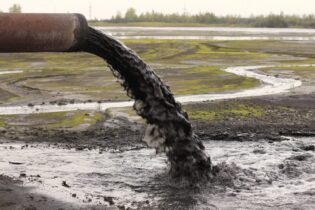
South Africa’s latest Green Drop results reveal a worsening wastewater crisis, with nearly half of systems now in a critical state. More than a warning, the data demands action. The WISA 2026 Biennial Conference offers a platform to move from diagnosis to coordinated recovery across the sector.
As a professional body with more than 3 500 members across the water value chain, WISA is uniquely positioned to help shift the sector from crisis management to system recovery. The upcoming conference theme – Rethink Amanzi: Securing Our Future – directly responds to the Green Drop trajectory by calling for a fundamental rethinking of how wastewater systems are planned, financed, operated and governed. First, WISA plays a decisive role in rebuilding capacity, a core failure highlighted by declining Green Drop scores. Many underperforming wastewater treatment works suffer not only from ageing infrastructure but from skills erosion, high staff turnover, and weak technical oversight. Through its rethink capacity conference subtheme, the conference aims to catalyse structured mentorship between experienced practitioners and struggling municipalities, promote professional registration and continuous development, and align training programmes with the real operational challenges faced on the ground. Second, the crisis demands a new approach to infrastructure renewal and optimisation. Traditional, capital-intensive solutions alone have proven insufficient. Under the rethink infrastructure and rethink efficiency subthemes, WISA will facilitate knowledge exchange on modular upgrades, process optimisation, energy-efficient treatment technologies and realistic standards of service that reflect local constraints, while still protecting receiving water bodies. Showcasing proven, context-appropriate solutions can help municipalities move from non-compliance to incremental improvement. Third, financing and governance failures sit at the heart of wastewater decline. The funding the flow and rethinking governance subthemes offer space to confront uncomfortable realities: chronic under-pricing of sanitation services, weak revenue collection, and blurred accountability between political and technical functions. WISA’s convening power allows policymakers, financiers, and engineers to jointly explore alternative funding models, ring-fencing of wastewater budgets and performance-linked support mechanisms that restore both credibility and sustainability to municipal services.
Fourth, the worsening Green Drop outcomes underscore the need for better data, monitoring, and accountability. Through smart water futures subtheme, WISA aims to promote digital tools for real-time process monitoring, early warning of system failures and transparent reporting. When coupled with professional ethics and independent peer review, these tools can help prevent the silent deterioration that often precedes system collapse.
Finally, wastewater cannot be treated in isolation. Under water for life and climate-resilient water futures subthemes, the conference aims to reinforce the link between failing treatment works, polluted catchments and climate stress. By framing wastewater as both a risk and a resource, WISA aims assist repositioning sanitation within integrated catchment management and water security strategies.
Harrison Pienaar, Research Group Leader: Smart Water Use, CSIR