
Dr Ferrial Adam executive director of WaterCAN
“The pollution of South Africa’s rivers rarely comes from a lone source. Instead, it is the cumulative result of everyday neglect, industrial dumping, and failing infrastructure. If you can see waste in a river, there is always more that you cannot see,” explains Dr Adam.Visible pollution includes household litter, garden waste, construction rubble, and illegally dumped refuse. But beneath the surface lie far more dangerous contaminants: chemicals from industrial processes, agricultural runoff, pharmaceutical waste, and poorly treated sewage. Construction waste is one of the most common offenders. Companies frequently dump rubble to avoid disposal costs, even though they are aware of the environmental consequences. At the same time, ordinary littering contributes to the problem because stormwater systems carry street waste directly into waterways. “The river actually begins in our streets,” Adam says. In some areas, the effects are stark. One river in Alexandra, she recalls, changed colour repeatedly from blue to yellow to red depending on what was being discharged upstream.
When water has no value
The scale of dumping reveals a troubling contradiction in how South African society treats water. Everyone understands that water is essential for survival, yet behaviour often suggests the opposite. Dr Adam explains that dumping, whether commercial or individual stems from larger systematic failing, namely the lack of good governance and no enforcement. In communities that face these issues, residents are often left asking a simple question: Where should we put our rubbish? Dr Adam describes community outreach efforts where activists went door-to-door asking residents not to dump waste, particularly nappies, into nearby rivers. The response was immediate and practical: but without reliable waste services, people had few alternatives. Government responsibility is therefore central to the crisis. When services fail, informal solutions emerge, and rivers become the default disposal system. At the same time, large industries deliberately cut corners. Waste disposal and treatment can be expensive, and in the absence of strong enforcement, illegal dumping becomes a cost-saving measure.Water under siege
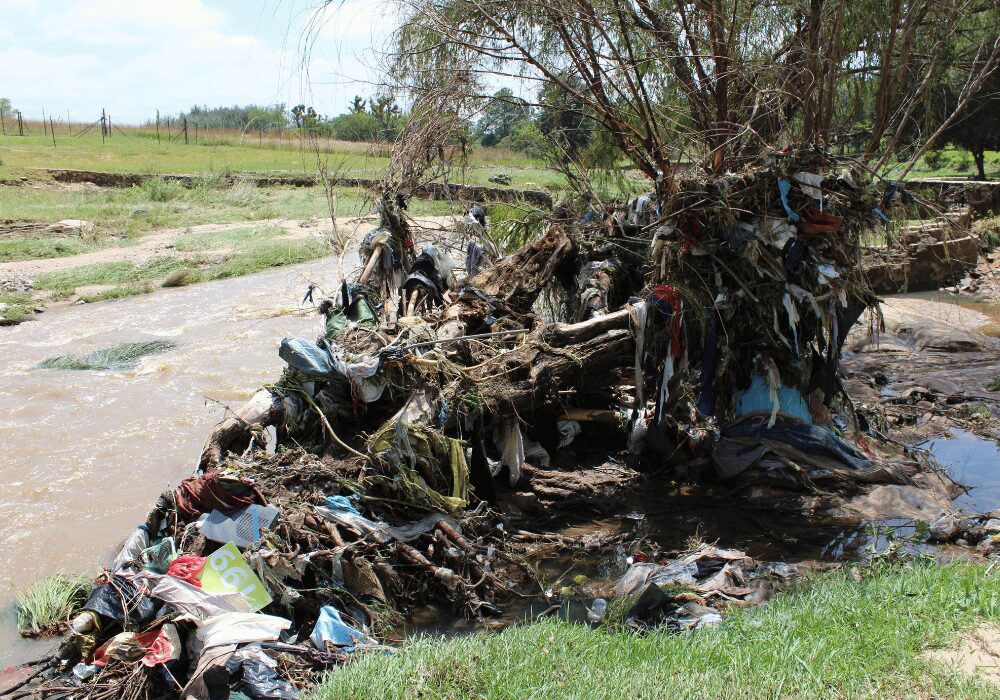
Pollution in the Jukskei River

Water source areas are another concern. These relatively small regions generate a huge portion of the country’s freshwater supply, yet they remain poorly protected from pollution and development pressures.
“The impacts affect all of us,” Adam says. “Even people who never see the rivers.”For millions of South Africans, polluted rivers are not just an environmental issue; they are a daily health risk. Approximately 10% of the population relies directly on river water for basic needs such as washing, cooking, and drinking. When those rivers are contaminated, diseases spread quickly. Exposure to E. coli, sewage, and industrial pollutants can lead to skin infections, gastrointestinal illness, and outbreaks of diseases such as cholera. Communities without reliable water and sanitation services experience disruptions to education and economic activity. Children miss school due to illness, and young women often stay home during menstruation when sanitation facilities are inadequate. Healthcare systems are also strained. Nearly half of South Africa’s clinics lack reliable water access, complicating even basic medical treatment. Meanwhile, small businesses, particularly those dependent on clean water, face additional challenges. From food preparation to small-scale manufacturing, water quality can determine whether a business is surviving. River pollution also places pressure on urban infrastructure. Solid waste entering stormwater systems can block drainage networks, increasing the risk of flooding during heavy rainfall. Blockages can also cause pipe bursts and sewage overflows, compounding the contamination problem. Dr Adam notes, “Once these systems begin to fail, the cycle becomes self-reinforcing: broken infrastructure leads to more pollution, which leads to further infrastructure damage.”
The governance gap
South Africa has strong environmental laws on paper, but in practice, enforcement remains inconsistent. According to Adam, the breakdown often begins with something less dramatic than corruption: maintenance neglect. “When infrastructure is not maintained, backlogs accumulate. Overworked municipal staff struggle to keep systems operational; budgets are diverted, and leadership gaps appear. Over time, the system becomes overwhelmed.” Enforcement agencies exist, including environmental regulators and specialised “Green Scorpions” units, but they are often under-resourced. WaterCAN has taken the approach to ‘force’ enforcement, laying criminal charges against municipalities for pollution caused by failing wastewater treatment plants. In Johannesburg, such action has been taken against facilities that have continued polluting rivers despite knowing the damage they are causing. In other cases, companies have been fined for releasing chemicals into waterways. Yet fines alone may not be enough. “If penalties are small. They simply become another operational cost,” adds Dr Adam.Letting the rivers breathe
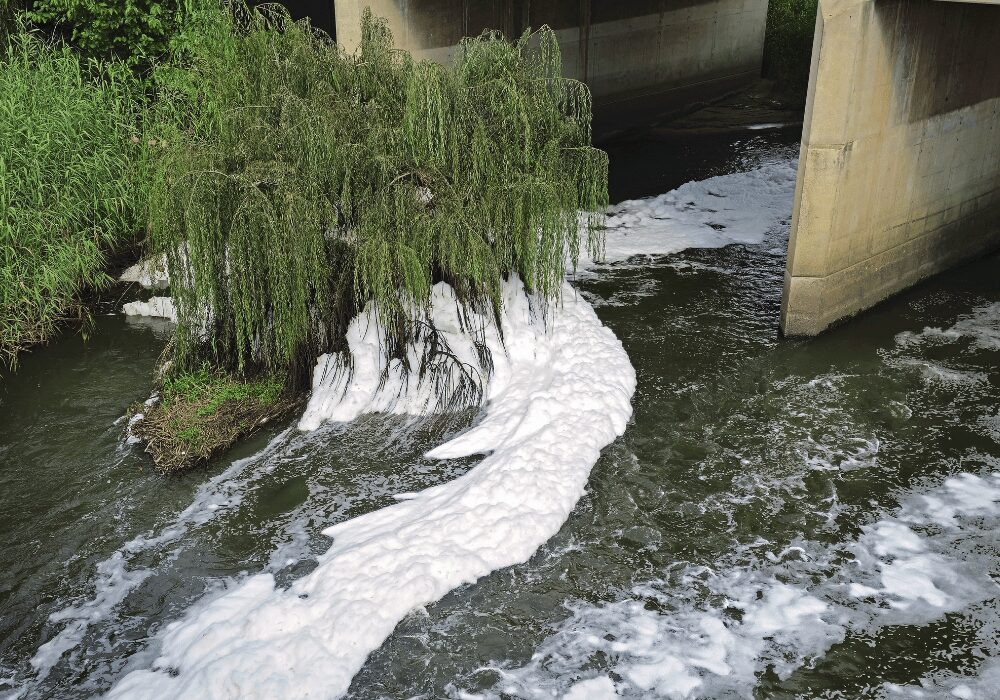
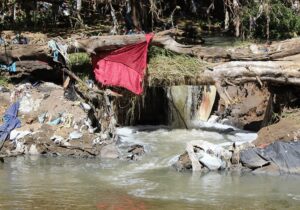
Polluted water running through Kliprivier
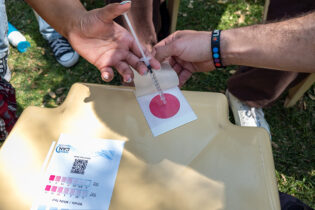
“This grassroots monitoring plays two important roles. First, it supplements government oversight by identifying problems early. Second, it rebuilds public trust by giving communities a direct role in protecting their environment. People trust people more than they trust institutions,” Dr Adam says.Community involvement also creates visible feedback loops. When residents monitor and clean rivers themselves, they can see improvements over time, reinforcing the value of collective action. Ultimately, restoring South Africa’s rivers will require a combination of stronger governance, reliable municipal services, industrial accountability, and active citizen engagement.