Kirsten Kelly talks to Francois Joubert – a partner at Fasken – about water rights.
South Africa’s water governance framework is built on one of the most progressive constitutional foundations in the world. Yet the gap between the lawful right to use water and practical delivery remains one of the country’s most pressing challenges.
Section 27(1)(b) of the Constitution of the Republic of South Africa, 1996, states that everyone has the right of access to sufficient water, placing a clear obligation on the state to respect, protect, promote and fulfil this right.What is access to sufficient water?
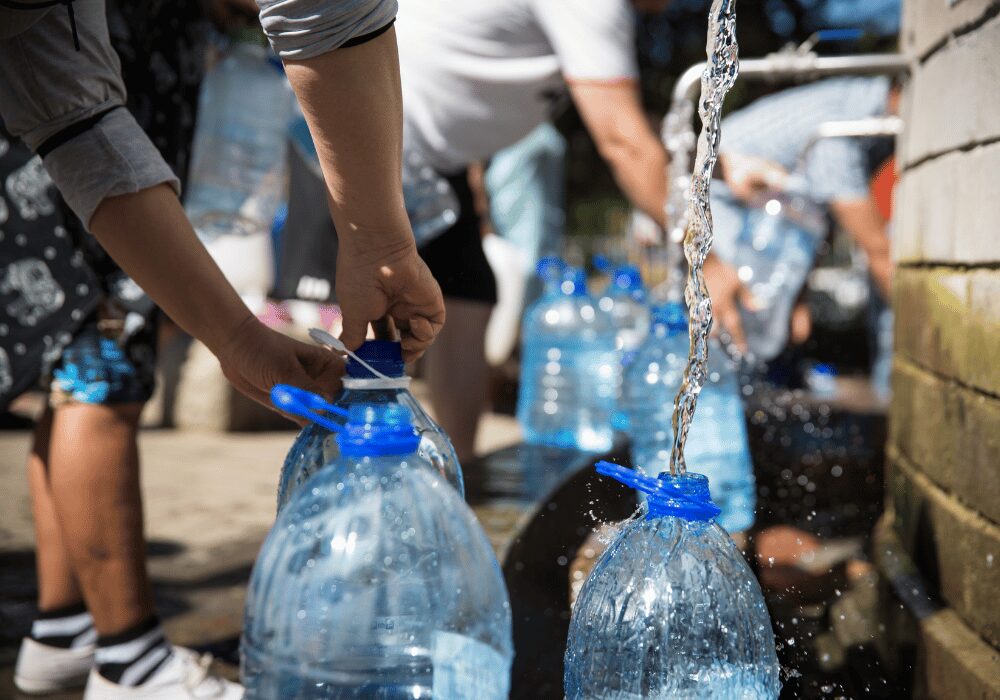
Defining what constitutes ‘sufficient water’ is far more complex than it appears in law. While the Constitution establishes the right, the regulatory framework attempts to qualify and quantify it. The Water Services Act 108 of 1997 (WSA) defines the minimum standard of basic water supply as 25 litres per person per day, or six kilolitres per household per month. This supply must be accessible within 200 metres of a household, delivered at a minimum flow rate of 10 litres per minute, and provided with sufficient reliability so that no consumer is without water for more than seven full days in any year. The Act defines basic water supply as ‘the prescribed minimum standard of water supply services necessary for the reliable supply of a sufficient quantity and quality of water to households, including informal households, to support life and personal hygiene’. “In practise, I would say that sufficient water means reliable, safe and accessible water for personal and household use. In reality, however, in a water stressed region like South Africa with service delivery failures across many municipalities, these standards are often not met. Ageing infrastructure, insufficient maintenance and capacity constraints within municipalities have led to widespread supply interruptions. In some communities, residents experience water outages lasting weeks or even months, far exceeding the allowable service interruptions outlined in regulation,” says Joubert.He notes that the impact falls most heavily on the poor and vulnerable. “The result is that access to water in many areas remains a theoretical right rather than an operational reality.”
Environmental protection
 Water of sufficient quantity must be provided to households, but equal emphasis must be placed on quality, as required by both the Constitution and reinforced by the WSA.
Therefore, the National Water Act (NWA) imposes a strict ‘duty of care’ on landowners, occupiers, and persons in control of land to prevent water pollution. Specifically, Section 19 of the Act mandates that reasonable measures be taken to prevent pollution of water resources from occurring, continuing, or reoccurring due to activities on their land. Activities that threaten water quality must be mitigated and managed to protect ecosystems and downstream users.
“This means that industries such as mining and agriculture must implement robust water management systems, monitor their impacts and take responsibility for remediation where pollution occurs. This principle is closely aligned with broader environmental legislation and reflects the constitutional right to an environment that is not harmful to health or wellbeing,” notes Joubert.
He adds that if this duty of care applies to ordinary citizens, it should apply even more stringently to the State. “As the custodian of public resources and the recipient of taxpayer funding, government carries a heightened obligation to safeguard water resources, maintain infrastructure and ensure consistent service delivery. This includes preventing pollution, enforcing compliance and investing in systems that guarantee reliable access to safe water for all.”
Section 24 of the Constitution guarantees everyone the right to an environment not harmful to their health or well-being. The National Environmental Management Act (NEMA) creates a broad, powerful ‘duty of care’ for anyone who owns, controls, occupies, or uses land where an activity causes, has caused, or is likely to cause significant pollution or environmental degradation, including harm to water resources.
Under this framework, regulators can apply the principle of joint and several liability, meaning that multiple responsible parties can each be held fully liable for the cost of preventing, stopping, or remediating the harm. In practice, this allows authorities to pursue any one or more of the responsible parties – for example, a landowner, an operator, or a polluting company—for the full extent of the reasonable measures required, leaving those parties to sort out contributions between themselves. This approach is intended to ensure that environmental and water-resource impacts are actually remedied, rather than lost in disputes about who is more at fault, and aligns with the constitutional right to an environment that is not harmful to health and well-being.
Water of sufficient quantity must be provided to households, but equal emphasis must be placed on quality, as required by both the Constitution and reinforced by the WSA.
Therefore, the National Water Act (NWA) imposes a strict ‘duty of care’ on landowners, occupiers, and persons in control of land to prevent water pollution. Specifically, Section 19 of the Act mandates that reasonable measures be taken to prevent pollution of water resources from occurring, continuing, or reoccurring due to activities on their land. Activities that threaten water quality must be mitigated and managed to protect ecosystems and downstream users.
“This means that industries such as mining and agriculture must implement robust water management systems, monitor their impacts and take responsibility for remediation where pollution occurs. This principle is closely aligned with broader environmental legislation and reflects the constitutional right to an environment that is not harmful to health or wellbeing,” notes Joubert.
He adds that if this duty of care applies to ordinary citizens, it should apply even more stringently to the State. “As the custodian of public resources and the recipient of taxpayer funding, government carries a heightened obligation to safeguard water resources, maintain infrastructure and ensure consistent service delivery. This includes preventing pollution, enforcing compliance and investing in systems that guarantee reliable access to safe water for all.”
Section 24 of the Constitution guarantees everyone the right to an environment not harmful to their health or well-being. The National Environmental Management Act (NEMA) creates a broad, powerful ‘duty of care’ for anyone who owns, controls, occupies, or uses land where an activity causes, has caused, or is likely to cause significant pollution or environmental degradation, including harm to water resources.
Under this framework, regulators can apply the principle of joint and several liability, meaning that multiple responsible parties can each be held fully liable for the cost of preventing, stopping, or remediating the harm. In practice, this allows authorities to pursue any one or more of the responsible parties – for example, a landowner, an operator, or a polluting company—for the full extent of the reasonable measures required, leaving those parties to sort out contributions between themselves. This approach is intended to ensure that environmental and water-resource impacts are actually remedied, rather than lost in disputes about who is more at fault, and aligns with the constitutional right to an environment that is not harmful to health and well-being.
Institutional responsibilities and governance
 “The State – through the Department of Water and Sanitation (DWS) – acts as the custodian of the country’s water resources. The DWS has the legislative mandate to ensure that the country’s water resources are protected, used, developed, conserved, managed and controlled in a sustainable and equitable manner for the benefit of all South Africans,” explains Joubert.
South Africa’s water governance structure distributes responsibilities across multiple spheres of government. Municipalities carry the primary responsibility for delivering water and sanitation services to communities, while national government sets policy, regulates the sector and intervenes only under specific circumstances.
This layered system is designed to protect local autonomy while ensuring oversight. However, when municipalities fail to meet their constitutional obligations, intervention mechanisms can be slow and procedurally complex.
Legal frameworks do allow for national government to assume certain municipal functions in extreme circumstances. “Yet these processes involve strict procedural safeguards and can take considerable time to implement, delaying urgent solutions for communities facing water shortages. A mayor, for example, cannot be dismissed without following massive constitutional and statutory processes,” states Joubert.
He adds that there are long-standing institutional structures in place that can improve service delivery. “Irrigation boards and water user associations have historically played a key role in managing water resources efficiently, particularly in agricultural regions. Many stakeholders argue that strengthening these institutions, rather than centralising control, could provide more effective water management in certain contexts.”
“The State – through the Department of Water and Sanitation (DWS) – acts as the custodian of the country’s water resources. The DWS has the legislative mandate to ensure that the country’s water resources are protected, used, developed, conserved, managed and controlled in a sustainable and equitable manner for the benefit of all South Africans,” explains Joubert.
South Africa’s water governance structure distributes responsibilities across multiple spheres of government. Municipalities carry the primary responsibility for delivering water and sanitation services to communities, while national government sets policy, regulates the sector and intervenes only under specific circumstances.
This layered system is designed to protect local autonomy while ensuring oversight. However, when municipalities fail to meet their constitutional obligations, intervention mechanisms can be slow and procedurally complex.
Legal frameworks do allow for national government to assume certain municipal functions in extreme circumstances. “Yet these processes involve strict procedural safeguards and can take considerable time to implement, delaying urgent solutions for communities facing water shortages. A mayor, for example, cannot be dismissed without following massive constitutional and statutory processes,” states Joubert.
He adds that there are long-standing institutional structures in place that can improve service delivery. “Irrigation boards and water user associations have historically played a key role in managing water resources efficiently, particularly in agricultural regions. Many stakeholders argue that strengthening these institutions, rather than centralising control, could provide more effective water management in certain contexts.”
Water use licenses


In a South African context, even though water is a shared public resource that can be used by everyone in the country, there are instruments in place to ensure that water is used sustainably. These include existing water use, general authorisations and water use licenses (WUL).
A WUL is a legal authorisation issued by DWS that allows an individual, company or institution to use water for a specific purpose. It forms part of the regulatory framework established under the NWA. “In practice, a WUL is required where a proposed activity could have a significant impact on a water resource or on other users. This includes activities such as abstracting water from rivers or groundwater, storing water, discharging waste into water systems, altering a watercourse, or using water for industrial, mining or agricultural purposes. The licence sets out the terms and conditions under which the water may be used, including limits, monitoring requirements and environmental protections,” states Joubert. To obtain a WUL, an applicant must submit a formal application to DWS. The process typically involves technical assessments, public participation, and consideration of factors such as environmental sustainability, existing lawful users, and the broader public interest before a decision is made. Ultimately, a WUL is a key mechanism for ensuring that water, as a scarce and shared national resource, is used in a controlled, equitable and sustainable manner.“Government has introduced reforms aimed at fast-tracking WUL applications, with measures seeking to reduce decision-making timeframes to just a few months in order to support strategic infrastructure and economic development. In many cases, we have seen a considerable improvement,” says Joubert.Under the NWA, not all water use requires a WUL. The Act provides for certain exempted or permitted use categories, provided specific conditions are met.
Existing lawful use applies where a person or entity, in certain circumstances, was already using water legally before the NWA came into effect in 1998, and that use continued within the required timeframes for registration of the existing use. In such cases, the user may continue using water under the same conditions, even without a licence, although the use may need to be registered and could later be subject to licensing or restrictions. General authorisations allow certain types of water use without a licence, provided they fall within defined limits and conditions set by the NWA and does not trigger any water use as provided for under Section 21 of NWA. These are typically low to medium-impact activities where the risk is known, predictable and manageable. While a licence is not required, users must still comply with conditions and often need to register the use. General authorisations are straightforward to obtain. Schedule 1 use are small-scale, low-impact uses that are automatically permitted. They typically include reasonable domestic use, small-scale gardening, and watering of animals for personal use. The idea is that these uses are unlikely to significantly affect water resources or other users, so they do not need formal authorisation. “One can say that together, these exempted categories create a tiered water use system. Low-risk uses (Schedule 1) are automatically allowed, moderate-risk uses are controlled through general authorisations, and higher-risk or more complex uses require a full water use licence. This approach helps balance accessibility with the need to protect and manage South Africa’s limited water resources,” maintains Joubert.
The growing importance of ESG
 This structured, risk-based approach to water use regulation also aligns with the growing global focus on environmental, social and governance (ESG) principles. As water becomes an increasingly constrained and scrutinised resource, financial institutions and investors are placing greater emphasis on responsible water stewardship when assessing projects.
Companies seeking funding must often demonstrate that their operations manage water sustainably, protect the existing and future water use of surrounding communities and align with international frameworks such as the United Nations – Equator Principles, United Nations Principles for Responsible Investment, the Initiative for Responsible Mining Assurance and other responsible investment principles. This protects funders from reputational risk and financial losses.
“Almost every reputable financier now has implied ESG lending criteria that explicitly reference climate change, biodiversity protection, and responsible, sustainable water resource management and risk management – all of which form an integral part of a transparent, responsible, and meaningful lending assessment process,” says Joubert.
He adds that in most cases, industries whose operations pose a risk to a community’s access to safe, sufficient and affordable water are taking accountability very serious. “Companies have made great efforts to align their water management principles, procedures and policies with global sustainable development goals (SDGs). The most successful projects demonstrate a sustainable and accountable approach.”
Water security is no longer viewed as a purely an environmental impact issue. It has become a core business risk that can influence financing, regulatory approval and a company’s long-term licence to operate.
“South Africa’s water legislation provides a strong legal framework for equitable access and sustainable management. Yet the sector continues to face major challenges in translating these principles into practical outcomes. Ultimately, water remains one of South Africa’s most valuable and vulnerable resources. Protecting it will require both strong governance and innovative partnerships that recognise water not only as a constitutional right, but as the foundation of social and economic stability,” concludes Joubert.
This structured, risk-based approach to water use regulation also aligns with the growing global focus on environmental, social and governance (ESG) principles. As water becomes an increasingly constrained and scrutinised resource, financial institutions and investors are placing greater emphasis on responsible water stewardship when assessing projects.
Companies seeking funding must often demonstrate that their operations manage water sustainably, protect the existing and future water use of surrounding communities and align with international frameworks such as the United Nations – Equator Principles, United Nations Principles for Responsible Investment, the Initiative for Responsible Mining Assurance and other responsible investment principles. This protects funders from reputational risk and financial losses.
“Almost every reputable financier now has implied ESG lending criteria that explicitly reference climate change, biodiversity protection, and responsible, sustainable water resource management and risk management – all of which form an integral part of a transparent, responsible, and meaningful lending assessment process,” says Joubert.
He adds that in most cases, industries whose operations pose a risk to a community’s access to safe, sufficient and affordable water are taking accountability very serious. “Companies have made great efforts to align their water management principles, procedures and policies with global sustainable development goals (SDGs). The most successful projects demonstrate a sustainable and accountable approach.”
Water security is no longer viewed as a purely an environmental impact issue. It has become a core business risk that can influence financing, regulatory approval and a company’s long-term licence to operate.
“South Africa’s water legislation provides a strong legal framework for equitable access and sustainable management. Yet the sector continues to face major challenges in translating these principles into practical outcomes. Ultimately, water remains one of South Africa’s most valuable and vulnerable resources. Protecting it will require both strong governance and innovative partnerships that recognise water not only as a constitutional right, but as the foundation of social and economic stability,” concludes Joubert.

Francois Joubert, partner, Fasken