
Architects spend years learning that no project is ever built exactly as it was first imagined. Blueprints evolve. Budgets shift. Foundations reveal surprises. Weather intervenes. Deadlines move. The strongest designs are rarely the ones that avoid obstacles altogether, but the ones that respond to them with creativity and resolve. For Nelson Mandela University Students Ruan Smith and Rudi Scholtz, that lesson arrived long before they stood before an international jury in Belgrade.
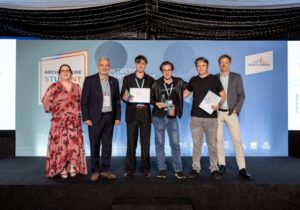
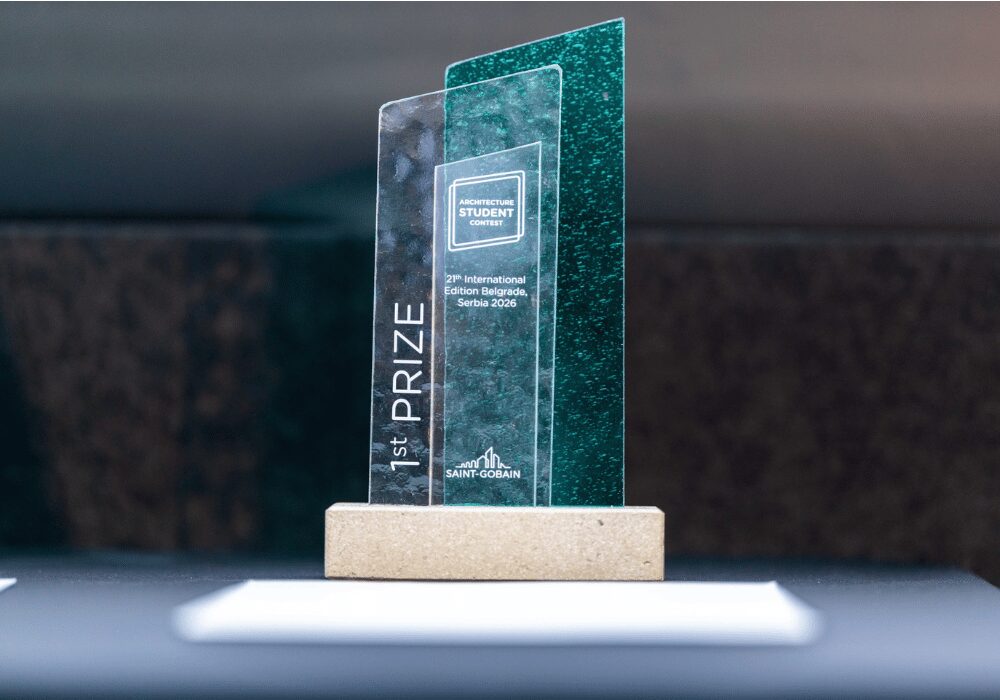
Before they could present their work on one of architecture’s biggest student stages, they found themselves navigating visa delays, missed flights, hastily rewritten travel plans and the very real possibility that they might never make it to Serbia. By the time they arrived, exhausted and running on little more than adrenaline, simply reaching the 2026 Saint-Gobain Architecture Student Contest felt like a victory. A few days later, they walked away as world champions. Representing South Africa against some of the brightest emerging architectural talent from across the globe, Smith and Scholtz were named the overall winners of the prestigious 2026 Saint-Gobain Architecture Student Contest, earning one of the highest honours available to architecture students worldwide. Their winning proposal reimagined a neglected waterfront precinct in Belgrade. The project went beyond the brief and asked some asked a more ambitious question: how can architecture reconnect people with a city, breathe new life into forgotten places and transform what already exists into something meaningful? It was a project rooted in renewal. Unknowingly, they had been living that idea all week. “It still feels surreal. We are incredibly proud to be bringing this achievement home to South Africa,” says Rudi Scholtz.“We believed in a bold idea from the very beginning, knowing it could have gone either way with the judges, so to see that vision recognised with first place is an amazing feeling. This was also my first time travelling outside of South Africa, which made the experience even more memorable. It’s been an unforgettable journey, and one that I’ll always be grateful for.”“Seeing our conviction in our idea rewarded with first place is an incredible feeling,” says Ruan Smith. “To have had the opportunity to represent South Africa on an international stage and return home as winners is something we will treasure for the rest of our lives. This is by far the most significant award we’ve ever received, and it makes every challenge we faced along the way worthwhile. Looking back now, the difficult moments have only made this achievement and the journey to get here even more meaningful.” Behind every polished presentation are countless conversations, abandoned sketches, and difficult questions. Senior Lecturer at NMU and participating teacher John Andrews mentored the students throughout, challenging assumptions, offering insight, and preparing them for the national and international stages. For proud mentor Andrews “it was a rare opportunity to view other students’ work and current discourse from a broad global context, through a contest that brought together 239 universities from five continents”.
 Following their victory in the South African competition, the team embraced detailed feedback from the national jury, returning to the drawing board to strengthen every aspect of their proposal before presenting it on the international stage.
The project that ultimately won the world title was not exactly the same project that first won in South Africa.
It had evolved.
Much like the journey that would eventually take them there.
The road to Belgrade had begun months earlier.
Nelson Mandela University was represented by just one team and, from the outset, Saint-Gobain Africa Academy Manager Samukelisiwe Mkize believed Smith and Scholtz had something special.
But as departure day approached, another challenge emerged. Visa approvals remained outstanding, leaving the team’s participation hanging in the balance.
“I had reached the point where I thought I would have to send the email I’d been dreading; that the team probably wasn’t going to Serbia,” recalls Mkize. “Parents were calling, the students were understandably disappointed, and it was incredibly difficult.”
Then, with only hours remaining before the team’s final opportunity to depart, the visas were finally approved.
Following their victory in the South African competition, the team embraced detailed feedback from the national jury, returning to the drawing board to strengthen every aspect of their proposal before presenting it on the international stage.
The project that ultimately won the world title was not exactly the same project that first won in South Africa.
It had evolved.
Much like the journey that would eventually take them there.
The road to Belgrade had begun months earlier.
Nelson Mandela University was represented by just one team and, from the outset, Saint-Gobain Africa Academy Manager Samukelisiwe Mkize believed Smith and Scholtz had something special.
But as departure day approached, another challenge emerged. Visa approvals remained outstanding, leaving the team’s participation hanging in the balance.
“I had reached the point where I thought I would have to send the email I’d been dreading; that the team probably wasn’t going to Serbia,” recalls Mkize. “Parents were calling, the students were understandably disappointed, and it was incredibly difficult.”
Then, with only hours remaining before the team’s final opportunity to depart, the visas were finally approved.
“Everything happened at once,” says Mkize. “Fortunately, we still had the passports, and thanks to incredible teamwork from everyone involved, we managed to secure new flights and get the team on a plane that same evening.”
Against the odds, they were finally on their way. Belgrade, however, wasn’t finished testing them. When they landed shortly after midnight on 23 June, not everything had arrived with them. One suitcase didn’t. As it turned out, the judges were interested in something far more important than luggage. Despite the disruption, Smith and Scholtz delivered their presentation with confidence and composure. When the final results were announced, South Africa stood at the top of the global leaderboard.“They never allowed the setbacks to distract them from why they were there,” says Mkize. “They adapted, stayed focused and delivered when it mattered most. Those are qualities that will serve them throughout their careers.”What ultimately set their project apart was its ability to look beyond the building itself. “Many student projects focus primarily on the building,” says Mkize. “This team looked beyond that. They considered the site, the people and the broader experience. The design connected people, place and purpose in a way that felt thoughtful, mature and refreshing.” That philosophy lies at the heart of the Saint-Gobain Architecture Student Contest. More than a design competition, it challenges students to solve real-world problems, think critically about sustainable construction and develop the skills that will shape the future of the built environment. For Saint-Gobain Africa, the victory is a powerful reminder that Africa is producing architects capable of competing with and outperforming the very best in the world. Investing in young professionals today helps shape the future of sustainable construction tomorrow. As part of their prize, Smith and Scholtz will travel to Saint-Gobain’s global headquarters in Paris, accompanied by Andrews and representatives from Saint-Gobain South Africa, where they will engage with global leaders in sustainable construction and architectural innovation. There is a quiet irony in how their story unfolded. The project that earned them a world title was built on the idea of transformation. Finding opportunity within existing structures and creating connections where others might see limitations. Their own journey became an unexpected reflection of that philosophy. Somewhere between delayed visas, rewritten itineraries, missed flights and an incomplete set of luggage, this story stopped being only about a competition. It became a story about what architects are really trained to do. Every great project begins with a blueprint. But the blueprint is never the finished building. And what began as a race simply to reach Belgrade became proof that resilience, much like good architecture, is measured not by how perfectly the plan unfolds but by what you build when it doesn’t.