
South Africa’s water sector faces an enormous financing challenge. With an estimated R90 billion required annually for water and sanitation infrastructure, but average spending of just R17 billion a year between 2018 and 2022, the gap continues to widen.
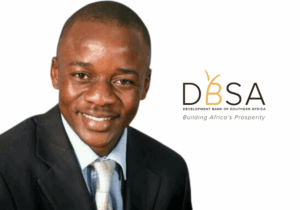
Ageing infrastructure, high levels of non-revenue water, limited municipal capacity and increasing climate risks have made investment more urgent than ever. As Acting Head of Origination and Client Coverage for Transport, Logistics, Water and Sanitation at the Development Bank of Southern Africa (DBSA), Bothwell Manikai works at the centre of financing some of the country’s largest infrastructure projects. He explains why new funding models, stronger project preparation and regional collaboration will be essential to securing Africa’s water future.Q: As Acting Head of Origination and Client Coverage for Transport, Logistics, Water and Sanitation at DBSA, what do you see as the most urgent financing priorities in South Africa’s water sector?
Bothwell Manikai: South Africa’s water sector requires a fundamental shift in how infrastructure is financed. Traditional on-balance-sheet funding has reached its limits because it constrains the borrowing capacity of public entities. We need to develop innovative financing instruments that encourage greater private sector participation through mechanisms such as public-private partnerships and blended finance structures. At the same time, credit enhancement tools are becoming increasingly important to reduce project risk and attract institutional investors. The Credit Guarantee Vehicle being developed by DBSA, National Treasury and the International Finance Corporation is one example of this approach. Climate resilience must also become central to infrastructure financing. Projects need to be designed to withstand climate variability while attracting climate-conscious investors. Rather than financing isolated projects, we should be targeting regional and district-scale programmes that create greater impact and economies of scale. Equally important is investing in project preparation and technical capacity. Bankable projects do not happen by accident—they require sound planning, technical expertise and integrated support from concept through to construction. DBSA’s focus spans early-stage project development, technical support to Water Services Authorities, integrated financing solutions and alternative financing mechanisms such as SPVs, PPPs and blended finance facilities.What are the biggest barriers preventing water and sanitation projects from reaching bankability?
The challenges are both structural and institutional. Many municipalities lack the technical expertise required to prepare projects that meet investor requirements. Small, fragmented projects also increase transaction costs, while lengthy regulatory processes discourage private sector participation. Financially, weak revenue models remain one of the greatest obstacles. Tariffs often fail to recover costs, billing and collection systems are ineffective, and heavy dependence on fiscal transfers undermines investor confidence. Governance also plays a significant role. Fragmented institutional responsibilities and limited oversight weaken project execution, while poor municipal creditworthiness and high levels of non-revenue water create the perception of excessive investment risk. Addressing these issues requires stronger project preparation facilities, capacity building, cost-reflective tariff reforms, improved revenue collection, credit enhancement products such as guarantees, and governance reforms that improve transparency and strengthen Water Service Authority credit profiles.How does DBSA determine which water and sanitation projects will have the greatest developmental impact?
Everything begins with our developmental mandate. DBSA allocates funding across South Africa and the rest of Africa, with approximately 60% directed locally and 40% across the continent. Within water and sanitation alone, there is a R60 billion allocation. We already have a committed post-financial-close pipeline of around R17.5 billion, with more than R4 billion already disbursed to strategic national bulk water projects, including the Lesotho Highlands Water Project Phase II, MCWAP-2, BRVAS and VRESAP. Collectively these schemes supply seven of South Africa’s nine provinces, serving approximately 75% of the country’s economy and 55% of its population. When selecting projects, we assess both bankability and developmental impact. Successful projects improve service delivery, expand access to water, strengthen infrastructure resilience and support vulnerable communities, while also serving commercial and industrial customers that generate sustainable revenue. Transformation is another key consideration. We prioritise projects that advance youth, women and black participation, while creating employment opportunities. Across the SADC region, we also focus on projects that strengthen regional integration, improve cross-border water security and enhance resilience to climate-related shocks.What makes a water infrastructure project financially sustainable over the long term?
Long-term sustainability depends on much more than securing initial funding. Projects need diversified customer bases that balance social obligations with commercial and industrial users capable of generating reliable revenue. Revenue streams must be predictable, supported by ring-fenced income, cost-reflective tariffs and effective billing and collection systems. Governance is equally critical. Transparent institutional arrangements and efficient operations, including reducing non-revenue water, are essential for maintaining investor confidence.
Climate resilience also has to be built into infrastructure from the outset. Events such as the KwaZulu-Natal floods have demonstrated that resilience cannot be treated as an afterthought. Financing instruments such as green bonds, blue bonds and resilience funds can help support this transition.
How can public and private finance be structured more effectively to accelerate investment?
Blended finance is one of the most effective tools available because it combines concessional public funding with private investment, reducing overall project risk. Credit enhancement mechanisms further improve investor confidence, while aggregating multiple municipal projects into larger investment portfolios reduces transaction costs and creates more attractive opportunities for institutional investors. Green and blue bonds also provide opportunities to attract environmental, social and governance-focused capital, particularly for climate-resilient infrastructure. Cross-border financing models for shared water systems offer another opportunity to improve both efficiency and regional cooperation.What role should development finance institutions play in addressing South Africa’s water challenges?
Development finance institutions have responsibilities that extend well beyond lending money. They need to mobilise capital by blending concessional and commercial finance while providing credit enhancement mechanisms that attract private investors. Capacity building is equally important. Through project preparation facilities, technical assistance and training, DFIs can strengthen municipal capabilities and create a stronger pipeline of bankable projects. They should also help introduce off-balance-sheet financing structures that ring-fence revenues and encourage private investment, while ensuring greater investment flows into climate-resilient infrastructure.What lessons from South Africa and the wider African continent are most transferable?
One of the biggest lessons is that successful infrastructure begins with proper project preparation. Investing in feasibility studies and preparation facilities significantly improves project bankability, as demonstrated by initiatives such as DBSA’s Project Preparation Facility and the African Development Bank’s Africa Water Facility. Strong revenue reforms are another consistent success factor. Nairobi’s water utility, for example, improved financial sustainability through cost-reflective tariffs and stronger billing systems. Innovative financing structures have also proven effective. The Lake Victoria PPP project successfully mobilised private capital through a special purpose vehicle model, while climate resilience has become increasingly integrated into post-disaster reconstruction programmes such as those implemented in Mozambique following Cyclone Idai. Regional cooperation is equally important. Projects such as the Lesotho Highlands Water Project demonstrate how cross-border investments strengthen long-term water security for multiple countries.How can investment in water and sanitation better support economic growth and resilience?
Water infrastructure should never be viewed purely as a utility investment. Projects that improve service delivery, expand infrastructure resilience, strengthen regional integration, create jobs and support economic transformation contribute directly to long-term economic development. Aligning financing with these broader objectives ensures investment delivers lasting social and economic returns.Looking ahead, what gives you the greatest confidence that Africa’s water challenges can be addressed at scale?
There are several encouraging developments. New operating models, including metropolitan trading service reforms, are helping unbundle water, sanitation, energy and waste services, improving operational efficiency while ring-fencing revenues. Technology is also creating significant opportunities. Water recycling and reuse continue to grow rapidly, while smart water management systems using artificial intelligence and the Internet of Things are enabling real-time monitoring and operational optimisation. Equally encouraging are the policy reforms taking place. The establishment of the National Water Resource Infrastructure Agency, the consolidation of water boards, revised PPP regulations, expanded regulatory interventions under the Water Services Act, alternative municipal delivery mechanisms under the Municipal Systems Act, the reinstatement of the Blue Drop, Green Drop and No Drop monitoring systems, and the introduction of Water Service Provider licensing all point towards a more enabling investment environment.“Taken together,” Manikai concludes, “these innovations in financing, partnerships, technology and policy create real confidence that Africa can begin addressing its water infrastructure challenges at the scale required.”