
As Africa intensifies efforts to close the energy access gap and accelerate sustainable development, a dedicated discussion panel on Mini-Grids and Decentralised Energy Supply will take a prominent role at the 19th edition of the Africa Energy Indaba. The premier continental energy event will be held from 2 – 4 March 2027 at the Cape Town International Convention Centre (CTICC) in Cape Town, South Africa.
With nearly 600 million people in Sub-Saharan Africa still lacking access to electricity – representing the vast majority of the global access deficit – mini-grids and decentralised energy systems offer one of the most promising pathways for rapid, cost-effective electrification. The growth potential is substantial. According to World Bank and ESMAP analysis, mini-grids could serve as the least-cost solution for connecting up to 380 million people in Africa by 2030. This would require the deployment of more than 160,000 mini-grids at an estimated cumulative investment of US$91 billion, with electricity costs projected to fall as low as US$0.20/kWh – making them the most affordable option for over 60% of the unelectrified population. Under the World Bank and African Development Bank’s Mission 300 initiative, which aims to bring electricity to 300 million Africans by 2030, mini-grids have been identified as a key solution for approximately 115 – 116 million people across 29 countries that have signed energy compacts. Industry leaders estimate that delivering these connections will require between US$28 billion and US$46 billion in investment (including debt, equity and targeted subsidies). Yet current deployment remains far below what is needed. Only around 600 mini-grids were commissioned across the continent in 2024, and at existing rates just 12,000 new systems serving about 46 million people are expected by 2030. Meeting Mission 300 targets would demand roughly 9,200 new mini-grids per year – or more than 760 per month – highlighting both the immense opportunity and the urgency of scaling the sector. The panel at the 2027 Africa Energy Indaba will examine how to unlock this potential through innovative business models, blended finance, streamlined regulation, hybrid renewable systems, productive-use applications, and the integration of decentralised solutions with national grids and regional power pools. It forms part of the event’s broader agenda under the theme “African Energy – Pathways to Prosperity: Connectedness and Cooperation.”
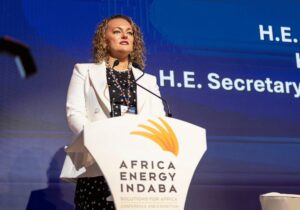
“Decentralised energy solutions, including mini-grids, represent one of the highest-growth opportunities in Africa’s energy transition,” said Liz Hart, Managing Director of the Africa Energy Indaba.
“With the right policy frameworks, capital mobilisation and partnerships, they can deliver reliable power at scale, drive economic activity in rural and underserved communities, and help close the continent’s energy access gap far faster than traditional approaches alone.”The Africa Energy Indaba 2027 will convene African energy ministers, utility executives, independent power producers, investors, technology providers and development finance institutions for high-level plenaries, technical sessions, B2B Connect Matchmaking and a comprehensive exhibition. Stakeholders active in the decentralised energy space are encouraged to register early and explore exhibition or sponsorship opportunities.