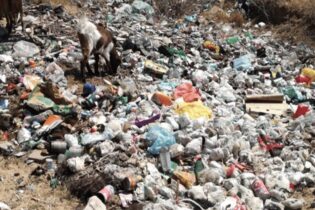
Waste management is vital, in South Africa it’s near a human right as Section 24 of the constitution guarantees everyone the right to an environment not harmful to their health or well-being. It is also costly, and despite the flippancy many have towards waste, it is big business.
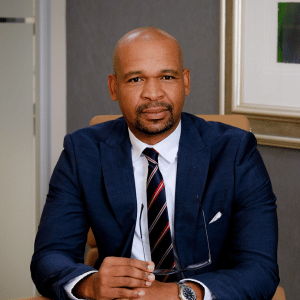
At a casual glance, a private equity firm investing in the waste sector may seem odd, but waste management companies are some of the largest in the world. In South Africa, the current airspace crisis, as well as problems of municipal service delivery, have led to growth in the private waste management sector. Spurred on by world-class academics and scientists, the space is ripe for investment. Agile Capital is a respected, black-owned and managed investment company based in Johannesburg, South Africa, that focuses on investments in sustainable businesses. The company invested in Seche Environment’s South African businesses, specifically hazardous waste and spill response. To help make sense of the financials, ReSource spoke to Tshego Sefolo, CEO of Agile Capital. Question: What made hazardous waste and environmental response an attractive investment theme? To what extent is this investment driven by ESG versus commercial returns? Answer: We see this sector aligning easily with ESG (Environmental, Social, and Governance) goals, allowing firms to drive sustainability while generating strong financial returns. It also serves as a strong investment conduit by creating and conserving a sustainable environment. While this makes financial sense, it also ensures green goals within the economy and environmental rehabilitation. The UN’s environmental goals in South Africa include supporting a transition to an inclusive, green economy and promoting sustainable consumption and production (SCP) patterns. The business is also able to leverage compliance level demands, along with being an essential service, as clean-ups are non-discretionary. We have seen a strong correlation between commercial growth and building sustainability within the business. Customer expectations have shifted, and ESG is now seen as a core compliance and business requirement. We also see that more regulations in terms of environmental management have driven growth. How do you evaluate environmental services businesses differently from traditional industrial investments? While impact and being responsible investors remain more important in the sector, we evaluate commercial returns in the same way as we would for any other business. Globally, there has been a shift in ESG, and our due diligence allows for understanding that environmental services companies will probably experience growth driven by more regulations in terms of waste management. What are some of the barriers? What mistakes can businesses make when looking for investment, particularly in this space? One aspect is that they can be capital-intensive. The infrastructure required can be expensive. The business will need to manage specialised treatment facilities, landfills, and incinerators, along with specialised vehicles to transport any hazardous materials; additionally, ensuring that staff are up-skilled and trained to manage any response is time-consuming and costly. It’s important to carefully consider long-term capital requirements when assessing any potential investment in the sector. How can you/do you structure investment in hazardous waste spill response? For us, it’s very much like any of our other investee businesses. Our outlook is generally risk-averse. Our focus remains on established businesses with demonstrable track records and tangible growth prospects. A solid management team is often the key to the success and growth of a business, and we require a good fit for our partnership. We are not troubled by the usual exit timing pressure and therefore consider our partnerships to be long-term. Agile Capital also looks at the financial history of the business, including profits and cash flows, and future growth prospects. Over what time periods are you looking to realise value from this investment?We are in a unique position as a private equity (PE) business, as we are not constrained by the usual exit pressure, timing, and therefore consider our partnerships to be long-term. Hazardous waste and spill response require significant upfront investment in equipment, vehicles, and specialised facilities. How do you balance capex with operational efficiency? Our approach has always been to do meticulous long-term planning. By careful consideration of the sector and outlook, we seek to ensure that any long-term strategy supports the investment. We’ve also found that allowing a business to focus on operational excellence and look to improve, streamline, or innovate its core business often means that any capital expenditure pays off through client retention and new clients coming on board.
Do you see a growing role for “environmental services as a service” models in this space?
Yes, in the PE sector, there has been an uptick of interest in this segment of the services industry. It allows other industrial businesses to focus on their core services and outsource non-core elements. We also think this enables companies to treat hazard waste management as an operating expense and therefore not to invest heavily in the infrastructure required, while still managing any environmental risk responsibly. We’ve seen that by offering outsourced waste management/reduction and hazardous spill services, our partner companies are able to leverage their position as specialists in the field. What are the biggest funding challenges facing environmental services businesses in South Africa?
We’ve not seen any real stumbling blocks. Many commercial banks appear to be willing to fund these businesses. We believe that this is driven by the growing demand for sustainable investment opportunities, along with a real need in the market for specialists in the field. Our mining, petrochemicals, and energy sectors currently rely heavily on road transportation, which could also be a factor in the growth we see.
Is there a role for public-private partnerships in funding environmental response infrastructure?
We believe that there is a strong investment case to be made for PPPs in the sector.
The private sector can become a crucial part of the funding to ensure adequate and timely environmental response. The capital that can be deployed within businesses to assist with growth – whether this is due to technical or geographical requirements – is one of the ways to build a solid infrastructure to manage these risks.
Governance and reporting are strengthened when these partnerships are formed. This can also mean that companies best suited for the roles they play have an additional advantage, ensuring that no unreliable companies enter the sector.
How do you quantify the environmental impact of your investment beyond financial returns?
We’ve seen the amount of waste collected and disposed of increaseand the use ofi specialised absorbents that allow for more effective treatment compared to traditional, high-volume disposal.
We have also seen how much soil contamination has been dealt with by providing specialised remediation, rehabilitation, and clean-up services to restore polluted land, leading to properties being rehabilitated for use, rather than simply disposing of contaminated soil.
Part and parcel of this is managing hazardous materials to prevent them from entering general waste streams.
We see this as part of a drive to really make an environmental impact on the actual site and the surrounding communities. We also believe that there is a case to be made that it enables healthier ways to manage risks in the environment.
What trends are you seeing globally that could shape investment in South Africa?
The opportunity in turning waste into biomass, which is still in its infancy in South Africa, as well as developing plants that convert organic waste into energy, is also in its infancy.
Additionally, deepening renewable energy deployment, the investment opportunities in solar, wind, and, in particular, the development of storage technologies that are suitable for South Africa. Along with developing infrastructure to support a green hydrogen economy.
Water conservation and innovative infrastructure are also vital. This would include a shift from traditional management systems to smart, circular solutions.
What are the biggest funding challenges facing environmental services businesses in South Africa?
We’ve not seen any real stumbling blocks. Many commercial banks appear to be willing to fund these businesses. We believe that this is driven by the growing demand for sustainable investment opportunities, along with a real need in the market for specialists in the field. Our mining, petrochemicals, and energy sectors currently rely heavily on road transportation, which could also be a factor in the growth we see.
Is there a role for public-private partnerships in funding environmental response infrastructure?
We believe that there is a strong investment case to be made for PPPs in the sector.
The private sector can become a crucial part of the funding to ensure adequate and timely environmental response. The capital that can be deployed within businesses to assist with growth – whether this is due to technical or geographical requirements – is one of the ways to build a solid infrastructure to manage these risks.
Governance and reporting are strengthened when these partnerships are formed. This can also mean that companies best suited for the roles they play have an additional advantage, ensuring that no unreliable companies enter the sector.
How do you quantify the environmental impact of your investment beyond financial returns?
We’ve seen the amount of waste collected and disposed of increaseand the use ofi specialised absorbents that allow for more effective treatment compared to traditional, high-volume disposal.
We have also seen how much soil contamination has been dealt with by providing specialised remediation, rehabilitation, and clean-up services to restore polluted land, leading to properties being rehabilitated for use, rather than simply disposing of contaminated soil.
Part and parcel of this is managing hazardous materials to prevent them from entering general waste streams.
We see this as part of a drive to really make an environmental impact on the actual site and the surrounding communities. We also believe that there is a case to be made that it enables healthier ways to manage risks in the environment.
What trends are you seeing globally that could shape investment in South Africa?
The opportunity in turning waste into biomass, which is still in its infancy in South Africa, as well as developing plants that convert organic waste into energy, is also in its infancy.
Additionally, deepening renewable energy deployment, the investment opportunities in solar, wind, and, in particular, the development of storage technologies that are suitable for South Africa. Along with developing infrastructure to support a green hydrogen economy.
Water conservation and innovative infrastructure are also vital. This would include a shift from traditional management systems to smart, circular solutions.