The story of Circular Energy NPC began long before the organisation itself existed. Its roots lie in South Africa's evolving waste management and Extended Producer Responsibility (EPR) landscape.
Patricia Schröder, CEO of Circular Energy
Building a new compliance framework
As South Africa’s EPR regulations evolved, government and industry worked together to develop a practical compliance framework. Following various consultations, regulatory amendments and industry engagements between 2018 and 2021, Patricia was appointed to a ministerial EPR task team and contributed to shaping the Section 18 EPR regulations. These regulations were eventually republished in May 2021 and required implementation by November 2021, creating a completely new compliance landscape for producers and importers across multiple sectors. The renewable energy industry quickly recognised the significance of the new regulations. Industry associations including SAPVIA, SAWEA and SAESA understood that their members would require support to become compliant. Patricia was approached by these organisations to assist their members and guide the establishment of an industry-managed Producer Responsibility Organisation. It was agreed that a dedicated PRO should be created for the EEE sector, and Patricia accepted the challenge of building it from the ground up. With the support of two fellow founding board members, Circular Energy NPC was formally established and registered in October 2021. The newly formed organisation was registered with the CIPC and the DFFE, initially covering lighting, electrical and electronic equipment, and related waste streams.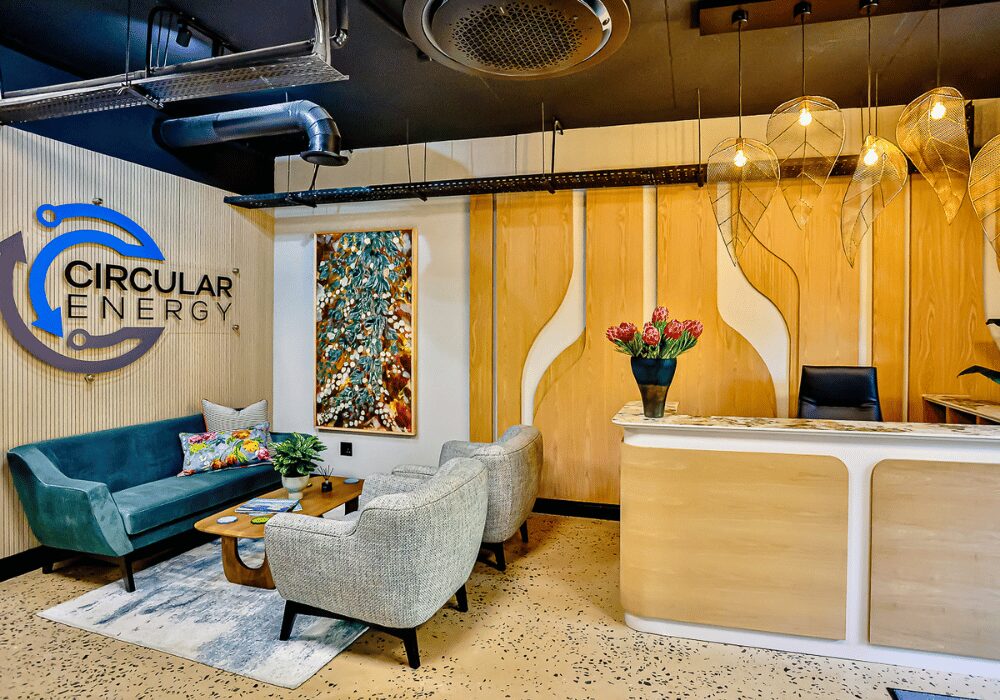
Circular Energy’s reception area, designed to reflect the company’s commitment to sustainability and the circular economy
From zero funding to a growing organisation
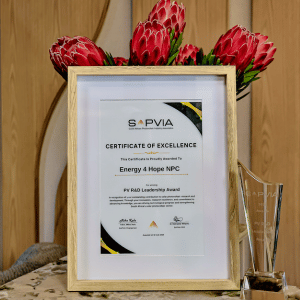
Recognised for innovation and industry
leadership, Circular Energy recently won
the PV R&D Leadership Award at the
2026 SAPVIA Industry Awards, adding
to its growing list of accolades for
advancing renewable-energy solutions
Growth, impact and a broader circular economy
The years that followed were characterised by exceptional growth. Membership expanded from only a handful of members in 2022 to 21 members in 2023, 50 members in 2024 and 84 members in 2025. Revenue grew exponentially, moving from a negative financial position in 2022 to exceeding 100 million in 2025. Circular Energy had evolved from a start-up compliance initiative into one of the fastest-growing PROs in the country.
Growth brought new challenges. The organisation needed to recruit the right people, maintain exceptional standards and preserve the personal relationships that had been central to its success. Circular Energy deliberately focused on finding individuals who shared the organisation’s values, passion and commitment to environmental impact. Participatory leadership, strong governance and a culture of purpose became defining characteristics of the organisation.
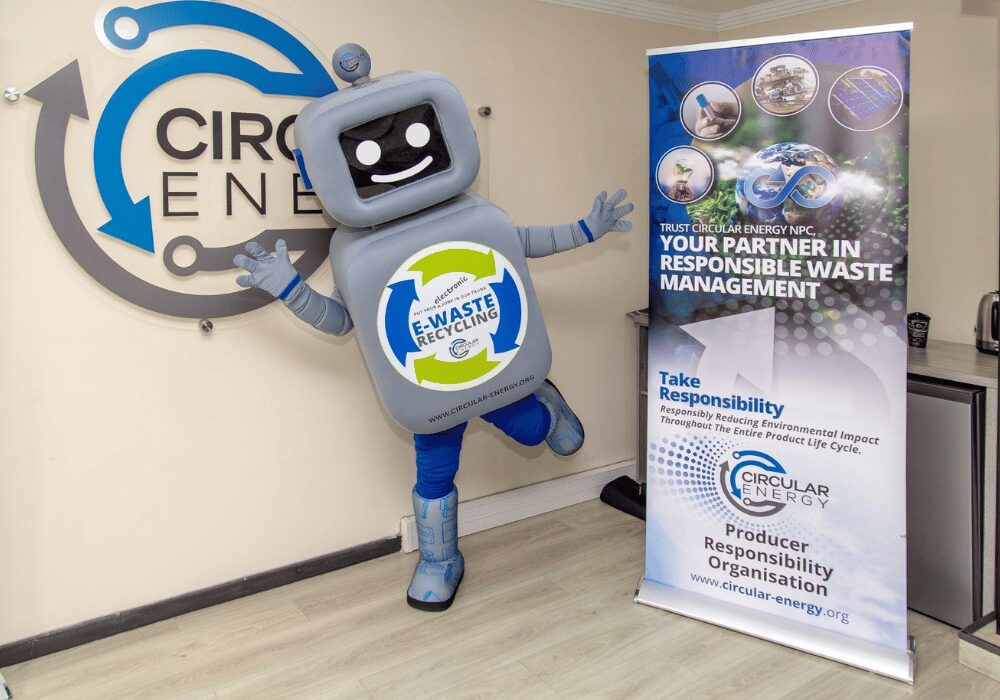
EcoBot®, the Circular Energy mascot, brings the circular economy to life by making e-waste recycling more relatable, engaging and accessible, particularly for younger generations
Healthier planet and stronger communities
Beyond compliance, Circular Energy increasingly focused on creating meaningful environmental and social impact. In 2024, concerns raised by members about the responsible management of solar panels and batteries led to the development of Energy 4 Hope, a techno-social impact initiative focused on the repair, refurbishment, reuse and responsible management of renewable energy equipment. The vision was to create an independent platform capable of delivering both environmental and social benefits while remaining aligned with Circular Energy’s broader mission. The organisation also expanded its regulatory scope. Following engagement with the DFFE, Circular Energy secured registration for additional waste streams, including paper and packaging, portable batteries and lubricant oil, broadening its contribution to South Africa’s circular economy. At the same time, awareness initiatives were developed to inspire future generations, including the creation of EcoBot®, a mascot designed to educate children about sustainability and environmental responsibility.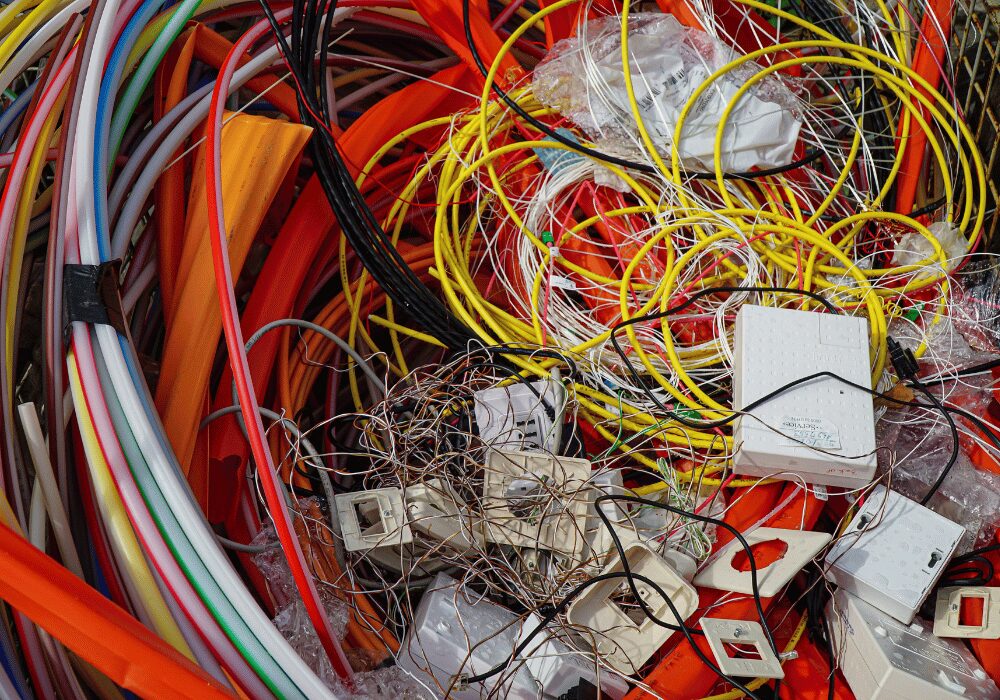
From discarded cables to valuable materials, Circular Energy is helping to drive responsible e-waste recovery and a more circular approach to electronics
The next chapter: EPR 2.0
By 2025, Circular Energy had outgrown its original premises and in 2026, relocated to larger offices in Simbithi Verve to accommodate its expanding team. The move symbolised how far the organisation had come in only a few short years. What began as a high-risk venture run largely by one individual had become a respected organisation serving prominent corporate brands and helping to shape the future of responsible resource management in South Africa. Throughout this journey, governance remained central to the organisation’s success. The Board evolved alongside the organisation, bringing expertise in industry engagement, government relations, risk management and commercial waste solutions. Their guidance helped Circular Energy transition from start-up mode into a mature organisation with a growing strategic focus and long-term vision. Today, Circular Energy stands as a testament to perseverance, courage and purpose-driven leadership. Built on a foundation of compliance, it has grown into an organisation focused on impact, innovation and collaboration. From home offices to established headquarters, from uncertainty to industry recognition, and from a single founding vision to a thriving national organisation, Circular Energy has established itself as a trusted partner in South Africa’s transition to a circular economy. Reflecting on the journey, founder Patricia Schröder often emphasises that sustainability must be embedded in the way organisations create value:“If we think sustainability is just something to report on, we will never be sustainable. The day we understand sustainability is good for business, the planet, and the people, we will succeed. The companies who get it are leaping forward. Those that don’t are increasingly isolated.”This philosophy has shaped Circular Energy’s approach from the beginning, positioning sustainability not as a compliance exercise, but as a driver of innovation, resilience and shared value. Circular Energy’s next chapter will focus on strengthening strategic alliances, developing technical standards, expanding circular economy initiatives and deepening its contribution to environmental sustainability, whilst embarking on the EPR 2.0 journey, which will be implemented in 2027. Guided by the same passion that inspired its creation, Circular Energy is well positioned to continue leading the way in renewable energy stewardship, resource recovery, and responsible environmental management – spanning waste electrical and electronic equipment, batteries, lighting, packaging, and lubricant oils—for years to come. At the end of EPR 1.0, Circular Energy finished off with more than 100 members, 16 staff members, a solid financial foundation with proven tangible impact, and both positive environmental and social impacts that have won awards and are recognised nationally and internationally.