
Meat Naturally Africa’s EcoRanger programme is creating career pathways for herders and helping turn farmers’ associations into professional employers at scale.
South Africa’s communal farmers collectively own 47 percent of the country’s livestock but supply just eight percent of the formal red meat market. The gap between those two numbers is both market and human capital failure. The people who manage that livestock every day, the herders who make daily decisions about land, animals and livelihoods across millions of hectares of communal rangeland, have historically been among the least recognised workers in the agricultural sector.
Meat Naturally Africa (MNA) is working to change that by building something South Africa has rarely attempted at this scale: a professional career pathway for communal herders, backed by formal employment through the farmers’ associations MNA works with. The ambition is for those associations to become professional employers in their own right, creating a new sector within the rural economy. The numbers already tell part of the story.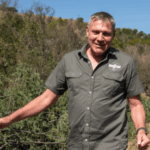
Guy Deacon, MNA Technical Director
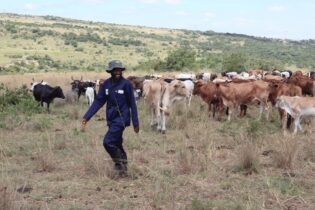
“The people who walk with cattle every day have the greatest influence on livestock and rangeland management and yet they have historically been one of the most overlooked and undervalued parts of communal farming systems,” says MNA Technical Director Guy Deacon. “Restoring dignity to that profession is a core part of what we are trying to do.”When the government programme ended, MNA took the model forward. Two partners were instrumental in shaping what came next. Conservation South Africa had developed and designed the original herding model and their principles remain at the core of the EcoRanger approach. MNA implements the Herding for Health (H4H) model, a programme established in 2017 with its own project areas across the region. From 2021, at the establishment of the GRASS programme, the SA Herding Academy – now the SAWC Herding Academy at the Southern African Wildlife College – provided a train-the-trainer framework and helped MNA navigate the accreditation process. One of those who came through that partnership was Phumla Nyembezi, a training associate who had herself begun as an EcoRanger before being identified as an exceptional trainer. She went on to train EcoRangers within MNA’s own programme, and her trajectory – from participant to practitioner – is emblematic of the career path MNA is working to institutionalise. But MNA also identified a gap. The SA Herding Academy’s curriculum had been built for small stock farming in arid ecosystems and not for the grasslands of the Drakensberg and the communal rangelands of KwaZulu-Natal and the Eastern Cape. MNA adapted the content, adding material suited to its landscapes and communities and in 2023 launched its own EcoTrainer programme, which was purpose-built, community-based and designed to create a career path that extends well beyond the training itself. “The ambition is for farmers’ associations to become professional employers – to create meaningful careers in their own communities and drive better livestock production and landscape health,” says Deacon.
“We are not building a training programme in isolation. We are building a new kind of sector within the rural landscape, and the farmers’ associations are the employers we want to see emerge from it. That is what we are aiming at.”The EcoRanger concept did not emerge in a vacuum. The SA Herding Academy, which has since transitioned to become the SAWC Herding Academy under the Southern African Wildlife College, is among the pioneering organisations that helped establish the model of professionalised herding training – using a train-the-trainer approach to build capacity at scale, and listing Meat Naturally Africa as a named partner in that broader collaborative effort. The herding model – teaching professionalised techniques including planned grazing, animal production, primary animal care, tracking and rangeland management – has been developed and refined through collaboration between conservation organisations, government and community-based implementing partners over more than a decade.

MNA’s contribution has been to take that framework and embed it directly inside communal farming communities in KwaZulu-Natal and the Eastern Cape, with the explicit intention of building not just trained individuals but a new class of professional employer in the form of the farmers’ associations those communities have established.
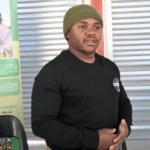
Wandile Dlamini, Meat Naturally Africa’s Technical Training and Development Manager
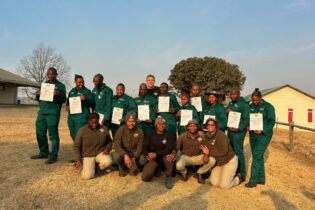
“He grew from being an EcoRanger to being one of our technical staff. This is exactly what we want to see.”The aspiration, however, extends well beyond the employment MNA itself can offer. The longer game is to build the capacity of communal farmers’ associations – which MNA works with and through – to function as professional employers in their own right. That ambition has significant implications for rural and youth unemployment in the provinces where MNA operates. KwaZulu-Natal and the Eastern Cape consistently record some of the highest unemployment rates in the country, and the communal farming sector, despite its scale, has historically offered subsistence participation rather than formal employment. The path toward formal accreditation adds further weight to the programme’s ambitions. MNA is working towards a formal qualification under the Quality Council for Trades and Occupations (QCTO) and then registration with the Agricultural Sector Education and Training Authority (AgriSETA), which would make the EcoRanger course a formally acknowledged qualification, opening doors for rangers and trainers that the current stipend model cannot yet reach. For MNA founder and CEO Sarah Frazee, the recent EcoTrainer graduation is confirmation that the model is scalable. “We came into these communities to restore rangelands and connect farmers to markets, but what we are really building is human capital. When a young man moves from following cattle to training others, from a stipend to a salary, from one community to the next, that is the regenerative cycle we are most proud of. We have always believed that the people closest to the land should be the ones leading its restoration. These graduates embody that belief.” The rangelands MNA works on span 580 000 hectares. The 10 000 farmers connected to MNA’s network have collectively earned more than R134 million, 87 percent of it from livestock auctions held in their own villages. The EcoRanger programme is not a peripheral activity in that system. It is the human infrastructure that makes the system work and, if the vision holds, the foundation of a new rural labour market that South Africa has not yet found a way to build.