South Africa’s growing landfill crisis can be addressed through decentralised zero-waste circular economy systems rather than costly waste-to-energy (WTE) incineration projects, according to Zero Waste Association of South Africa CEO Keith Roman.

Zero Waste Association of South Africa CEO Keith Roman
Source Separation Critical
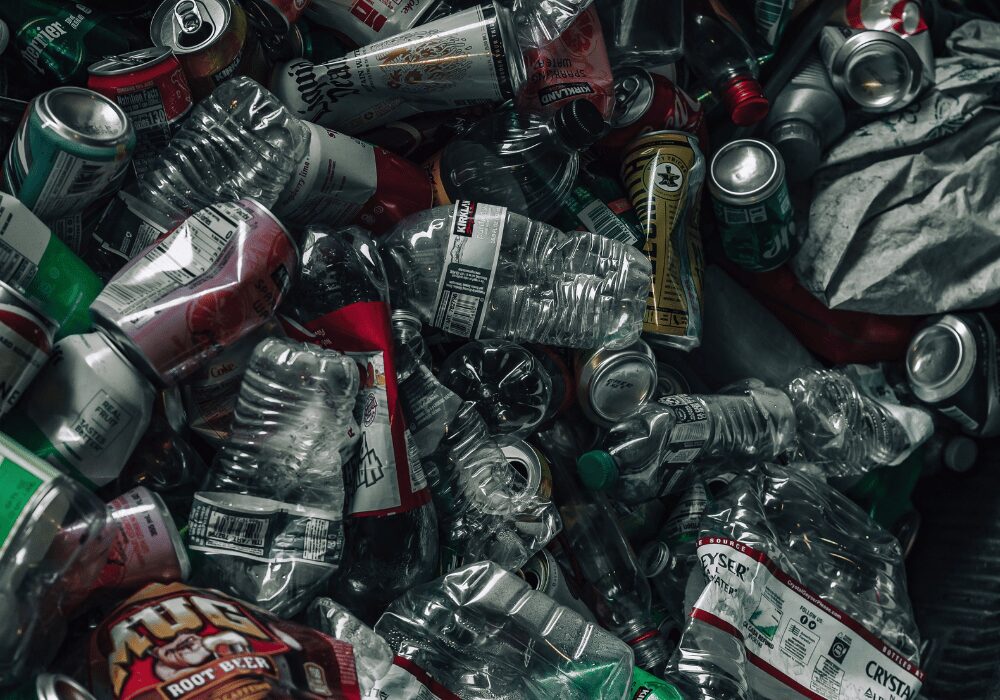
Waste to energy can be used for specific purposes but ZWASA argues that some cases benefit more from a Zero Waste approach
“Source separation includes the community mobilisation and education and awareness,” he says. “Suffice to say that the source separation is the most important.”Drawing on international examples, Roman notes that zero-waste systems are already achieving substantial results globally. “In San Fernando in the Philippines, where I obtained my Zero Waste Academy certificate, they separated more than 91% in 2025,” he adds. Another example is in Italy’s Treviso province, where municipalities have reduced residual waste dramatically. “Treviso province in Italy has reduced its average residual waste rate to 41 kg per person per year,” he explains. “Some of those municipalities are achieving a residual waste rate of 31 kg per person per year.” By comparison, South Africa generates vastly higher levels of residual waste.“South Africa’s average residual waste rate is approximately 900 kg per person per year,” Roman says.
Roman warns that the country’s continued dependence on landfill disposal is creating an escalating environmental and financial crisis.
“All that waste that we generate mostly goes to landfill sites.”He specifically highlights the shortage of remaining landfill airspace in the Western Cape, noting “landfill culture has led to a serious landfill crisis in South Africa.” Roman says that the government has already recognised the urgency of the problem: “In order to address the landfill crisis, the Department of Environmental Affairs has given a directive that all municipalities must divert 100% of the organic waste from landfills by 2027.” However, municipalities cannot achieve this objective without community participation. “In order to separate organic waste at source, you need the support of the communities,” Roman explains.
“Municipalities cannot separate kitchen organic waste at source. You need the communities to assist you with it.”
Cape Winelands Pilot Demonstrates Potential
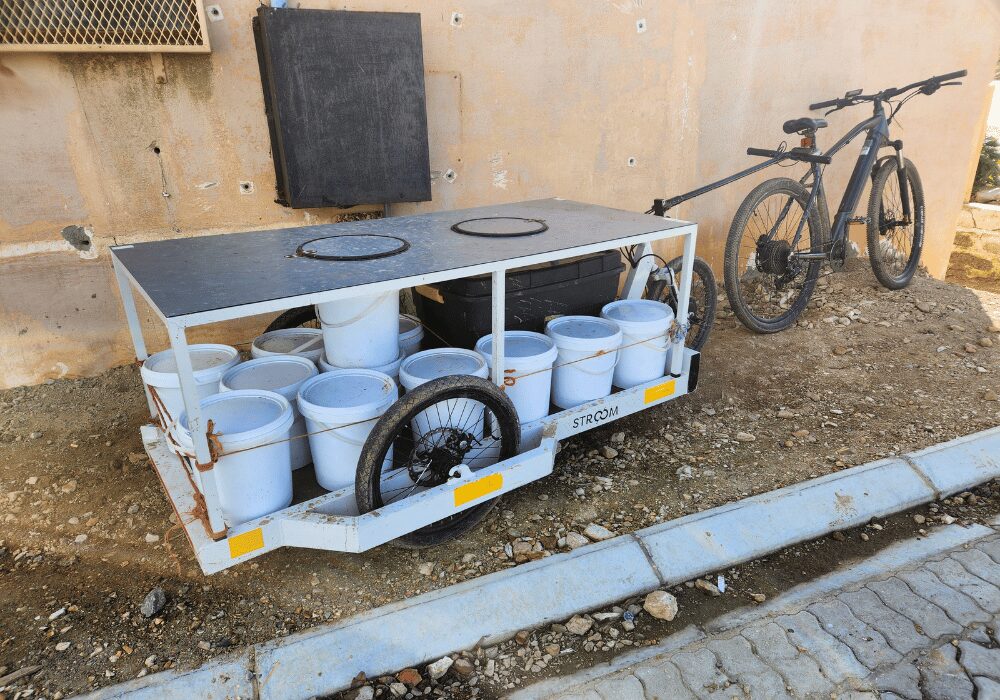
Tackling collection in townships enables better recycling practices
The programme includes household education, source separation, composting, waste picker training and decentralised collection systems.
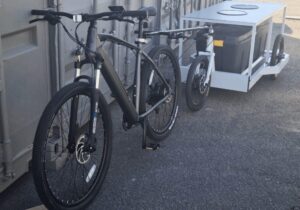
“We developed a model which has been adapted from the European and other benchmark cities around the world,” he says.The initiative also includes training programmes for waste pickers and unemployed youth. “We provided training and mentorship to waste pickers and unemployed youth who were sent on composting and vegetable farming training courses,” Roman says. Initially, collection systems relied on wheelbarrows before transitioning to electric cargo transport designed specifically for narrow township roads.
“We developed an E cargo bike and an E trailer bike, 100% manufactured in Stellenbosch,” he says. “These E-bikes and E-trailers are ideal for the narrow street roads of Zwelitsha.”Roman explains that decentralised treatment facilities located close to communities significantly reduce transport costs, “Instead of us transporting organic waste Struisbaai to Bredasdorp and then from Bredasdorp to Karwyderskraal in Botrivier, more than an hour-and-a-half drive away, we can treat the waste where it is generated.” According to Roman, transport represents one of the biggest municipal waste expenses, taking 60-80% of any solid waste department’s budget. Aside from cost savings, separating organic waste at source also improves recycling quality. “By separating organic waste at source, we prevent cross-contamination,” Roman says. “We can improve the quality and quantity of recyclables.” Having better recycling rates and separated organics leads to better use of organic waste.

“We can add value to that compost by using it on vegetable farms and then selling vegetables to the communities,” he says.The compost produced through the project is used to grow vegetables, supporting local food security while improving soil health. “The compost that we produce is used on farms to produce organic vegetables,” Roman explains. “This helps to mitigate food insecurity.” He links the project directly to broader social challenges, citing statistics on hunger and child malnutrition in South Africa. “Food insecurity in South Africa stands at about 23.6%,” he says, adding that chronic malnutrition affects “27% for children under five years of age.”
Climate and Health Benefits
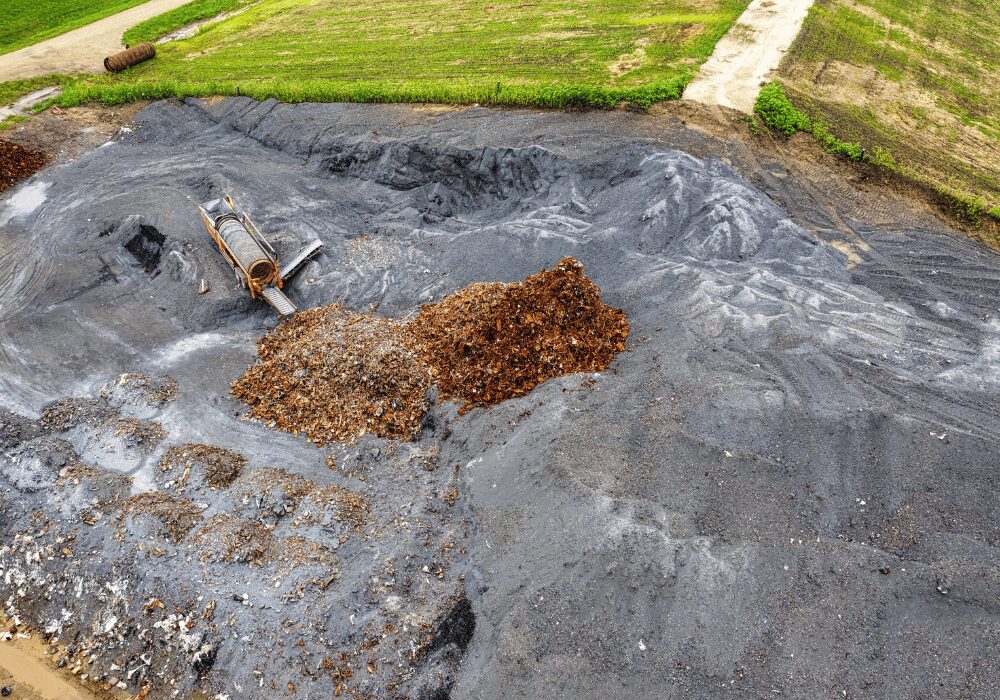
Diverting waste to landfills is one goal of Zero Waste initiatives
“By separating organic waste at source and diverting that organic waste from landfills, we reduce greenhouse gas emissions significantly, especially methane gas,” he says.He notes that landfill sites are major climate contributors. “Landfills are amongst the top five biggest greenhouse gas emitters in the world,” he says. Roman also references global air pollution research as a motivating factor: “According to the Centre for Environmental Rights, air pollution is the world’s largest environmental health threat, accounting for seven million deaths around the world every year.” Citing Professor Thomas Münzel of the Johannes Gutenberg University Medical Centre, Roman adds: “The effects of air pollution are so great that officials should consider it a pandemic.”
Energy vs other initiatives
Roman is sceptical of waste-to-energy systems, particularly incineration-based technologies.“Waste-to-energy systems are the most expensive way to produce electricity,” he says. He argues that mixed waste streams, especially organic waste, are unsuitable for efficient combustion.“It is a waste of energy to burn organic waste,” Roman says. “Organic waste constitutes 60% to 97% water. Cucumbers and watermelon have a very low calorific value, you are essentially burning water.” Roman also argues that burning recyclable materials undermines circular economy objectives. “It is also a waste of energy to burn plastic, paper and cardboard when it could be reused to produce new products and new jobs,” he says. He references comments by Swedish combustion expert Haakon Hjortland, who reportedly says that gasification, pyrolysis and plasma arc systems struggle to process heterogeneous municipal waste streams effectively. “The technology is not applicable for mixed waste,” Roman says.
Financial and Social Risks
Roman also says that WTE facilities create long-term financial risks for municipalities. “Cities cannot afford the costs of building waste-to-energy plants, which typically cost about US$650 million per plant.” He adds that incineration discourages recycling and creates dependency on continuous waste generation. “It demands a certain volume of flammable waste to remain solvent,” Roman says. He warns that this creates “a lock-in effect, thus delaying waste minimisation practices.” Roman cites international examples where municipalities moved away from incineration because of rising operational costs or environmental concerns, including cities in the United States, Italy, Portugal, Canada and the UK. He also notes that European policy is increasingly discouraging waste incineration investments. He further highlights research from the Netherlands and Slovakia showing elevated levels of persistent organic pollutants near incineration facilities.Zero Waste Creates More Jobs
“The zero waste system creates 200 times more jobs than the linear landfill and waste incineration system, says Roman. By contrast, the Roman states that WTE “creates the least number of jobs of any waste management approach by far.” Roman also warns that waste-to-energy threatens informal recycling economies and producer responsibility schemes. “Waste pickers and local recyclers are the first impacted,” he says. According to the Roman, WTE systems “discourage recycling” and “will destroy the EPR and PRO system.” South Africa already has practical examples of zero-waste systems to demonstrate its effectiveness, with a pilot project underway:“We envisage that by the end of this year, Zwelitsha will be the first zero organic waste-to-landfill town in South Africa,” he says.His message to municipalities is clear. “Waste-to-energy is the least preferred option to divert organic waste from landfills. Municipalities should first try zero-waste circular economy systems before embarking on large, risky capital-intensive waste-to-energy systems.”