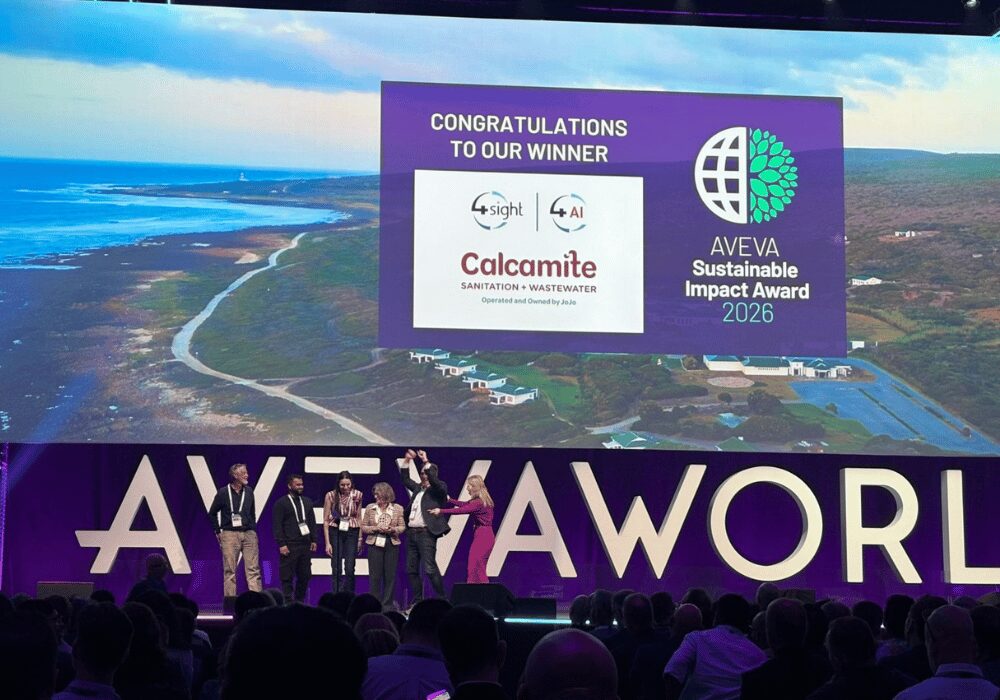
Calcamite and 4Sight win an AVEVA Sustainability Impact Award for using remote monitoring to improve decentralised wastewater treatment and reduce costs and emissions.
Calcamite’s use of remote monitoring to manage its decentralised wastewater treatment plants, has earned the company and its technology partner, 4Sight, an AVEVA Sustainability Impact Award.
For more than four decades, Calcamite has supplied decentralised wastewater treatment systems to industries and communities across Africa. Throughout this time, one reality has remained consistent: clients expect these systems to operate effectively but generally have little interest in maintaining them.
Who wants to own a sewerage plant?
Sebasti Badenhorst, COO of Calcamite
“Wastewater treatment is rarely a core focus for our clients. Many lack the necessary expertise and do not want to operate or maintain the plants themselves, they would (understandably) rather focus on their core businesses such as running a lodge or managing a shopping centre. They are not interested in pump performance or whether the blowers are working,” explains Sebasti Badenhorst, COO of
Calcamite.
Despite this lack of interest, regular maintenance is critical. A poorly maintained plant can fail to treat wastewater effectively, causing spills, offensive odours or environmental contamination. It may also expose the client to regulatory action, reputational damage and costly disruptions to operations.
Badenhorst emphasises that packaged sewerage treatment plants are not a product, they are little pieces of infrastructure and, like any other infrastructure asset, they require regular maintenance, regardless of how robustly they are designed.
“Our clients would prefer not to take on this responsibility. However, they need the assurance that the plant is operating correctly and that somebody will identify a problem before it causes a spill or affects treatment performance. So in addition to designing and manufacturing the wastewater treatment systems, Calcamite also provides (in most cases) maintenance support.”
The need for properly maintained onsite wastewater systems has become even more important following the publication of the revised Compulsory National Water and Sanitation Services Norms and Standards by the Department of Water and Sanitation (DWS) last year.
The standards prohibit water services authorities/municipalities from approving new bulk connections to wastewater treatment works that lack the capacity to accommodate the additional load.
Therefore, where sufficient municipal capacity is unavailable, developers turn to onsite sanitation solutions, such as septic tanks, conservancy tanks or packaged wastewater treatment plants.
“Once wastewater volumes exceed a certain threshold, decentralised treatment often becomes more economical than relying on septic or conservancy tanks. Under the revised norms and standards, these systems must be supported by a formal maintenance plan,” says Badenhorst.
More than 2 000 of Calcamite’s plants have been installed across South Africa and elsewhere on the continent, collectively treating approximately 2.3 million m³ of wastewater a year.
These plants are often dispersed throughout remote locations where specialist operational skills are scarce and travelling to site is costly. This makes it difficult to ensure that hundreds of relatively small plants continue to perform effectively without skilled personnel stationed at every site.
“You cannot manage what you cannot see. We needed a way to monitor our plants continuously, rather than relying solely on periodic site inspections or waiting for clients to report a problem. A site inspection is visiting a plant, it is not monitoring a plant. Calcamite therefore issued a request for quotation (RFQ) to identify a partner capable of delivering an effective remote-monitoring solution,” explains Badenhorst.
4Sight and the brief
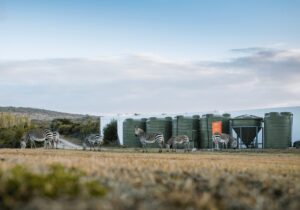
The Gourikwa Nature Reserve project received the AVEVA Sustainability Impact Award
4Sight was selected as this partner because they were the only company to propose a cloud-based solution requiring minimal onsite infrastructure and a simple user interface.
“The solution had to be appropriate for small plants. It could not be over-engineered because every additional feature is an added cost. Like Calcamite plants, the remote monitoring solution had to be scalable and robust. 4Sight recommended AVEVA Connect, a proven platform that could be customised to meet Calcamite’s specific needs, instead of building a bespoke system from scratch. AVEVA Connect is a proven solution backed by a global company which has the resources to continually invest in the platform and expand its capabilities. 4Sight is an endorsed AVEVA partner and systems integrator,” states Badenhorst.
A key requirement of the project was to minimise the amount of instrumentation required, making the solution as cost-effective as possible. Calcamite chose to only monitor parameters that were critical to the proper functioning of their plants and did not install a user interface onsite. The system had to have the ability to connect via wireless, the ethernet or cell phone networks.
The pilot project
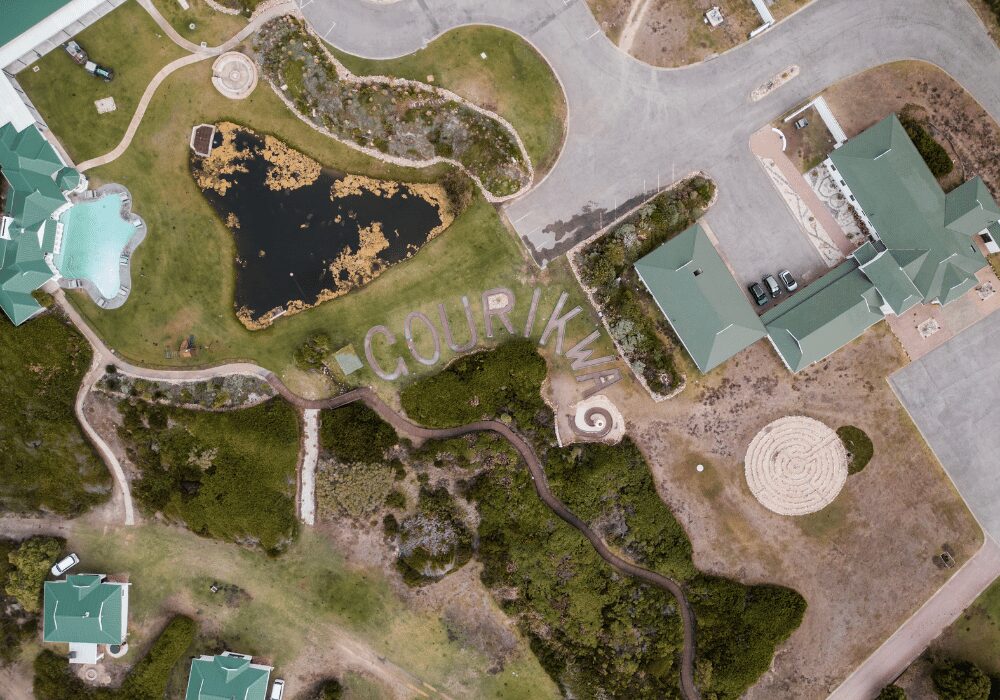
In a mere five weeks, 4Sight had to implement the remote monitoring solution at the Calcamite wastewater treatment plant at the Gourikwa Nature Reserve, approximately 1 380 km from Calamite’s Gauteng factory. The plant has a design capacity of 15 m³/day and treats wastewater for reuse in irrigation.
4Sight installed the AVEVA Connect platform and modified it to monitor parameters such as incoming and outgoing flow, peak flow, pressure, electrical and mechanical equipment uptime, electrical current and energy consumption. It alerts Calcamite when equipment stops operating, begins taking strain or moves outside its design parameters. “Just as a car must be serviced after travelling 10 000 km or 15 000 km, certain equipment requires servicing after a specified number of operating hours,” maintains Badenhorst.
The project reduced monthly oversight and maintenance costs by 85%. It also eliminated more than 22 600 km of travel, avoiding about 27 tonnes of carbon dioxide emissions. Without the Calcamite plant, sewage would have to be transported over 120 km to the nearest treatment plant. It was further calculated that the plant recovered 2 123 m³ of water for local groundwater recharge, along with 63 kg of nitrogen and 6.3 kg of phosphates. There was also lower energy consumption due to the use of small pumps and blowers.
“We have not had a day of trouble on that Gourikwa site,” states Badenhorst.
Other benefits
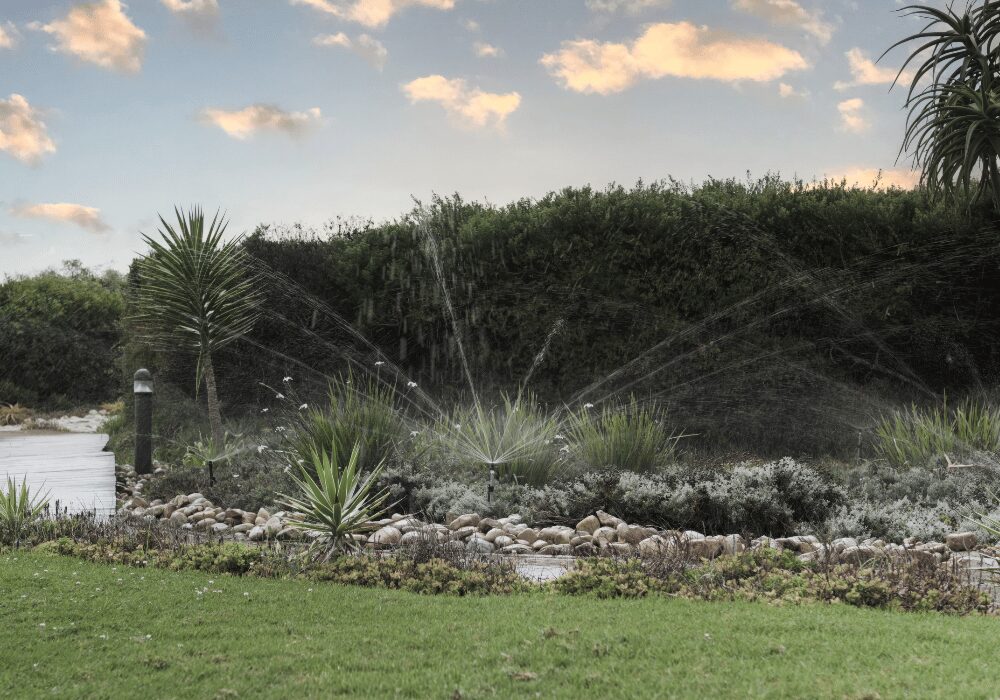
The plant has a design capacity of 15 m³/day and treats wastewater for reuse in irrigation
The remote monitoring solution has since been rolled out across other Calcamite plants, providing a consolidated view of all connected systems. Alerts can be issued when equipment or processes move outside the plant’s design capacity or specified operating conditions, allowing Calcamite to investigate problems before they develop into plant failures.
Historical trends can also be used to plan preventative maintenance. At one site, Calcamite connected an existing transfer pump, which moved sewage from a pump station to the treatment plant, to its electrical panel and AVEVA Connect dashboard. “When the pump failed, we could see it immediately on the dashboard and alerted the client. Without remote monitoring, they may only have discovered the failure once sewage backed up or spilled from the pump station,” explains Badenhorst. This illustrates how continuous remote monitoring can reduce the operational and environmental risks associated with decentralised wastewater treatment by identifying problems early enough for corrective action to be taken.
From a Calcamite perspective, AVEVA Connect tracks equipment runtime and performance across multiple plants from a central dashboard. This helps Calcamite identify equipment in the same area that needs attention and combine maintenance visits. Remote diagnostics also help technicians arrive with the correct tools and spares, reducing unnecessary inspections and repeat journeys.
“A surprising advantage for me was the use of artificial intelligence (AI) on AVEVA Connect platform. Calcamite can use AI to summarise plant performance over a specified period of time and identify whether action is required. This reduces the time employees must spend manually reviewing multiple dashboards and will become increasingly important as more plants are connected,” adds Badenhorst.
Importantly, Calcamite can use insights generated through the data from AVEVA Connect to refine its plant designs. Performance data reveals how water consumption differs across lodges, restaurants and residential developments. “The information coming back from our installations is one of the greatest advantages for us,” Badenhorst says.
“It allows us to test our assumptions against real-world conditions and size each new system more accurately for its intended use. The data can also help us to better justify any suggested plant modifications to our clients.”
The Award
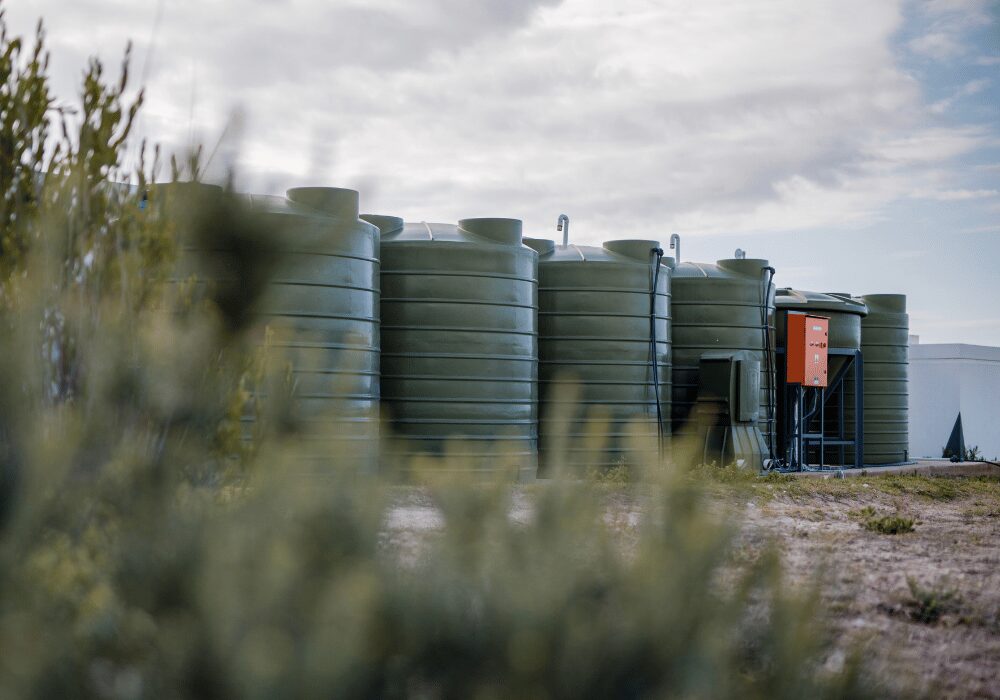
More than 2 000 of Calcamite’s plants have been installed across South Africa and elsewhere on the continent, collectively treating approximately 2.3 million m³ of wastewater a year
The Gourikwa Nature Reserve project received the AVEVA Sustainability Impact Award. Presented at the AVEVA World 2026 event in Milan, Italy, the international award recognises projects that deliver measurable progress in decarbonisation, circularity and resilience. Calcamite and 4Sight were selected from three global finalists following a vote by delegates attending the event.
For Badenhorst, the award demonstrates that ‘little pieces of infrastructure’ can collectively make a substantial contribution to sustainability. “In South Africa, we install solar panels, harvest rainwater and invest in decentralised wastewater treatment systems out of necessity. Yet we often overlook the fact that these practical responses to everyday challenges are also inherently sustainable. We forget the collective positive impact that these investments make on our planet because we are focussed on survival. When we presented this approach in Europe, people were astounded that South Africans generate their own electricity, harvest water and even treat their own sewage. It was great to get recognition for that on the world stage and a fantastic experience to attend AVEVA World 2026.”
The award also highlights how digital technology can address one of the principal weaknesses historically associated with small package plants: inadequate operation and maintenance. “This tool helps us provide an enhanced level of service to our clients. Our tiny pieces of infrastructure perform reliably when operated within their design parameters and maintained regularly, and AVEVA Connect strengthens our ability to support them. With greater visibility and control over plant performance, we can also confidently offer our clients a broader range of treatment technologies,” adds Badenhorst.
In conclusion, she states that the technology to treat sewage is not new. What is needed is to take this technology, scale it down for smaller plants and make it robust.
“Decentralised wastewater treatment plants must be recognised and managed as infrastructure. Remote monitoring gives us the visibility needed to do exactly that.”
Why are decentralised wastewater plants sustainable?
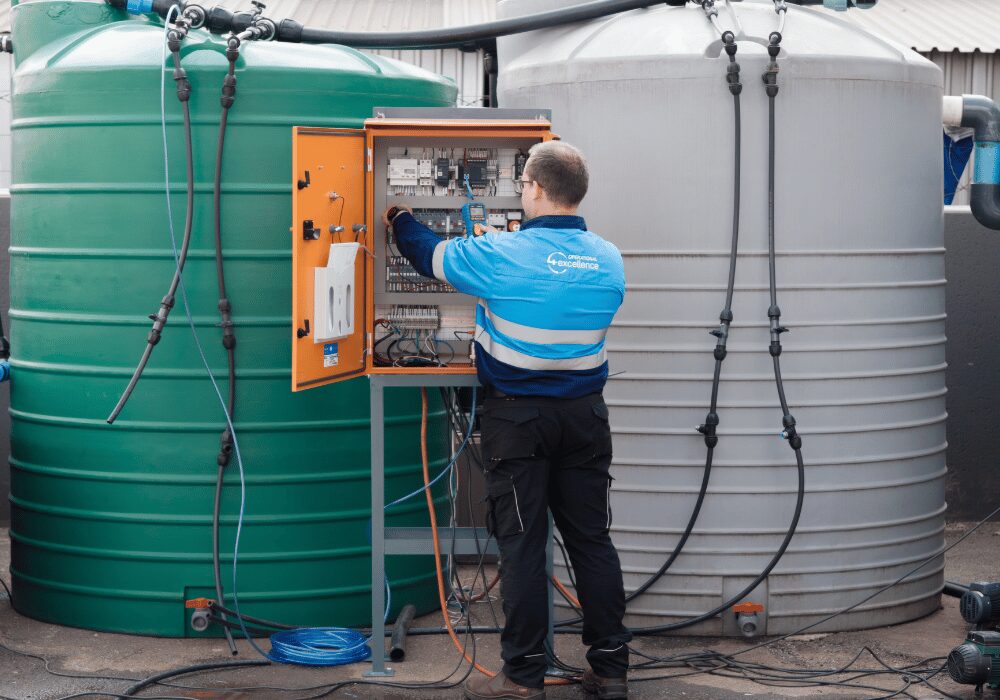
A key requirement of the project was to minimise the amount of instrumentation required, making the solution as cost-effective as possible
By treating wastewater close to where it is generated avoids the cost and environmental impact of constructing extensive sewer networks or transporting sewage by tanker. They also make treated effluent readily available locally for irrigation, dust suppression and toilet flushing, reducing demand for potable water. Nutrients contained in the treated water can support landscaping and agricultural applications.
“In South Africa, we install solar panels, harvest rainwater and invest in decentralised wastewater treatment systems out of necessity. Yet we often overlook the fact that these practical responses to everyday challenges are also inherently sustainable. We forget the collective positive impact that these investments make on our planet because we are focused on survival. When we presented this approach in Europe, people were astounded that South Africans generate their own electricity, harvest water and even treat their own sewage. It was great to get recognition for that on the world stage and a fantastic experience to attend AVEVA World 2026.”