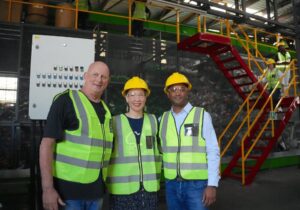
Cannibal Recycling’s new material recovery facility in Nelson Mandela Bay aims to process 100 tonnes of plastic packaging monthly, strengthening local recycling.
An idea that started with the sound of an empty beer bottle falling into a refuse bin has become Nelson Mandela Bay’s largest recycling buy-back centre – with a new production line capable of processing 100 tonnes of plastic packaging per month.
That is the trajectory of Leon van der Watt, director of Cannibal Recycling, who first saw the value of waste after falling on hard times when his chicken farming business was declared bankrupt. “I was staying in a room behind a friend’s pub when I heard that noise [of an empty beer bottle falling into a bin] and suddenly thought, ‘Can I make money from this?’ So, I started collecting bottles from pubs and restaurants around town,” said Van der Watt, who built his business criss-crossing the Eastern Cape and sleeping in his car. As he learned more about the sector, he also began teaching communities about the economic opportunities in collecting recyclable waste. Twenty-three years later, in partnership with Sustainable Seas Trust and funded by the Alliance to End Plastic Waste (AEPW), Cannibal’s new material recovery facility (MRF) is set to double its current capacity, reduce the amount of plastic waste going to landfill and strengthen recycling in the Eastern Cape. SST chief executive officer Janine Osborne said the launch of the new line represented an important milestone, not just for Cannibal, but in supporting the development of a more inclusive and effective plastics recycling value chain in the province. “Cannibal’s new line is the recycling end of Operation Clean Spot, our model for stopping plastic on its way to the sea. Operation Clean Spot gets households, schools and churches separating their waste, and links the collectors who pick it up to a buy-back centre. But it only works if there is a recycler at the end of the chain with the capacity to take what arrives. That is the gap this line fills,” explained Osborne. Cannibal currently has around 3,000 registered waste pickers and bakkie collectors on its database. “So, it also benefits local communities by securing the routes for waste collectors to sell their material into established formal markets, and by creating and sustaining income-earning opportunities in the value chain,” said Osborne. She said Sustainable Seas Trust was spearheading this project because it was a working example of its Operation Clean Spot integrated model in action and aligned with the organisation’s overall mission to protect Africa’s seas.“Most of the plastic in the sea started out on land, which is why Operation Clean Spot works there. We brought the Alliance into this project because of that model, to strengthen the last link so that every collector on the chain has a buyer who can take their material. Cannibal’s new line is that link.”
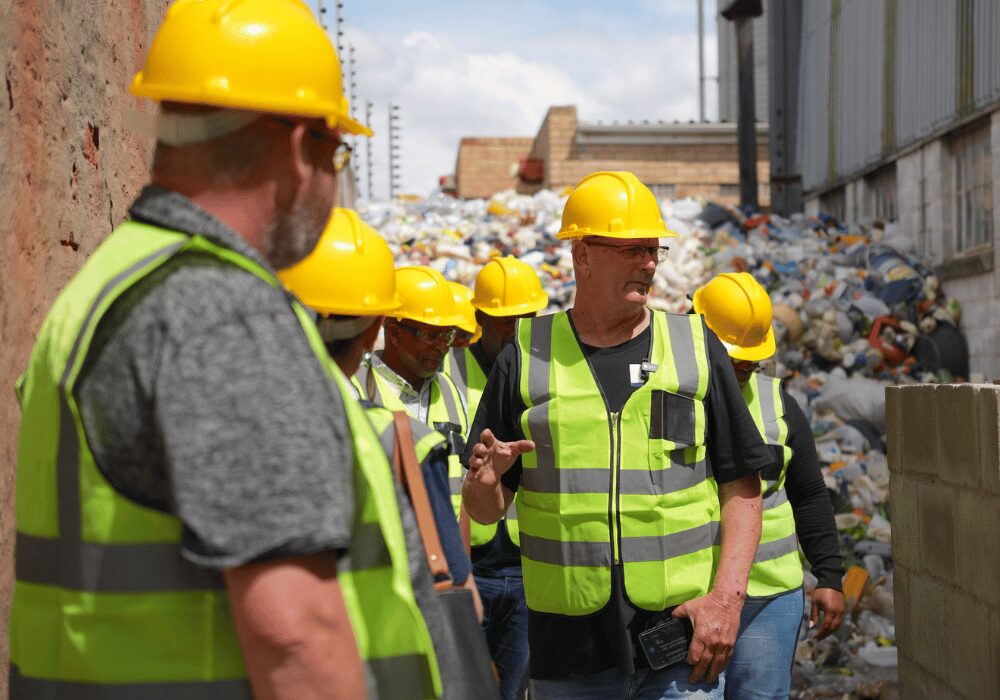
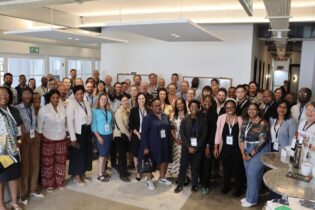
Cannibal Recycling director Leon van der Watt (centre) saw the worth in waste and turned it into a recycling success story. His business recently partnered with Sustainable Seas Trust and the Alliance to End Plastic Waste to launch the biggest material recovery facility for plastic packaging in Nelson Mandela Bay.
“You can’t just look at plastics alone. So, no single organisation or intervention can solve it alone.”Ultimately, he said, the value of this particular investment came from connecting the MRF to the broader system around it – the collectors, communities, buy-back centres, municipalities and markets for the recycled material. “For the Alliance, this is what systems change actually looks like in practice. It’s about bringing the right partners together. It’s about putting these practical solutions on the ground, learning what works and then creating the conditions for those solutions to scale.” The MRF – which took Van der Watt and his brother-in-law, Henry Edwards, nine months to design, build and install – features an elevated sorting line where employees drop the different types of plastic into separate holding cages below. When full, these cages are individually opened onto another conveyor for processing by three connected baling machines, streamlining the manual sorting process and ensuring a higher quality output. The baled materials are then trucked to recycling plants in Cape Town and Johannesburg. “It represents years of hard work and believing in what we do,” added Van der Watt. He said Cannibal previously processed an average of 40 to 50 tonnes of plastics a month but that with the new line, they were aiming to reach 100 tonnes. “This support from the Alliance and SST is going to make a huge difference to the collectors at ground level, improve working conditions for our staff, and allow us to assist more members of the community because we’ll be able to handle bigger volumes faster and easier. All in all, it’s just going to be magic getting this up to its full operating capacity.”