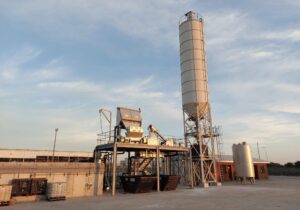
Sanitech acquires Green-Tech to expand water and waste treatment solutions, improving access to sustainable, cost-effective infrastructure in South Africa.

Robert Erasmus, managing director, Sanitech
Scale, operational efficiency and expanded design capabilities
Scale is a key driver behind the move. Smaller companies do not have the capital to offer rent to own options. While they often possess deep technical knowledge, they can struggle to expand due to limited sales reach and infrastructure. Sanitech, by contrast, services more than 5 000 customers through a national sales team of over 50 representatives. Combining this footprint with Green-Tech’s technical depth creates a platform to accelerate the adoption of modern, sustainable water and waste technologies at a national level. Operational efficiency is another benefit of the integration. With design, procurement and execution now more closely aligned within a single organisation, Sanitech expects faster project turnaround times, improved consistency and stronger risk management across its portfolio. This is supported by the company’s ISO accreditations in quality, environmental management, food safety and occupational health and safety, which underpin its commitment to responsible operations and high service standards. The integration also enhances product development capability. One example is Sanitech’s new self-sufficient mining toilet solution — a bio-reactor-based unit designed to operate without traditional holding or conservancy tanks. Prototypes are already developed and field testing with customers is scheduled for early 2026. Future iterations will include above-ground configurations and solar-powered enhancements.Water and wastewater division
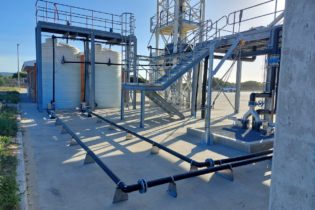
Green Tech will fall within Sanitech’s water and waste treatment division. Established in 2014, this division has successfully implemented various water and waste treatment facilities (using Green-Tech design) across Sub Saharan Africa as well as Ghana and Côte d’Ivoire. Applications typically fall into five key areas:- Water abstraction and potable treatment for remote operations
- Industrial process water treatment prior to discharge
- Decentralised sewage treatment for workforce
- Water treatment where municipal supply quality is inadequate
- Risk mitigation solutions to address water outages through reuse and storage.
“Our water and waste division was initially established out of operational necessity,” explains Erasmus.
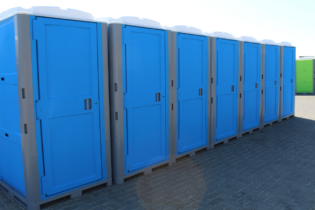
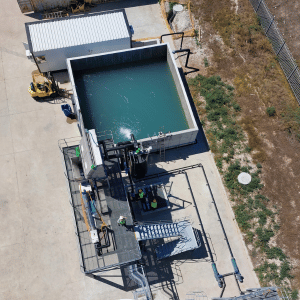 “As a compliant company, we are committed to disposing of all waste from our portable toilets in accordance with local regulations. In certain regions, however, disposal sites were located far from our areas of operation, resulting in high transport costs. Municipal discharge tariffs were also escalating. To address this, we established three wastewater treatment plants in Steelpoort, Secunda and Witbank to manage this waste more efficiently and cost-effectively.”
“What began as a practical solution to support our core sanitation business has since evolved into a fully-fledged water and waste treatment offering. The success of these facilities demonstrated the viability of decentralised treatment, prompting us to develop mobile and modular wastewater treatment plants for external clients. Today, this division services a growing client base across the industrial, mining and food processing sectors.”
Demand for decentralised and on-site treatment solutions is increasing, driven by water quality concerns, infrastructure constraints and water security risks.
Sanitech is seeing growing interest from the mining and manufacturing sectors, as well as from residential estate developers facing municipal capacity limitations. In some regions, new developments are required to implement a localised water and waste solutions before receiving service approvals — creating further demand for modular and scalable treatment systems.
Green-Tech makes sure that most of the mechanical items of the plant – like pumps and pipes – are sourced locally. This makes maintenance and any repair requirements less costly and reduces downtime. Clients may require a full-time Sanitech technician to operate the plant, alternatively Sanitech can train an on-site staff member, or provide ongoing support through scheduled monthly maintenance visits.
These decentralised wastewater treatment plants play a pivotal role in supporting Sanitech’s customers in achieving the environmental objectives of their Environmental, Social, and Governance (ESG) goals. The plants minimise a company’s environmental impact associated with waste transportation and presents opportunities for water reuse that reduces water demand and effluent discharge – creating a dual benefit for businesses through cost reduction and compliance.
“As a compliant company, we are committed to disposing of all waste from our portable toilets in accordance with local regulations. In certain regions, however, disposal sites were located far from our areas of operation, resulting in high transport costs. Municipal discharge tariffs were also escalating. To address this, we established three wastewater treatment plants in Steelpoort, Secunda and Witbank to manage this waste more efficiently and cost-effectively.”
“What began as a practical solution to support our core sanitation business has since evolved into a fully-fledged water and waste treatment offering. The success of these facilities demonstrated the viability of decentralised treatment, prompting us to develop mobile and modular wastewater treatment plants for external clients. Today, this division services a growing client base across the industrial, mining and food processing sectors.”
Demand for decentralised and on-site treatment solutions is increasing, driven by water quality concerns, infrastructure constraints and water security risks.
Sanitech is seeing growing interest from the mining and manufacturing sectors, as well as from residential estate developers facing municipal capacity limitations. In some regions, new developments are required to implement a localised water and waste solutions before receiving service approvals — creating further demand for modular and scalable treatment systems.
Green-Tech makes sure that most of the mechanical items of the plant – like pumps and pipes – are sourced locally. This makes maintenance and any repair requirements less costly and reduces downtime. Clients may require a full-time Sanitech technician to operate the plant, alternatively Sanitech can train an on-site staff member, or provide ongoing support through scheduled monthly maintenance visits.
These decentralised wastewater treatment plants play a pivotal role in supporting Sanitech’s customers in achieving the environmental objectives of their Environmental, Social, and Governance (ESG) goals. The plants minimise a company’s environmental impact associated with waste transportation and presents opportunities for water reuse that reduces water demand and effluent discharge – creating a dual benefit for businesses through cost reduction and compliance.
Acquisitions
The Green-Tech integration forms part of a broader strategic expansion. Sanitech has signalled active interest in further acquisitions over the next three to four years, particularly in specialised cleaning, hygiene and pest control sectors where regional expertise can be scaled nationally. Some of Sanitech’s previous acquisitions include Nanchem – a Namibian pest control business, Rent-A-Toilet, Pristine Health Services, Gem-care as well as various smaller toilet hire companies.“We like to focus on sectors or regions where Sanitech is not yet strong, then using those acquisitions as a base to roll out nationally,” adds Erasmus.Sanitech’s parent group, Waco, plays a key role in the acquisition process. “A sales person or manager will identify a potential company, and that company will be approached by the chief financial officer at Waco, who will inevitable sign a non-disclosure agreement. They will then do due diligence. I will then get involved at a later stage,” says Erasmus. Together with its disciplined acquisition strategy and strong group backing, Sanitech is reinforcing its long-term growth trajectory. By targeting complementary expertise and scaling it nationally, the company continues to strengthen its service offering across hygiene, sanitation and water treatment — positioning itself to deliver integrated, future-focused solutions that respond to South Africa’s evolving infrastructure and environmental demands.