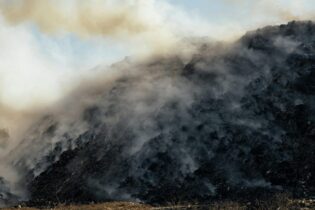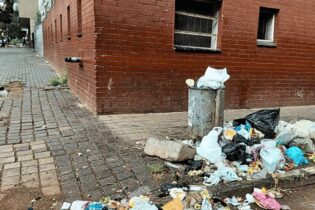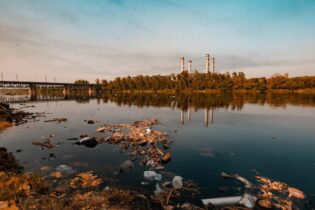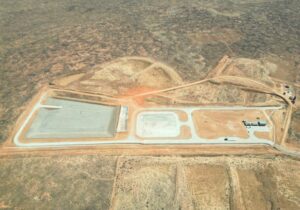
For more than two decades, municipalities across South Africa’s West Coast District grappled with a mounting waste crisis: small, scattered landfill sites, many of them unlined, overfilled, and poorly controlled, were becoming both environmental liabilities and financial burdens.
The regionalisation of waste disposal, long promoted by national and provincial government, has now reached a significant milestone with the completion and commissioning of the Weskus Regional Landfill, a flagship infrastructure project that demonstrates how inter-municipal collaboration, technical excellence, and strategic governance can converge to deliver sustainable waste solutions.The imperative for regionalisation
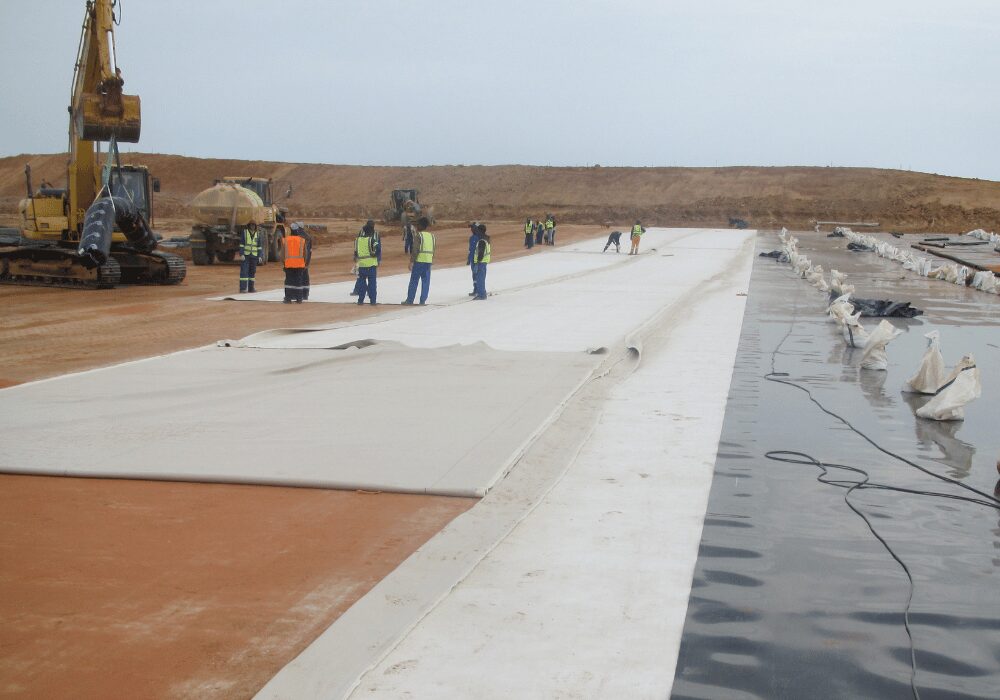
Installation and welding of the HDPE geomembrane liner, a critical component of the landfill’s composite containment system that protects soil and groundwater
From strategy to site: Two decades of development
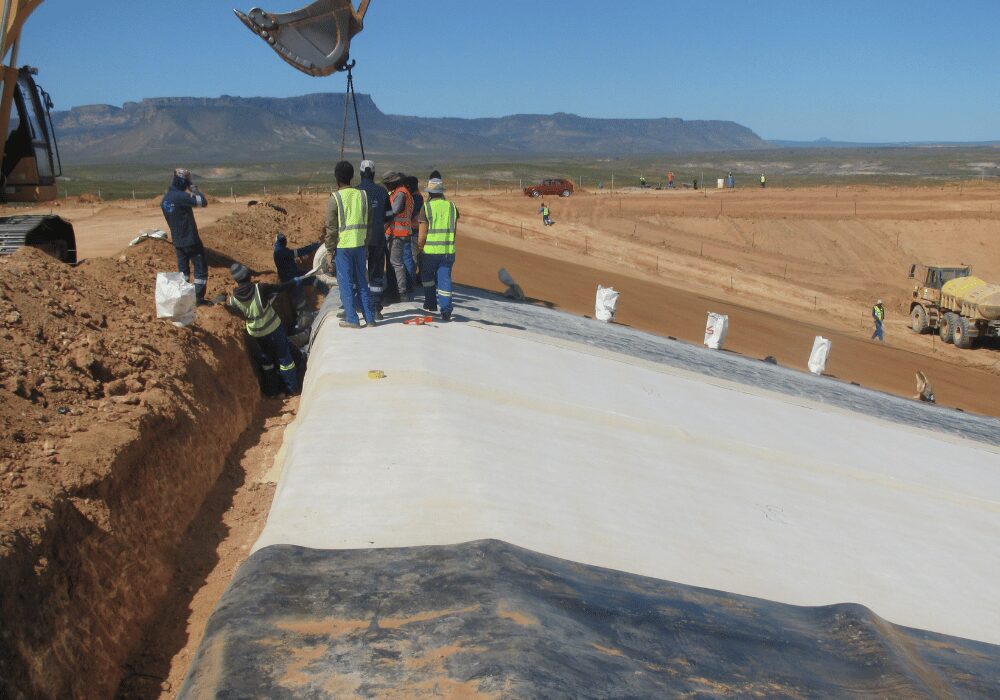
Construction of the first engineered landfill cell, designed with a composite liner system and leachate drainage layer to meet South Africa’s national landfill standards
Overcoming administrative and political hurdles
 Inter-municipal co-ordination proved one of the project’s most significant challenges. Differing priorities, budget cycles, and procurement frameworks initially delayed progress. The breakthrough came in 2022, when both the Cederberg and Matzikama Councils formally resolved to participate in the regional facility. The WCDM Council followed with final approval in early 2023, unlocking the procurement and construction phases.
This cooperative governance model, underpinned by sustained technical engagement, now stands as an example of how multi-tier government can successfully deliver shared environmental infrastructure.
The final design, completed in 2021 by JPCE (Pty) Ltd, incorporated all requirements of the National Norms and Standards for Disposal of Waste to Landfill (GN R636 of 2013). The facility was designed as a Class B general waste landfill, equipped with a composite containment liner, leachate management system, stormwater controls, and supporting infrastructure to ensure regulatory compliance and operational efficiency.
Key design features included:
Inter-municipal co-ordination proved one of the project’s most significant challenges. Differing priorities, budget cycles, and procurement frameworks initially delayed progress. The breakthrough came in 2022, when both the Cederberg and Matzikama Councils formally resolved to participate in the regional facility. The WCDM Council followed with final approval in early 2023, unlocking the procurement and construction phases.
This cooperative governance model, underpinned by sustained technical engagement, now stands as an example of how multi-tier government can successfully deliver shared environmental infrastructure.
The final design, completed in 2021 by JPCE (Pty) Ltd, incorporated all requirements of the National Norms and Standards for Disposal of Waste to Landfill (GN R636 of 2013). The facility was designed as a Class B general waste landfill, equipped with a composite containment liner, leachate management system, stormwater controls, and supporting infrastructure to ensure regulatory compliance and operational efficiency.
Key design features included:
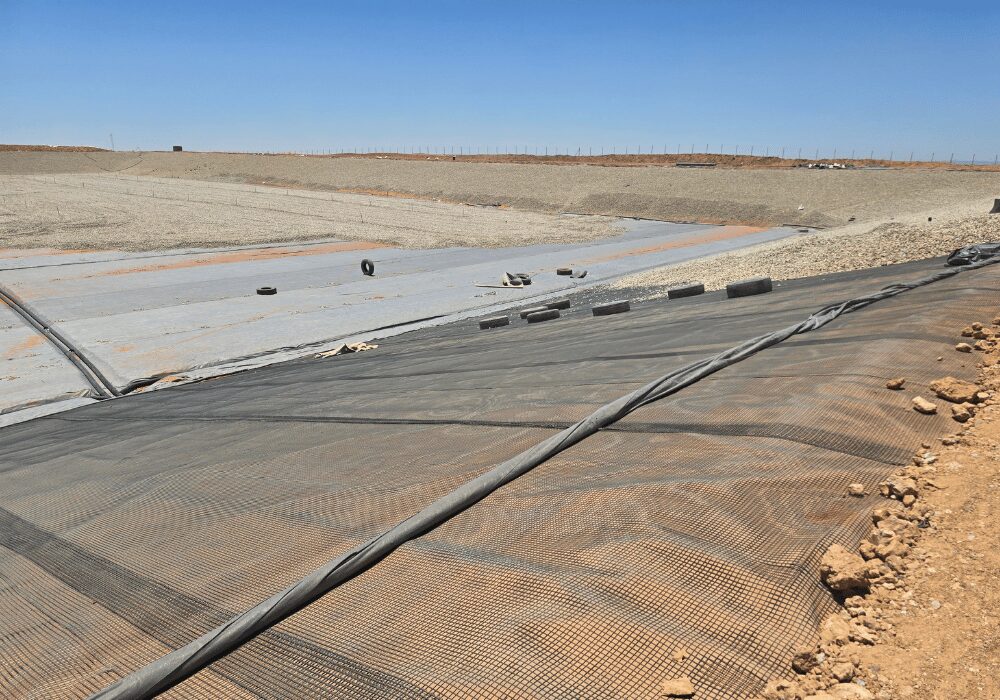
- Basal Liner System – A composite liner comprising a geosynthetic clay liner (GCL) replacing locally inadequate clays, overlain by a 1.5 mm high-density polyethylene (HDPE) geomembrane, a geotextile protection layer, and a stone leachate drainage layer.
- Leachate Collection and Evaporation – A dual-lined sump and pumping system directing leachate to an evaporation pond designed to contain effluent under all climatic conditions.
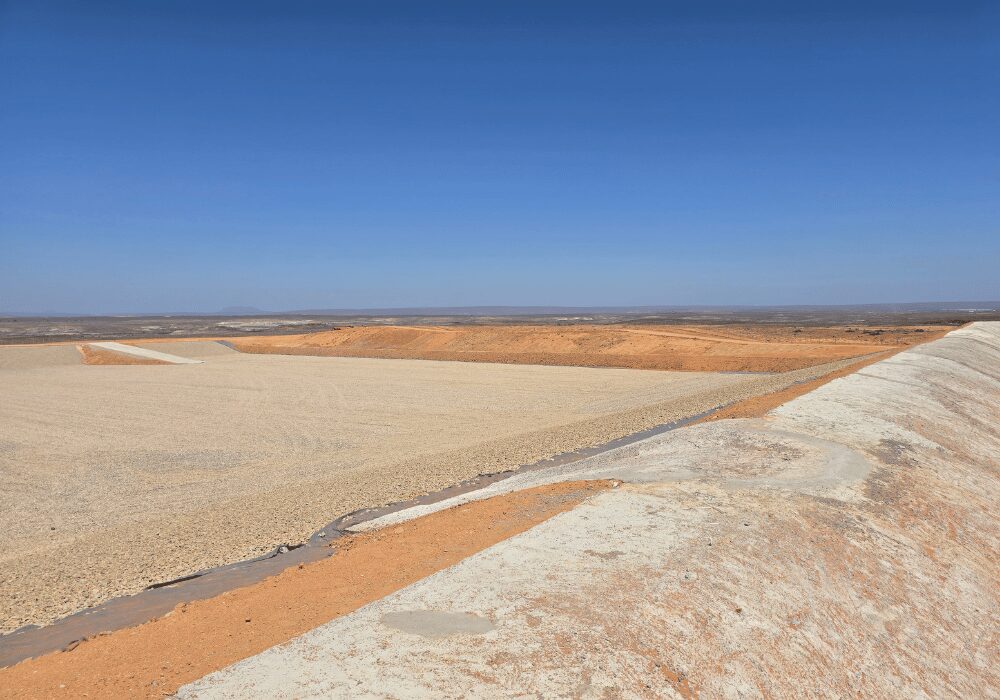
- Stormwater Management – Infrastructure to isolate “clean” external runoff from “dirty” internal leachate-affected water, sized for a 1-in-50-year storm event of 24 hours’ duration.
- Access and Control – A 1.1 km asphalt access road from the R27, segmented paving at the weighbridge and gatehouse, and perimeter security fencing.
- Operational Facilities – Administrative buildings, ablution facilities, a weighbridge and data systems for waste tracking, and provision for future waste diversion facilities such as recycling and garden-waste processing areas.
Construction and quality assurance
Stormwater and leachate infrastructure were designed to separate clean runoff from contaminated water, ensuring compliance with environmental regulations

Throughout construction, Construction Quality Assurance (CQA) was central. Independent laboratories tested geomembrane properties; on site testing was done on seam weld integrity, and layer thicknesses. Full-time QA inspectors monitored installation to ensure strict adherence to specifications. A comprehensive Construction Completion Report was submitted to the Department of Water and Sanitation (DWS), which approved the operation of the facility through an official Record of Decision (RoD) on 8 July 2025, following a site inspection in April 2025.
Recognising the 2024 amendment to the National Norms and Standards requiring immediate protection of the separation geotextile, the project team requested authorisation to place the pioneering layer of waste immediately after completion. Permission was granted, enabling early commissioning and safeguarding the integrity of the newly installed liner.Empowering local economies
Beyond its technical achievements, the Weskus Regional Landfill also served as a vehicle for local economic empowerment. The project created 77 direct jobs during construction, including 21 for youth and 4 for women, and generated R13.7 million in local procurement through subcontracting, fuel sourcing, and material supply. The inclusion of a prefabricated wastewater treatment plant, designed locally, further enhanced sustainability by enabling on-site effluent reuse for landscaping. Importantly, the project recorded no community resistance or disruptions, a testament to effective public participation and transparent communication during the EIA and construction stages.Financial sustainability
The total project cost of R93.97 million (including VAT) came in R3.27 million under budget, a rare outcome for a capital project of this scale and complexity. Funding was secured through the Development Bank of Southern Africa (DBSA) as a 20-year municipal loan with a two-year repayment holiday, providing breathing space for tariff stabilisation. Tariff modelling, developed collaboratively with Cederberg and Matzikama municipalities, translated capital and operational costs into monthly household service charges, benchmarked against provincial medians. Even with the inclusion of transport and future rehabilitation costs, the regional model proved both affordable and fiscally responsible.Commissioning and operations
Operations commenced in May 2025, with Matzikama Municipality delivering the first waste loads using its existing collection vehicles. Cederberg Municipality also started to use the facility, and full access will follow upon completion of its transfer infrastructure. The operational contract, awarded through competitive tender process, requires the operator to maintain compliance with licence conditions, ensure data accuracy via the weighbridge system, and implement progressive cell development under WCDM oversight. Contract performance is managed through monthly technical meetings and third-party certification of payments, ensuring transparency and accountability in ongoing operations.Delivering on governance and sustainability
The success of the Weskus Regional Landfill project is reflected not only in its engineering and environmental outcomes but also in the governance that enabled its delivery. The West Coast District Municipality has achieved clean audits for 14 consecutive years, the most of any district municipality in South Africa, and the landfill project reinforces that legacy of administrative discipline and regulatory compliance. The project aligns fully with South Africa’s waste management hierarchy, where avoidance and diversion remain priorities, but residual waste must still be safely contained. By consolidating numerous non-compliant local sites into one engineered facility, the region has substantially reduced its environmental footprint and established a long-term safety net for waste that cannot be diverted or treated through other technologies.Lessons for future regionalisation
The Weskus Regional Landfill demonstrates that the regionalisation of waste disposal, when approached strategically, offers measurable technical, economic, and environmental advantages. Key lessons include:- Early inter-municipal alignment: long-term planning and shared commitment are essential to overcome jurisdictional and political barriers.
- Adaptive design: anticipating regulatory changes, such as the transition from the Environment Conservation Act to the National Environmental Management: Waste Act, ensures future compliance and project continuity.
- Integrated CQA: Full-time quality assurance oversight is indispensable for ensuring liner integrity and regulatory approval.
- Community partnership: Transparent communication and local participation mitigate social risk and foster public ownership.
- Sound financial structuring: Aligning loan terms, tariff models, and affordability analyses ensures sustainability beyond construction.
As the authors observe, “Regionalisation is not only about efficiency, but also about resilience, accountability, and stewardship.”The Weskus project proves that when these principles are embedded from the outset, sustainable waste management becomes not just an aspiration but an attainable reality. Adapted from an article by Chris Koch, Jan Palm and Reon Pienaar