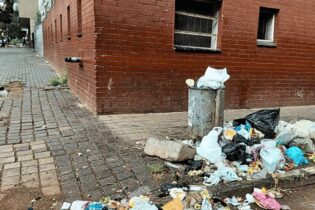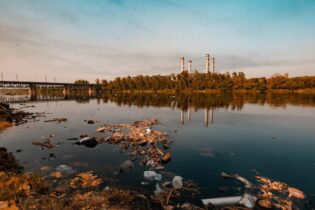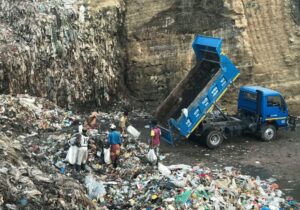
For decades, landfills have carried the blame for the failures of waste management systems; odour, pollution, groundwater risks, methane emissions, and the visible reminder of “wastefulness.”
But landfills do not create waste; they merely receive the consequences of upstream design, production, consumption, and policy decisions. Further to this, landfills are often misidentified as “dumps.” Dumpsites are uncontrolled, unlined, and unmanaged sites and are responsible for the negative impacts commonly attributed to “landfills.” An engineered landfill, by contrast, is a regulated environmental containment system. The real problem is upstream.
Waste value is determined upstream — long before material reaches the landfill.
Produce → Consume → Discard
Recycling markets were underdeveloped, source separation was limited, and packaging innovation prioritised convenience and cost over reusability and recovery. In many developing countries, recovery was not municipal; it was performed by the informal sector. For example:- In South Africa, up to 80% of post-consumer packaging recovery is driven by informal reclaimers.
- In India, segregation programmes in Bangalore and Pune have struggled with inconsistent public compliance and infrastructure support.
- Dandora (Nairobi) and Kpone (Accra) continue to receive large volumes of recoverable material due to weak upstream sorting and market pull-through.
Not All Landfills Are Equal
There is a critical distinction between engineered landfills and uncontrolled dumpsites. As the composition of waste has become more complex, composite packaging, textile blends, electronics, multi-layer plastics, and engineered landfills are now expected to do more than contain waste.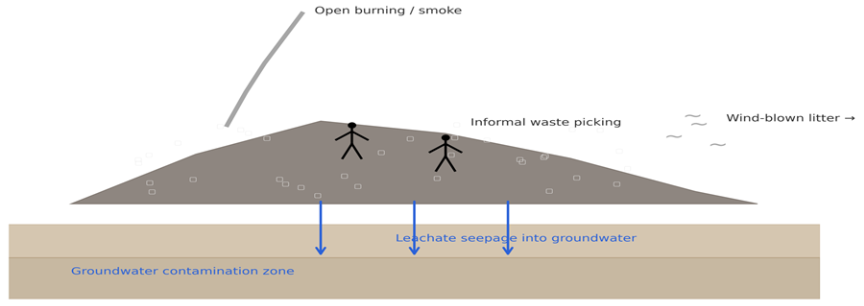
Uncontrolled dumpsite showing human exposure, environmental leakage, and unmanaged emissions.
Landfills as a recovery node
The waste arriving at engineered landfills today is no longer simple or uniform. Instead, landfill operators are increasingly required to:- Extract recoverable materials
- Convert suitable streams into RDF / SRF fuel
- Recover metals and WEEE components
- Manage bio-stabilisation and gas-to-energy.
Decide what is truly residual and requires containment
In other words:- The landfill has become the last opportunity to rescue value that upstream systems failed to preserve.
- This directly reinforces why the goal is not to eliminate landfills, but to dramatically reduce what must reach them.
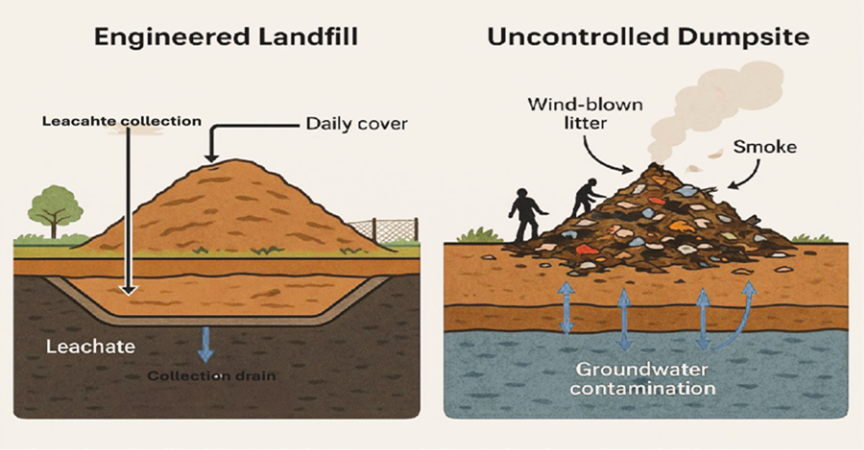

Comparison of an engineered sanitary landfill (regulated containment system) and an uncontrolled dumpsite (environmental hazard)
Sector-Specific Frameworks Are Emerging
Industries are now beginning to intervene earlier in the material life cycle, especially in:- Plastics: Global treaty negotiations, EPR, advanced recycling.
- E-waste: Recovery of critical minerals (copper, cobalt, rare earths), design-for-disassembly.
- Chemical waste: Closed-loop solvent systems and industrial symbiosis networks.
- Design lab (design engineer)
- Polymer reactor (scientist)
- Circuit board assembly line (electronic design engineer)
- Chemical formulation bench (chemical solutions engineer).
Conclusion
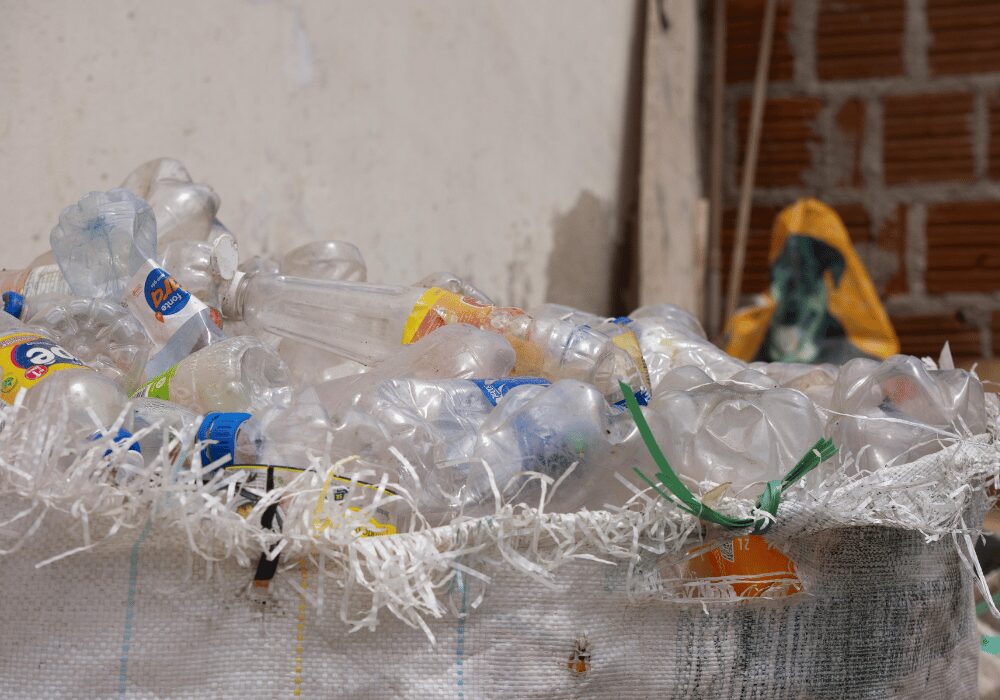
Not all landfills are equal, and open dumps represent environmental harm when landfills are not engineered properly
- Our product design choices,
- Our consumption habits,
- Our policy priorities, and
- Our investment decisions.
- High-hazard waste,
- Stabilising some waste
- Residual deposition.

Nick Mannie, waste and circular economy executive