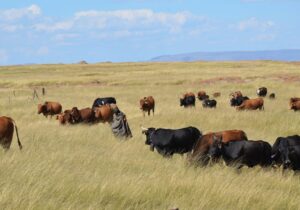
Meat Naturally Africa is preparing a R3 million drought response plan to support communal livestock farmers through planned destocking, feed alternatives and rangeland restoration.
With the outlook brighter than it was three months ago, the social enterprise is pressing on with veld regeneration and farmer training – and has a four-part drought strategy ready to switch on if conditions turn.
The El Niño forecast for the 2026/27 summer remains a serious one. The South African Weather Service has described the current event as strong and likely to strengthen through summer, with below-normal rainfall expected across much of the country. However, for communal livestock farmers in KwaZulu-Natal and the Eastern Cape, the picture is better than it was three months ago and Meat Naturally Africa (MNA) is using this time to continue with strategies to ensure that vital safety nets are in place should the outlook worsen. The latest rainfall forecasts point to a season that is neutral to slightly below average, and Investec chief economist Annabel Bishop expects El Niño’s impact to be less severe than in previous events, thanks to the higher soil moisture and dam levels left by last season’s La Niña. South Africa also goes into the season with a record maize crop. Agbiz chief economist Wandile Sihlobo puts the 2025/26 harvest at 17,7 million tonnes, the largest on record, with about 2,4 million tonnes of opening stocks, leaving the country in a much better position than in past droughts. Closer to home, good rains in recent months have strengthened grazing in the communities where MNA works in KZN and the Eastern Cape. However, MNA is not taking this for granted. The El Niño-driven droughts of 1991/92, 2015/16 and 2023/24 each brought reduced grazing, distress sales and significant livestock losses. By November 2015 alone, drought damage to KZN’s livestock and crops was assessed at more than R400 million, with more than 40 000 cattle dead. National drought relief spending that year topped R1 billion, but the bulk went to water infrastructure – just R6 million reached farmers as fodder support. Above-normal rainfall last season improved dam levels and soil moisture across most of the summer rainfall region, according to the Department of Agriculture’s El Niño advisory, and very good rains in recent months have strengthened grazing in the communities where MNA works. History has also shown that a strong El Niño does not guarantee disaster: 1997/98, one of the strongest on record, brought slightly above-normal rain to parts of the summer rainfall region. The lesson MNA has drawn from that history is a hard one. Water delivery saved lives but it did not save livelihoods, and the response came only after the damage was already done. So MNA – a farmer-owned social enterprise that works across 240 communities and 740 000 hectares of communal rangeland, and has channelled more than R134 million to over 10 000 farmers – is keeping its core work going on the ground: regenerating veld, managing grazing and training farmers and EcoRangers, so that rangelands go into the season in the best possible condition. Alongside that, it has a four-part drought strategy ready to activate within the next three months should the forecasts deteriorate. The risk is sharpened by recent Foot-and-Mouth Disease movement restrictions, which have left many herds larger than the land can support and many households reluctant to sell into a market that is still recovering.Livestock hubs with sales and animal health under one roof
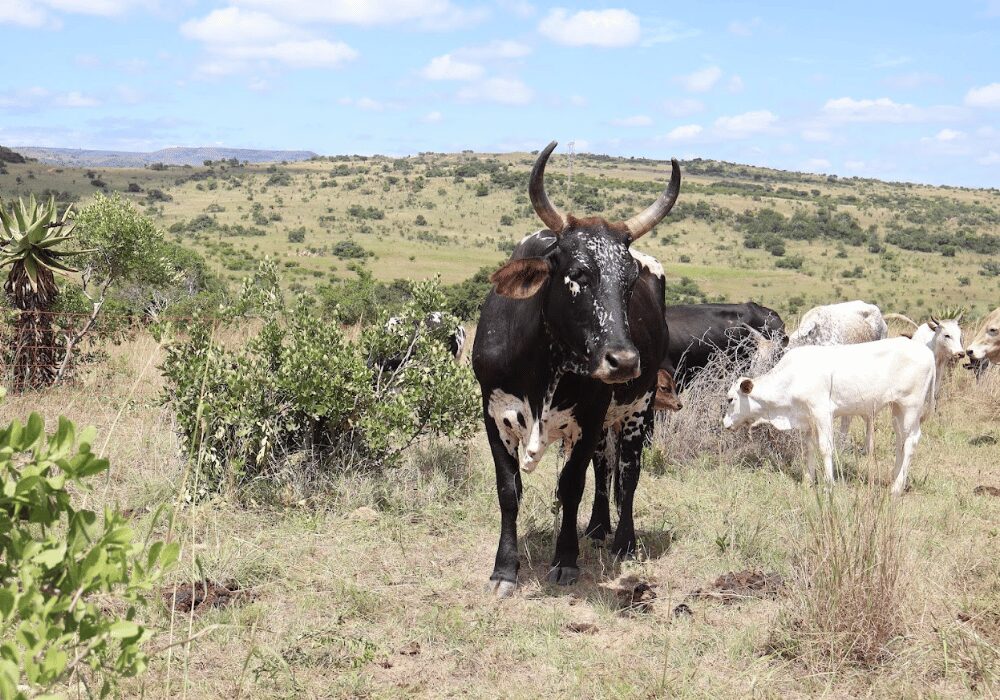 If conditions worsen, MNA plans to extend its mobile auction model – which already brings formal, transparent markets directly into remote communities – into community livestock hubs that combine sales access with on-site veterinary services. Farmers would have a single point of access to sell animals through established channels and to have their herds checked and treated, keeping stock in saleable condition for longer and reducing losses from untreated illness during periods of stress.

A market incentive to get ahead of distress sales
The centrepiece of the plan is a R3 million Climate Resilience Fund, which would pay communal cattle farmers an additional R1 per kilogram of live weight for animals sold through MNA’s auctions and approved marketing channels. Of the total, up to R2,7 million would go directly to farmer incentive payments and R300 000 to extension support and community mobilisation.The fund is designed to counter a well-documented behavioural barrier: farmers frequently hold onto animals too long, even as prices fall, because livestock are viewed as a form of savings and there is always hope that conditions will improve. A R1/kg payment – worth close to a fifth of an average monthly household income per animal sold – is intended to make timely, planned destocking financially attractive, rather than something farmers are forced into once condition and prices have already collapsed. Once activated, the fund is expected to support the sale of roughly 6 000 cattle (2,7 million kilograms) from at least 500 households across the 240 communities in MNA’s GRASS carbon programme footprint, easing grazing pressure before it causes lasting damage to rangeland already under restoration. Every sale would be verified through MNA’s Flexi-Auction system, with quarterly reporting on cattle sold, farmers reached and hectares relieved of grazing pressure.
Turning an invasive weed into drought-season feed
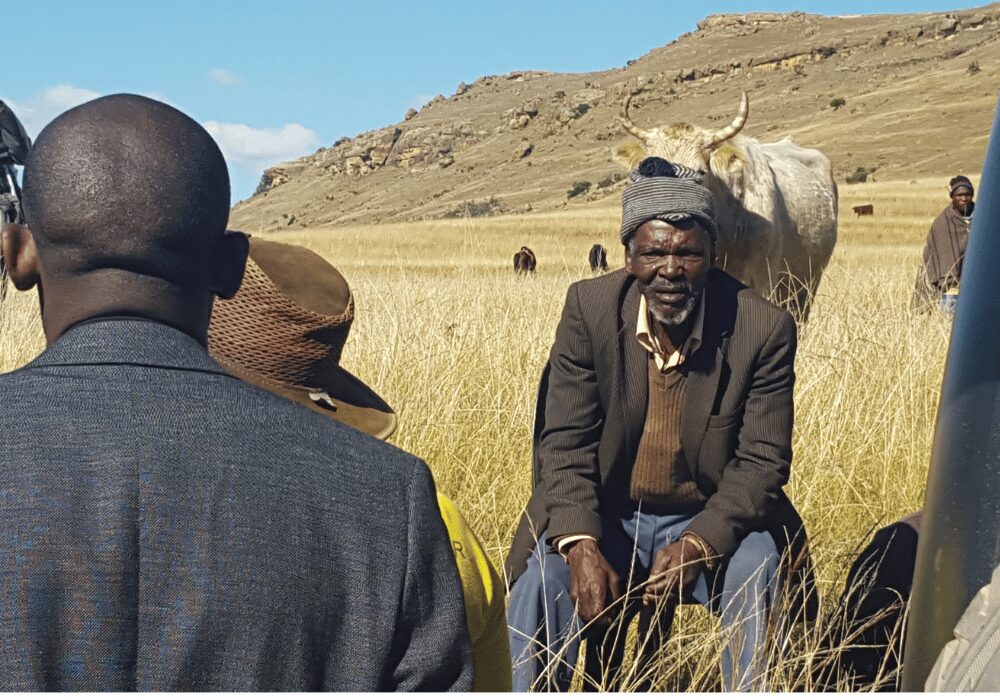 In the uMkhomazi Catchment in the KZN Midlands, MNA’s partner, the Institute for Natural Resources, has developed a pilot that converts wattle – a priority invasive alien plant already targeted for clearing nationally – into a livestock feed supplement, giving farmers an affordable, locally produced feed option for when grazing is scarcest. The ration has already been palatability-tested with local livestock owners using an existing chipper and kiln, and is governed through the community’s own Participatory Land-Use Management structures, working alongside Traditional Authorities and the uMkhomazi Catchment Working Group.
The model runs in four steps – harvesting and chipping wattle biomass, formulating and trialling the feed ration, distributing it through local supply chains, and managing off-take and grazing – and is designed to scale from an initial two to four pilot villages into a wider network shared through MNA’s Cross-Catchment Collective.
Waste wool into rangeland restoration and income for women
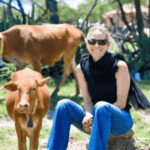
Sarah Frazee, CEO of Meat Naturally Africa