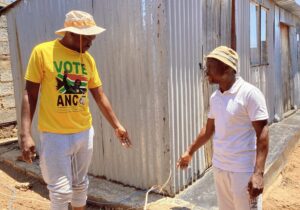

In 2019, residents of Monflorah Park won their case to stop the City of Ekurhuleni from demolishing their homes.
- In 2019, residents of Monflorah Park, Tembisa, won their case against the City of Ekurhuleni after their shacks had been demolished more than ten times.
- The Ekurhuleni Metropolitan Police Department and the City were ordered to pay occupiers R1,500 each for damage to property incurred during prior evictions.
- Years later, residents say the City has ignored their pleas to formalise the settlement. This would entitle them to services such as tap water, electricity and toilets.
- The City says it sends water trucks and has provided chemical toilets. It said the settlement’s proximity to a river affects the feasibility of electrification.
 Most of the occupiers were unemployed and unable to pay rent.
In 2019, the residents achieved a court victory against the City after their shacks had been demolished more than ten times. Judge Anthony Millar ordered the Ekurhuleni Metropolitan Police Department (EMPD) and the City to stop evicting the occupiers without a court order and to pay occupiers R1,500 each for damages to property incurred during prior evictions. The court also interdicted any harassment, intimidation or threats towards the occupiers.
According to community representative Florah Tjabadi, City officials had told them formalising the settlement would be considered. But years after the ruling, families are still using “bucket-like toilets” and do not have running water or electricity, said Tjabadi.
Tjabadi said the community has now grown to over 200 households. She said the community now feels neglected because nearby informal settlements, such as Duduza and Extension 8, have since been given water, toilets and electricity.
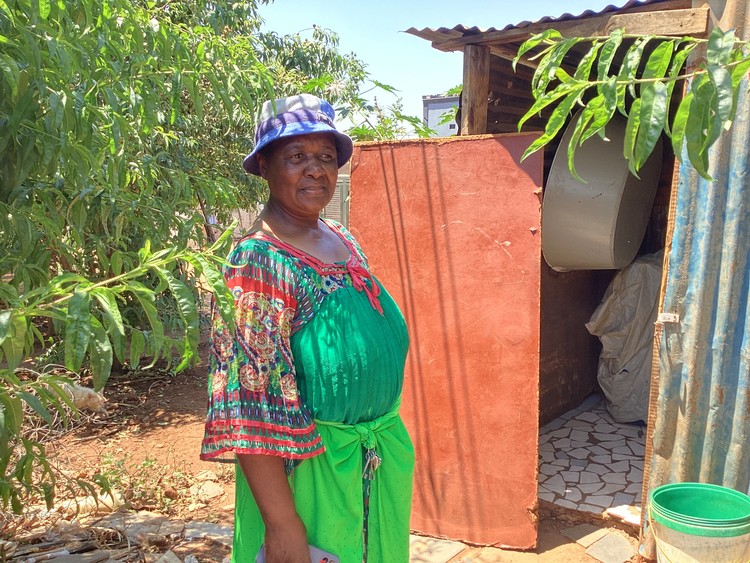
Meisie Tshabalala says she walks over 500 metres to reach the nearest communal tap and must return carrying heavy containers.

She lives with four of her children in a single room.
Mbungele’s neighbours use illegal connections, but she cannot afford one. Alfred Mashava moved to the settlement because he was unemployed and could no longer pay rent. Five years ago, while working a short-term job on a construction site, he was injured. He now uses crutches and can no longer do piecemeal work to support himself. Mashava tried to connect water and electricity to his home through illegal means, but the water does not come out, and the electricity supply is unreliable. “I recently voted,” he said. “The government should own up to its promise and provide our community with services.” Ekurhuleni spokesperson Zweli Dlamini denied the allegation that the City does not provide basic services. He said the City sends water tankers, provides chemical toilets and removes waste. But Tjabadi told GroundUp that the water truck delivers closer to Duduza and Extension 8, not their area. She said people dig holes in their yards to discard their faeces. Regarding electricity, Dlamini said Eskom has indicated that the settlement’s proximity to a river affects the feasibility of electrification. “We currently have no housing development plans for the informal settlement. This is primarily due to environmental constraints affecting the feasibility of providing electricity in the area,” said Dlamini.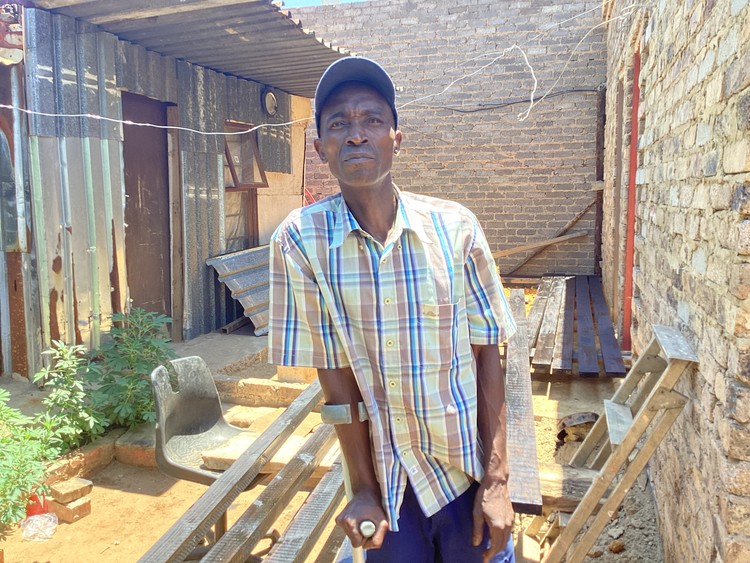
Alfred Mashava, who relies on crutches, tried to connect water and electricity to his home through illegal means, but the water does not come out, and the electricity supply is unreliable.